


24/7 Insights
- Tariffs are often self-defeating policy implemented by corrupt or ignorant governments.
- Tariffs always punish the consumer the most, as well as the importer and exporter.
- Download our free report on the two stocks we recommend every investor buy.
Tariffs recently became a popular subject of education for many people after Donald Trump announced he would implement a 60% tariff on all good imported from China and a 20% tariff on everything else imported into the United States, and recently announced a 200% tariff on anything made by John Deere. He also recently threatened Mexico with a 100% tariff.
Are these tariffs realistic? How would they work, what would their impact be, and how do they compare to the highest tariffs in the world?
Background on Tariffs

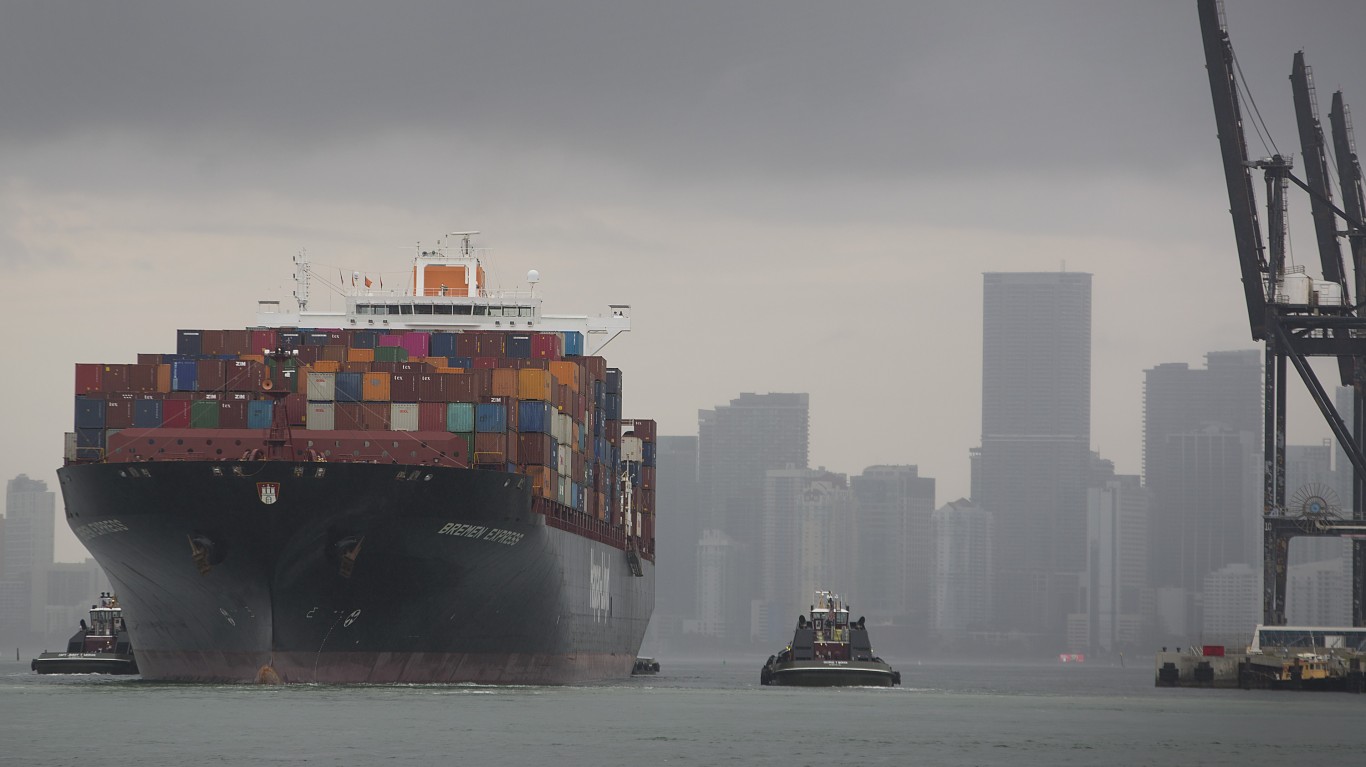
Shipping containers.
Tariffs are a tax that a government can put on any goods that are imported into its country. They are among the most popular tools governments can use to implement protectionism and isolationism in their country. Tariffs are usually implemented to accomplish a number of goals:
- Generate revenue for the government
- Regulate foreign trade
- Encourage or protect domestic industries
However, economists around the world agree unanimously that tariffs are self-defeating. Tariffs always have a negative impact on a country’s economic growth, welfare, and prosperity, most strongly impacting the citizens who rely on those products being imported. Tariffs punish the exporter, the importer, and the consumer, but not in equal measure. The exporter will suffer a loss due to lower demand, the importer will suffer because of fewer imports and a weaker economy, and the consumer will suffer because they are the ones who have to pay the tariff.
Basic economic principles tell us that if consumers are forced to pay more for an item, the demand for that item will drop.
Whenever a tariff has been implemented to protect domestic industry, it has almost always backfired by harming the industry it was meant to protect by causing increased costs for inputs and retaliatory tariffs from the exporting country.
For a society that preaches the value of a free-market economy and capitalism, tariffs should be anathema to their worldview. Generally, where there are extremely high tariffs, you can expect to find rampant government corruption, authoritarian governments, and military oppression of citizens. For that reason, free, open, and democratic countries tend to avoid tariffs whenever possible, and only the economically illiterate or power-hungry use them to extremes.
Today, the average tariff rate worldwide is around 2.59%. Here are the 25 countries with the highest tariffs according to The World Bank and the United Nations.
#25 Guinea
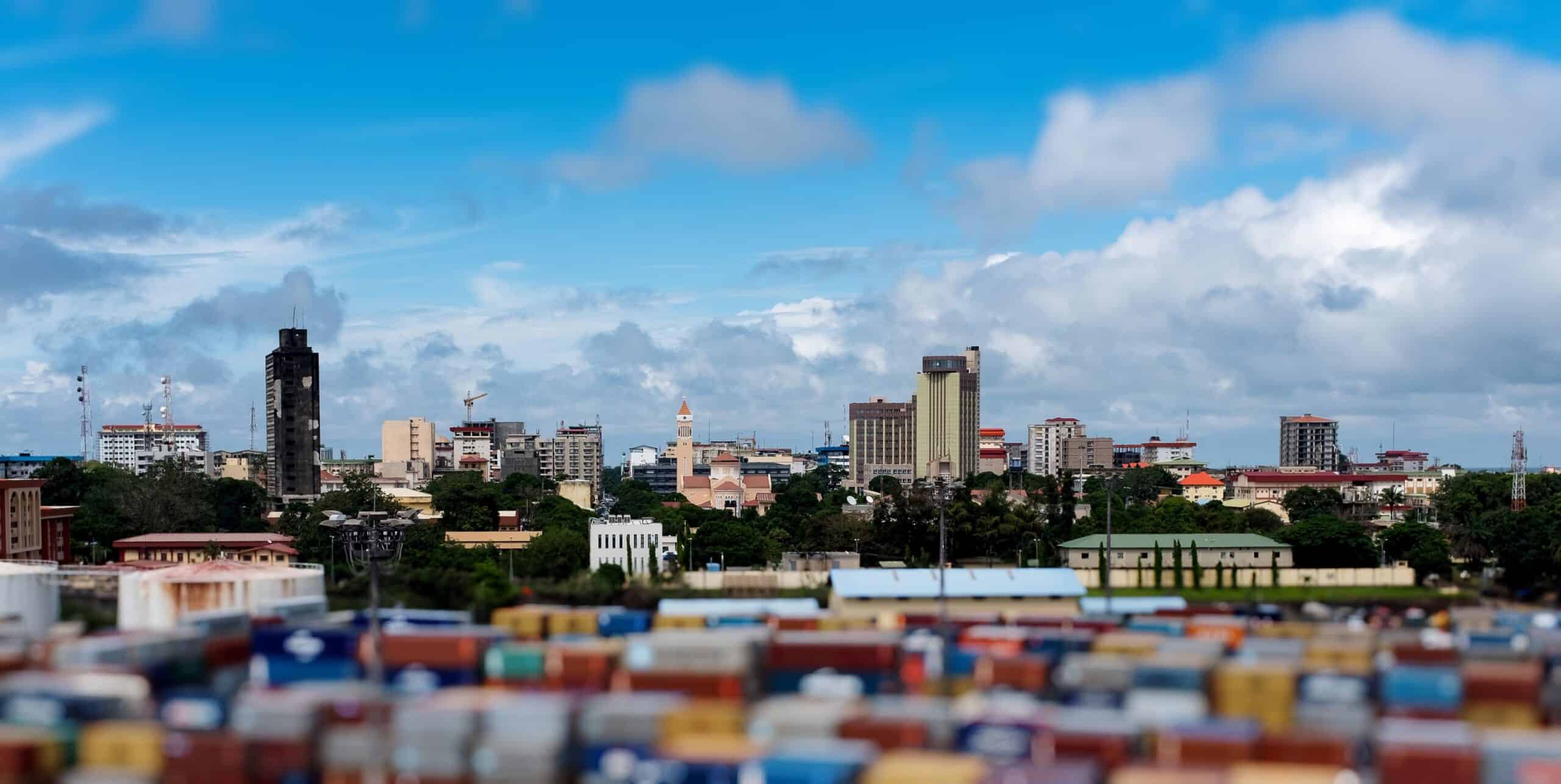
Guinea.
- Average tariff rate on all products: 12.1%
- Tariff rates on non-agricultural and non-fuel products: 11.29%
Guinea has suffered multiple military coups in recent years, with the most recent in 2021. The current government has been hard at work eliminating protections against authoritarianism and corruption. Most of the population works in agriculture and many people are impoverished.
#24 The Gambia
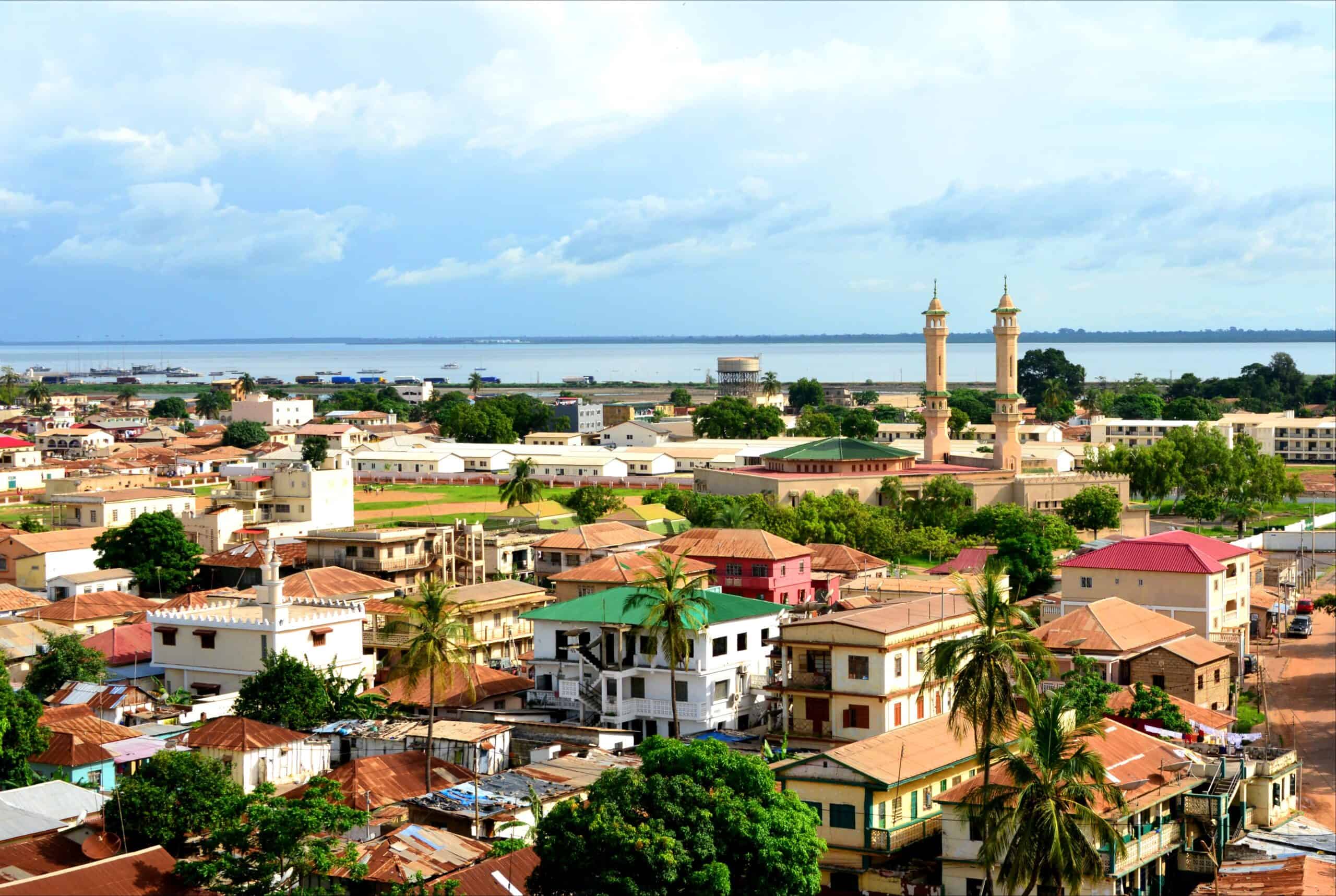
Gambia.
- Average tariff rate on all products: 12.1%
- Tariff rates on non-agricultural and non-fuel products: 17.8%
An international military intervention was needed to remove The Gambia’s third president after he refused to leave office in 2016. The government and the culture are strongly religiously authoritarian and oppressive. It transitioned from a military dictatorship in 1996.
#23 Nauru
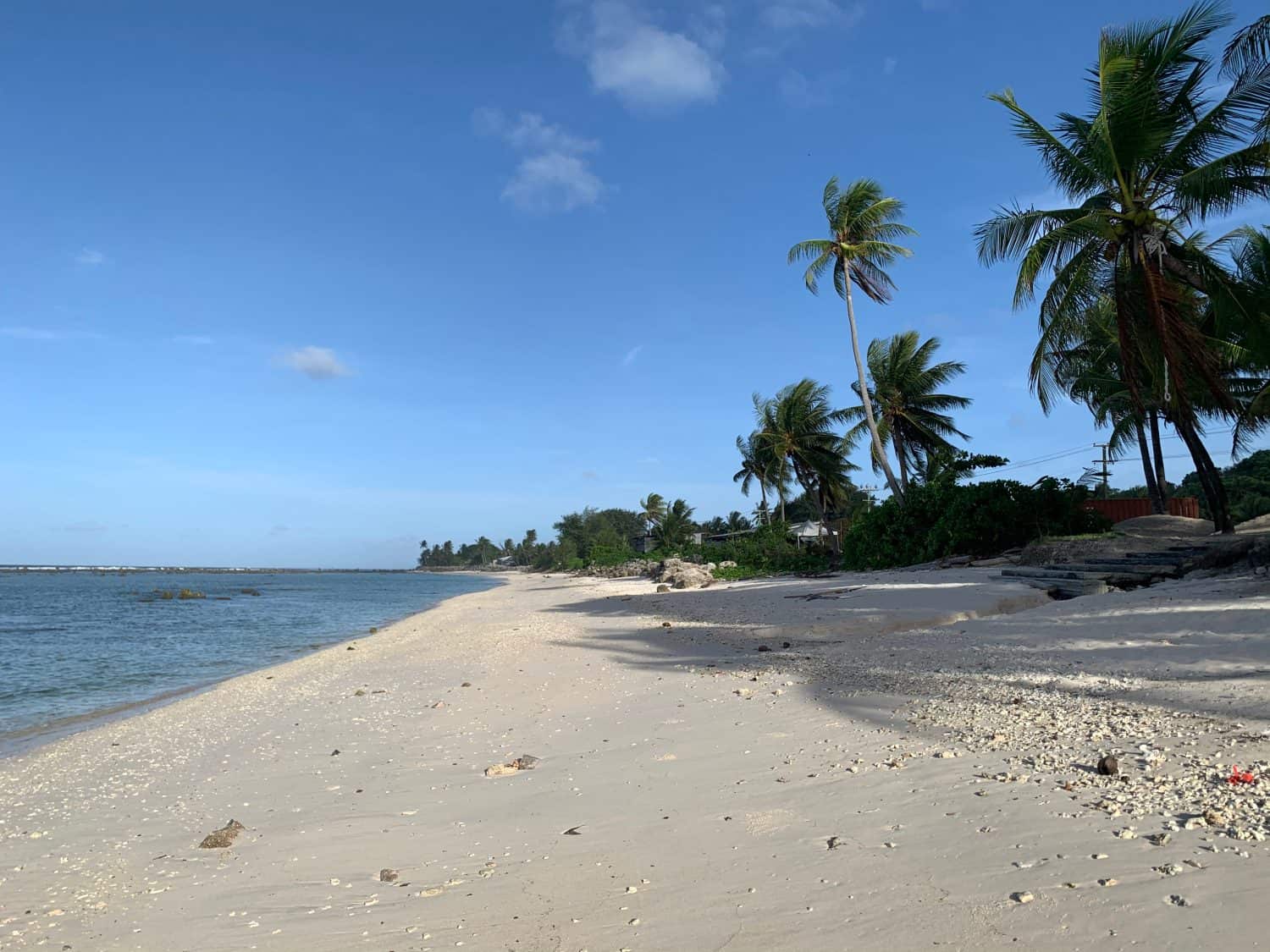
Nauru.
- Average tariff rate on all products: 12.9%
- Tariff rates on non-agricultural and non-fuel products: 13.35%
Nauru’s natural resources were plundered by colonial powers, leaving it poor and without the foundation to build a successful economy. As a result, Nauru has had to resort to being a tax haven for rich foreigners and a center for illegal money laundering.
#22 Guinea-Bissau
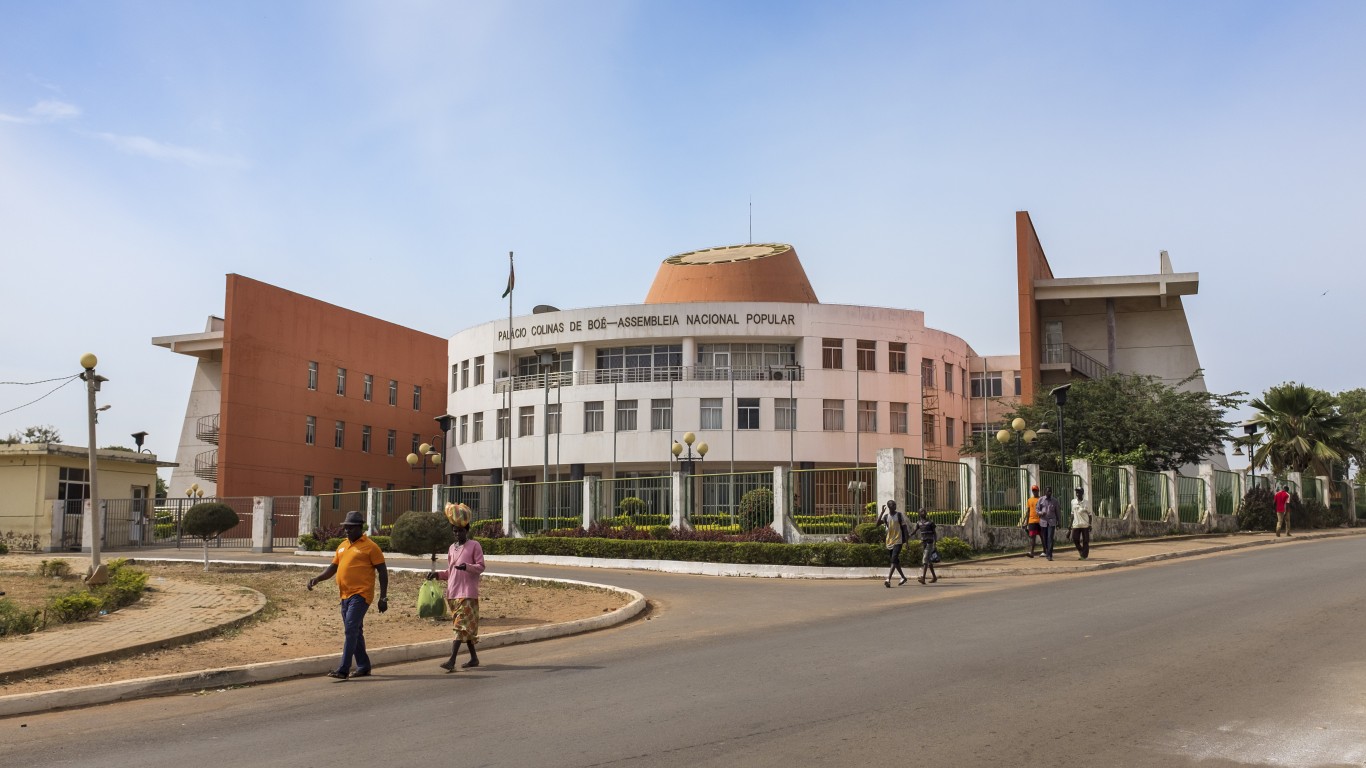
Guinea-Bissau.
- Average tariff rate on all products: 12.1%
- Tariff rates on non-agricultural and non-fuel products: 10.32%
Corruption is rampant in Guinea-Bissau, with around 75% of the country living in poverty. It takes 33 weeks to register a new business in Guinea-Bissau, the second-longest of all countries.
#21 Nigeria
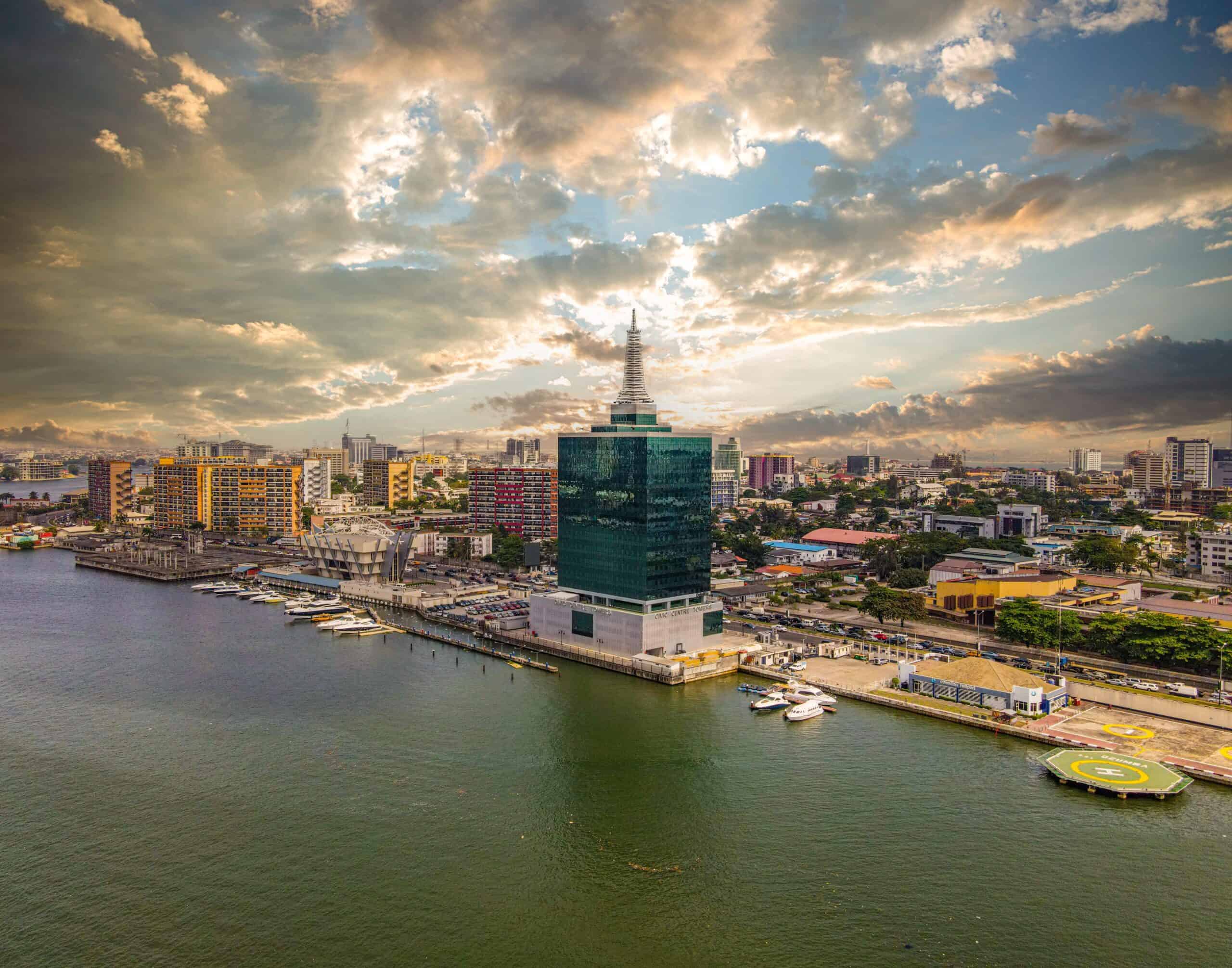
Nigeria.
- Average tariff rate on all products: 12.1%
- Tariff rates on non-agricultural and non-fuel products: 12.30%
Nigeria is one of the most populous and successful countries in the world. Most of its success has been since 1999 when it began to liberalize its economy after decades of military rule, widespread corruption, and mismanagement.
#20 Sierra Leone
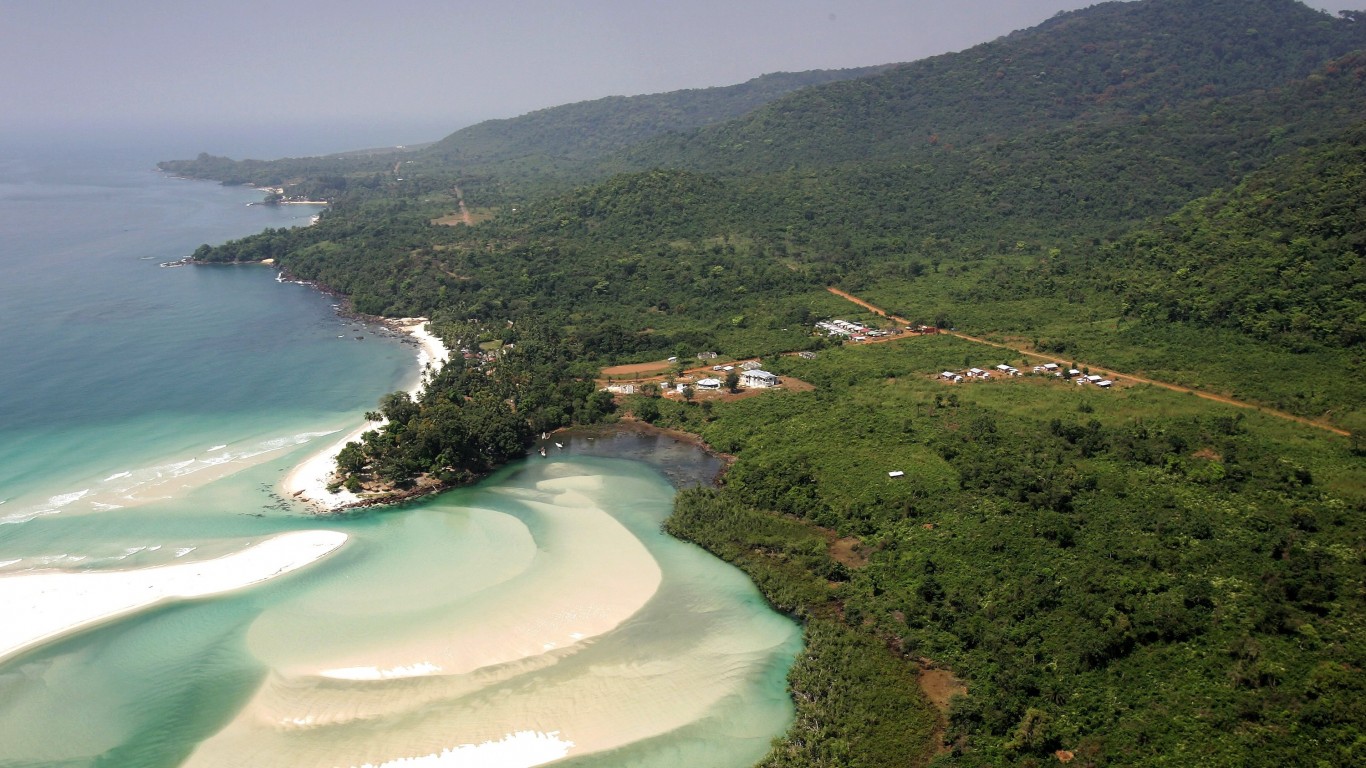
Sierra Leone.
- Average tariff rate on all products: 12.1%
- Tariff rates on non-agricultural and non-fuel products: 12.45%
After numerous military coups and political turmoil in the 1990s, Sierra Leone has been relatively stable ever since, though the country continues to recover from the destruction caused by its civil war.
#19 Togo
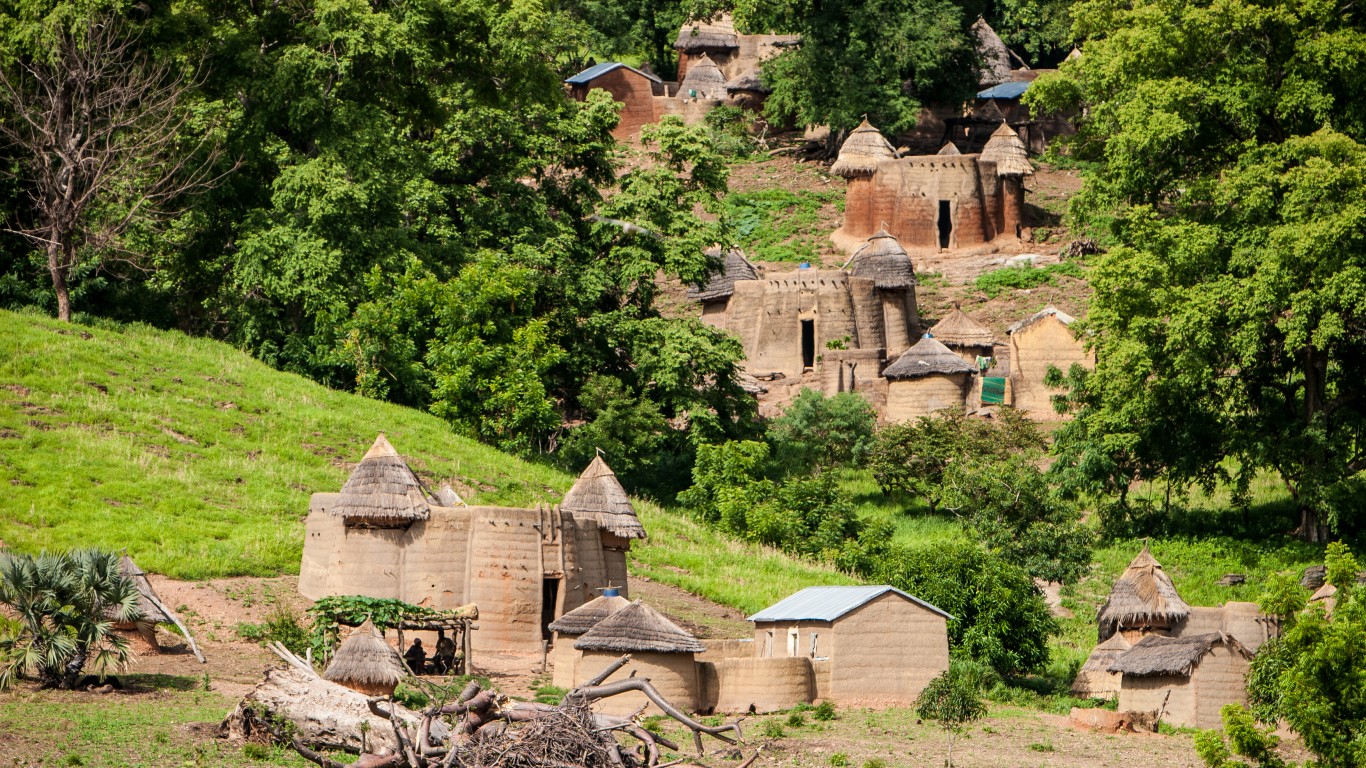
Togo.
- Average tariff rate on all products: 12.1%
- Tariff rates on non-agricultural and non-fuel products: 10.36%
Since gaining independence from France in 1960 it has suffered coups and political unrest and chaos. The military currently controls the country and cracks down on dissent with extreme violence. It is currently ruled by the Gnassingbé family.
#18 Mauritania

Mauritania.
- Average tariff rate on all products: 12.0%
- Tariff rates on non-agricultural and non-fuel products: 10.03%
Mauritania had its very first peaceful transition of power in 2019 since gaining independence in 1960. Before this, military dictatorships and oppression was the norm. The nation of Mauritania is rich, but due to mismanagement and deep corruption, the natural resources of the country have not been used to benefit the people.
#17 Belize
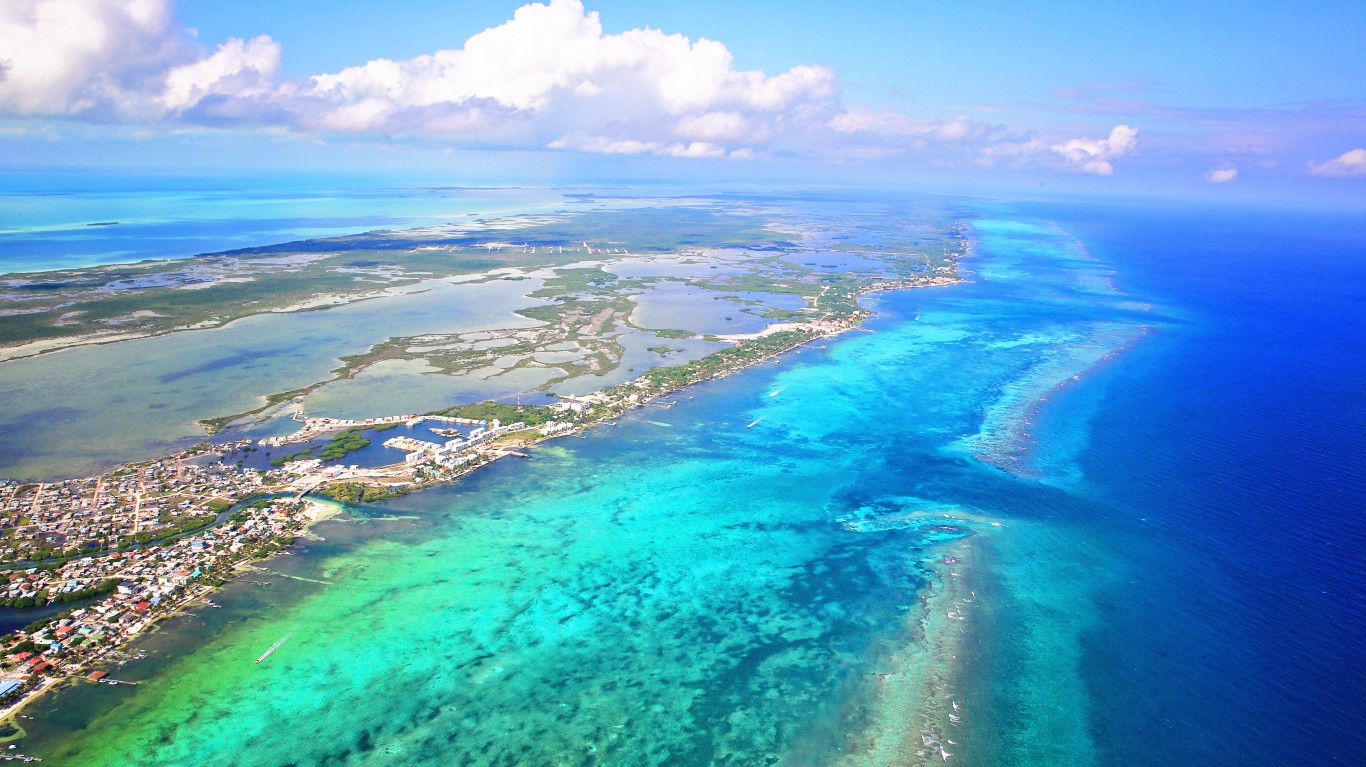
Belize.
- Average tariff rate on all products: 11.9%
- Tariff rates on non-agricultural and non-fuel products: 10.32%
The government of Belize has struggled to maintain economic stability ever since gaining independence in the 1980s. It has promised to improve tax collection but has not been able to limit its own spending which threatens its current exchange rate. And as a popular tourist destination and money laundering country, this is an extremely important factor.
#16 Pakistan
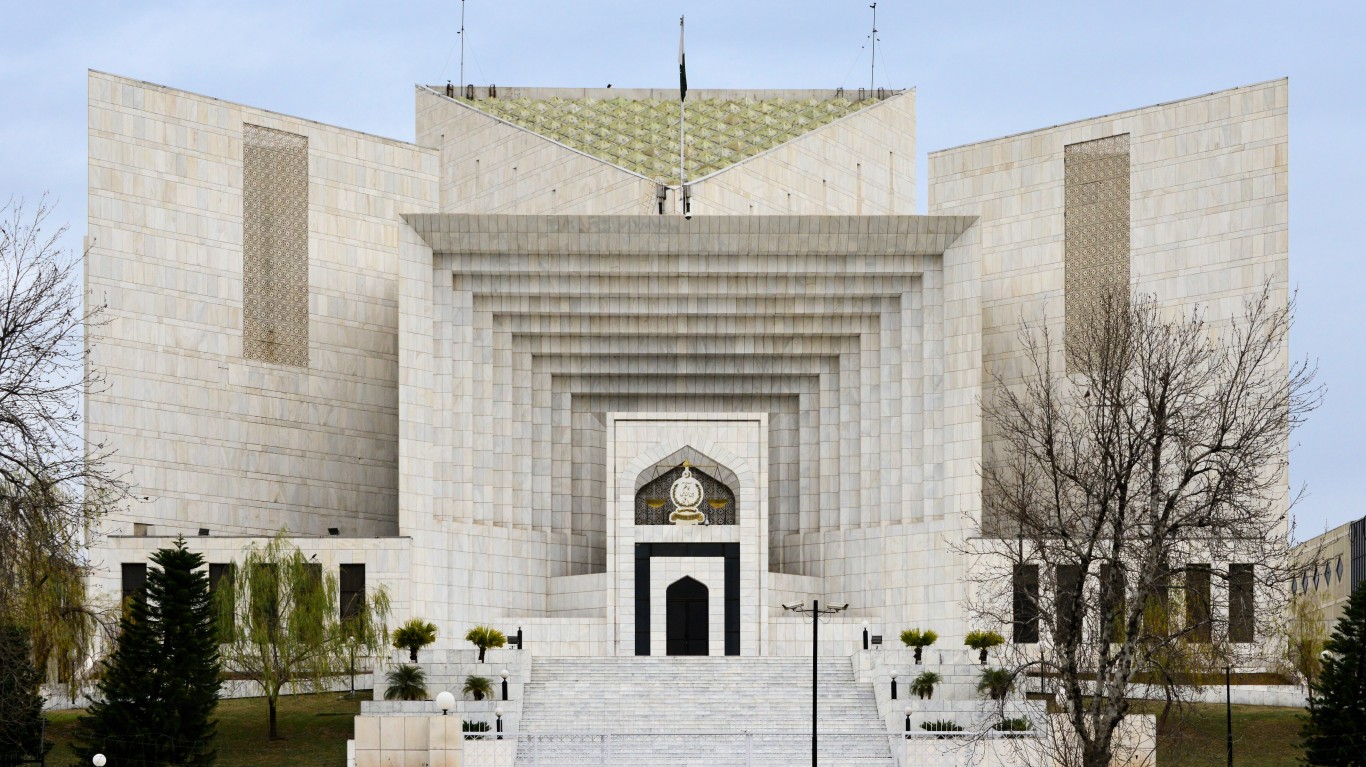
Pakistan.
- Average tariff rate on all products: 11.2%
- Tariff rates on non-agricultural and non-fuel products: 11.14%
Pakistan struggles with massive levels of corruption, terrorism, illiteracy, and poverty, stretching as far back as colonial times. It has been focused on asserting its independent foreign policy and strengthening its national identity. It has fought four wars with India over the Kashmir region.
#15 Venezuela

Venezuela.
- Average tariff rate on all products: 13.8%
- Tariff rates on non-agricultural and non-fuel products: 15.27%
Economic turmoil and market crises have led to social unrest and numerous coups since the 1980s. Poverty increased rapidly in the 2010s and contributed to the nation-wide protest that continues until today. Venezuela has consistently experienced democratic backsliding in recent decades, becoming a more authoritarian state and eliminating protections for the press, civil liberties, and political opponents. It has significant levels of corruption, poverty, disease, unemployment, mortality, crime, and regular shortages of basic goods that could at least be alleviated by removing tariffs.
#14 Bangladesh
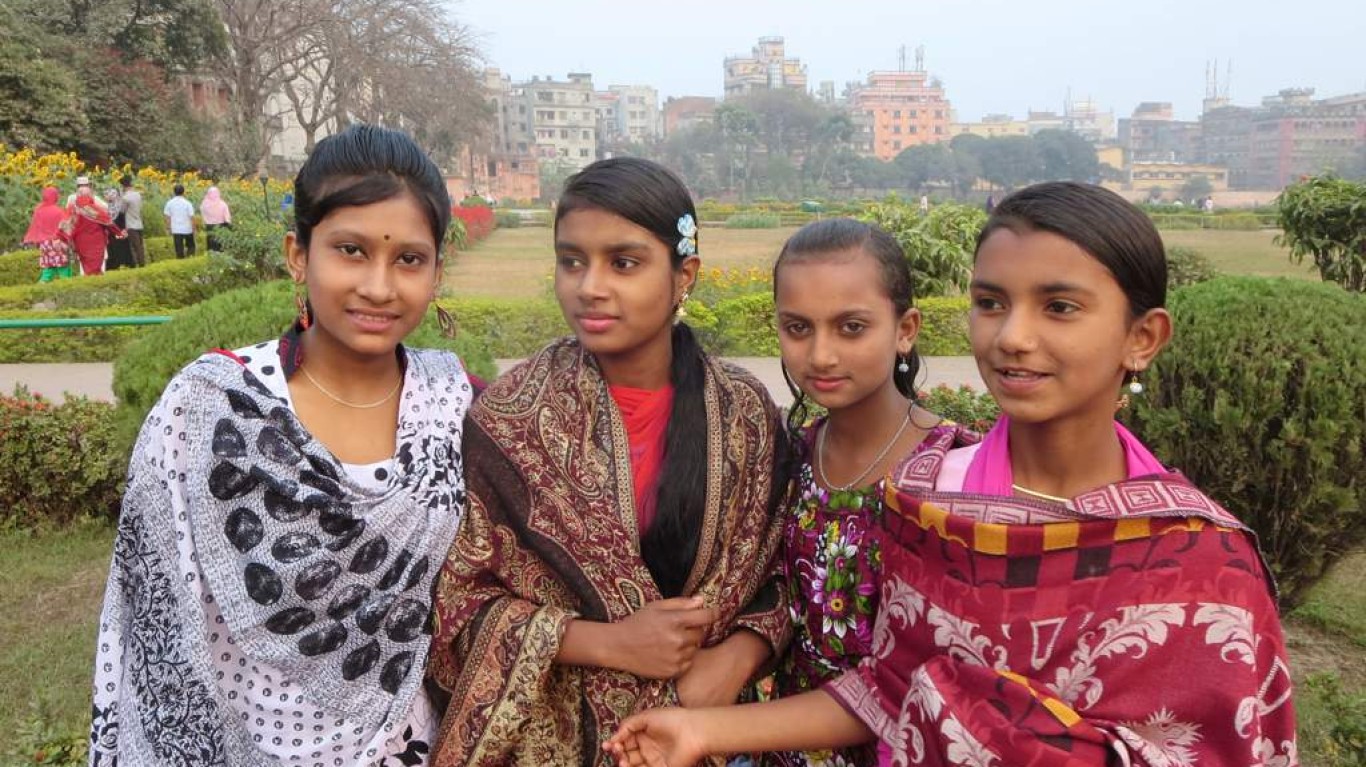
Bangladesh.
- Average tariff rate on all products: 14.0%
- Tariff rates on non-agricultural and non-fuel products: 13.11%
Bangladesh is one of the most densely-populated countries in the world, and being close to India and China which have built industries on producing cheap goods in vast quantities, it makes sense why Bangladesh would want to make those cheap products more expensive to protect its own companies. While one of the most successful economies in the region, it continues to struggle with high levels of corruption and significant levels of bribery.
#13 Comoros
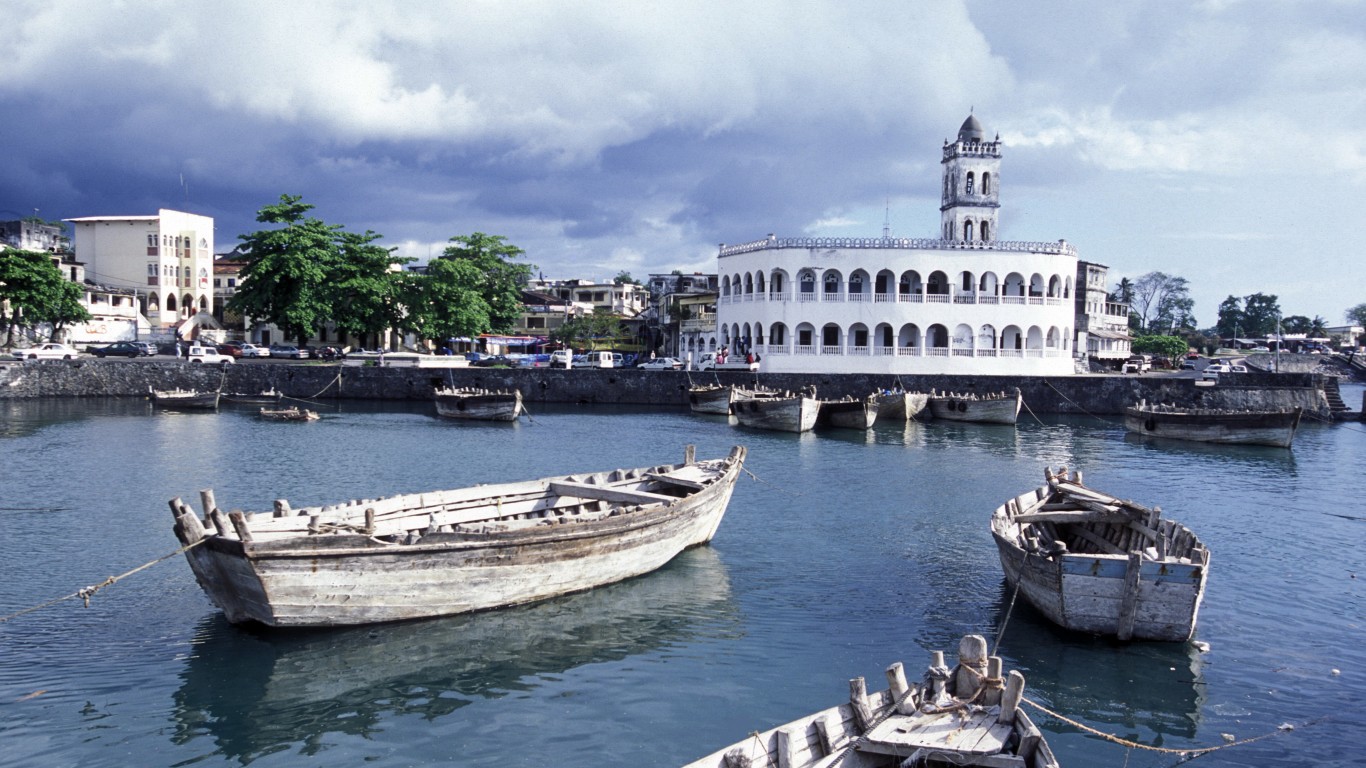
Comoros.
- Average tariff rate on all products: 15.1%
- Tariff rates on non-agricultural and non-fuel products: 4.78%
Comoros is a tiny island nation off the coast of Africa that suffers from political instability and one of the highest levels of income inequality in the world. The government is oversized for the needs of the country and it has not had regular fiscal revenues for years. A high government debt might be the reason why high tariffs are seen as a potential relief.
#12 Ethiopia
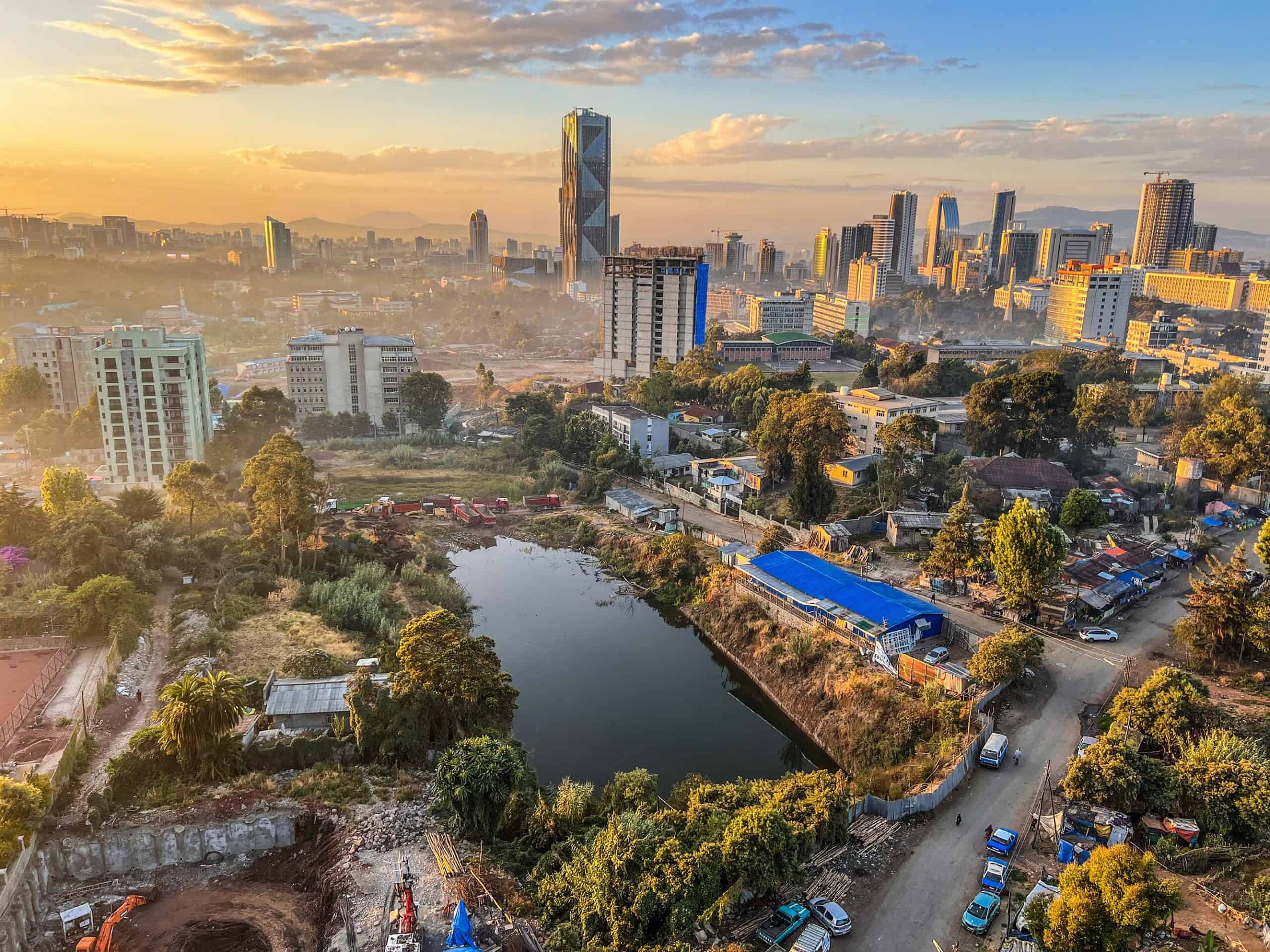
Ethiopia.
- Average tariff rate on all products: 17.0%
- Tariff rates on non-agricultural and non-fuel products: 12.76%
As one of the most populous and diverse countries in the world, Ethiopia still has extremely high rates of poverty, rampant ethnic discrimination, low literacy rates, and a terrible human rights record. Ethiopia experienced rapid economic growth for years until 20011 when inflation reached 40% and the country struggled with high debt due to a bloated government and loose money policies, probably leading to relying on tariffs to make ends meet.
#11 Uganda
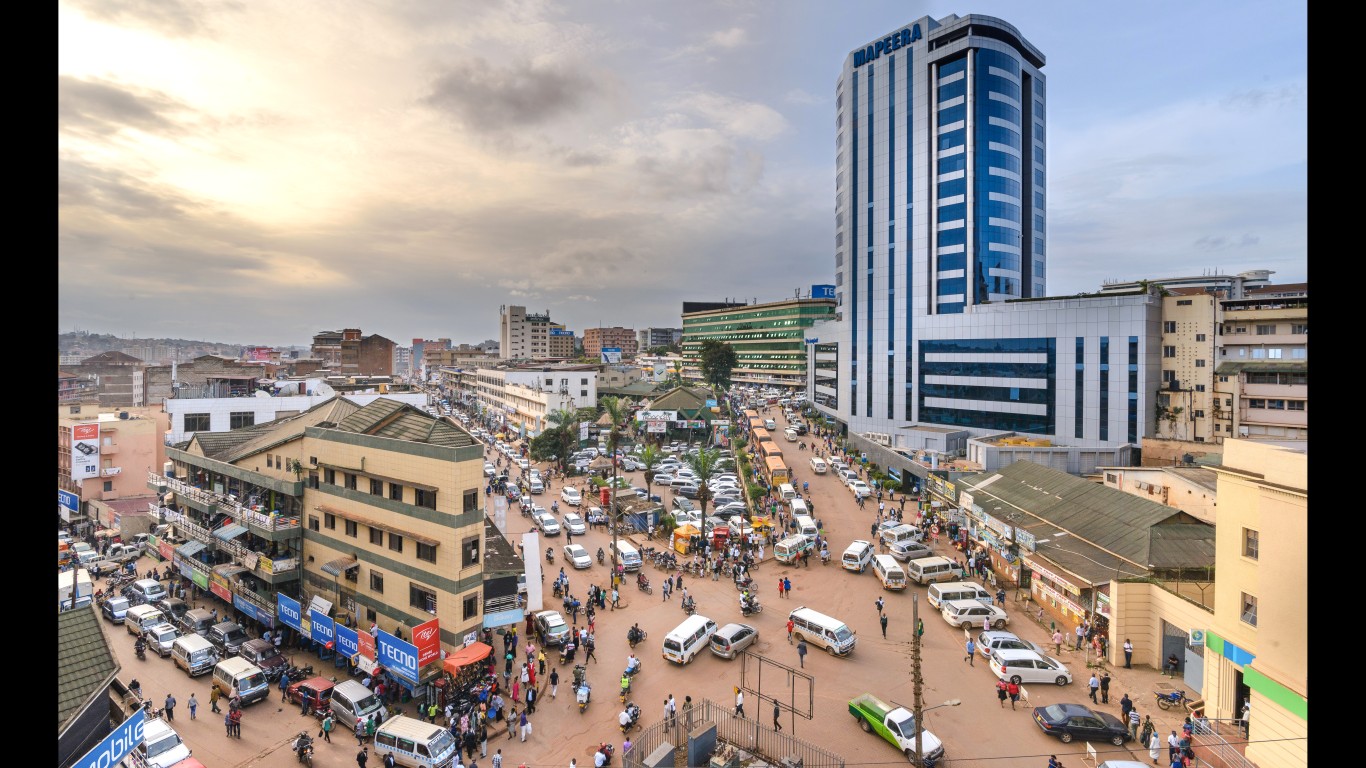
Uganda.
- Average tariff rate on all products: 17.6%
- Tariff rates on non-agricultural and non-fuel products: 6.04%
Yoweri Museveni assumed power in Uganda in 1986 after a successful guerilla war over six years. He has since abolished presidential term limits, committed fraud in elections, suppressed political dissidents, and repeatedly abused human rights. It is listed as one of the most corrupt countries in the world, and tariffs are often used to persuade companies to pay officials discreet payments to import their products more cheaply.
#10 Gabon
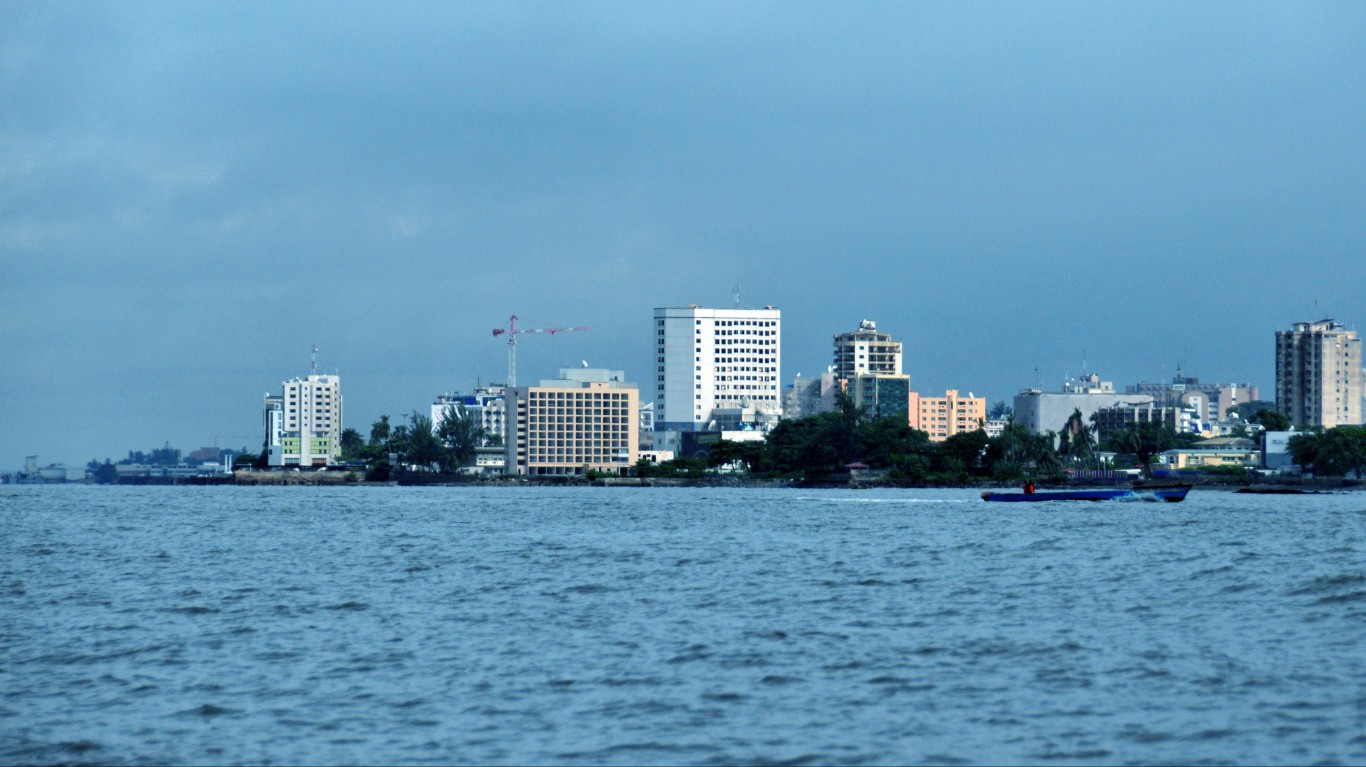
Gabon.
- Average tariff rate on all products: 17.7%
- Tariff rates on non-agricultural and non-fuel products: 14.11%
World leaders have repeatedly noted the lack of diversity of the economy in Gabon, which is almost entirely dependent on oil extraction. In the 1990s, the government began a program of privatizing many of its public industries, and high tariffs might be their attempt at protecting these companies while they still find their feet. The government in Gabon is volatile, with a recent military coup in 2023 and eight military government interventions since 2020.
#9 Zimbabwe
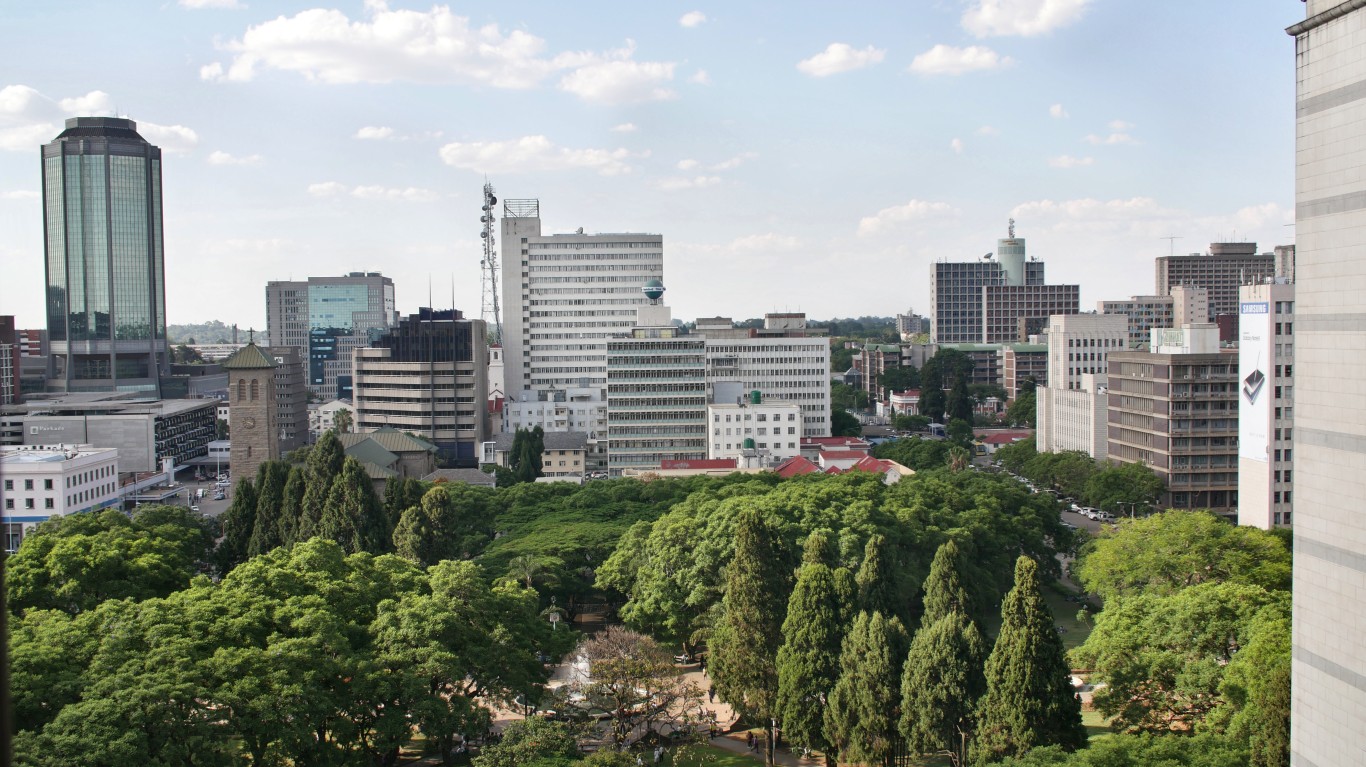
Zimbabwe.
- Average tariff rate on all products: 17.9%
- Tariff rates on non-agricultural and non-fuel products: 10.08%
Zimbabwe suffered a military coup in 2017 and is currently sanctioned by the United States and other countries for its offensive actions in the region. Taxes and tariffs are both unreasonably high for private companies while the industries owned by the government are heavily subsidized. This has caused many companies to close or leave the country, leading to a slowing of the economy.
#8 Central African Republic
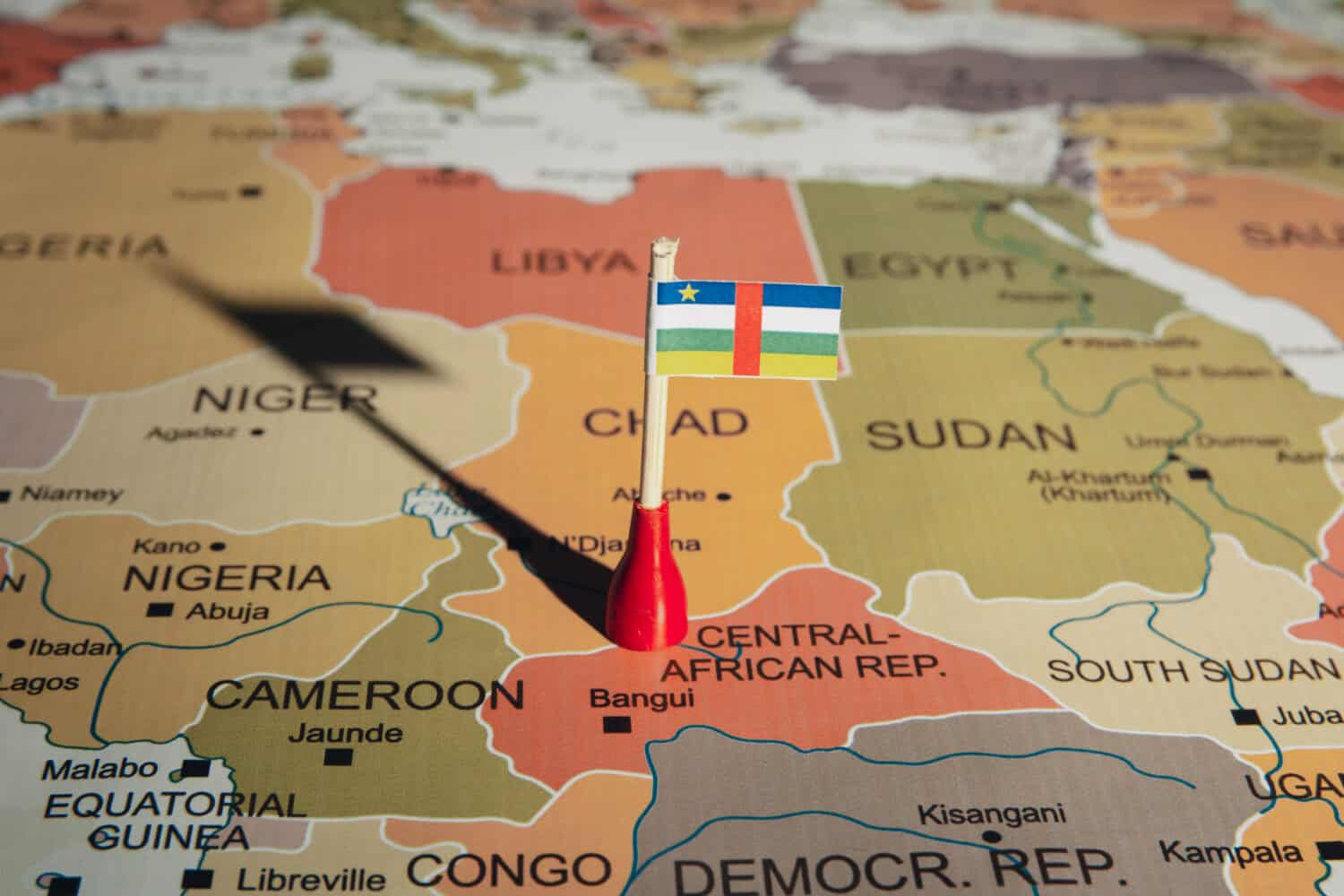
Central African Republic.
- Average tariff rate on all products: 18.0%
- Tariff rates on non-agricultural and non-fuel products: 16.21%
The Central African Republic has been a democracy since 1990, but civil war broke out in 2004 and again in 2012, leading to numerous reports of human rights abuses, and ranks at the bottom of the list of almost every quality of life ranking. This includes being the last on the list of countries ranked in order of ease of doing business.
#7 Cameroon
Cameroon.
- Average tariff rate on all products: 18.2%
- Tariff rates on non-agricultural and non-fuel products: 13.75%
The current president of Cameroon has ruled over the country since 1984, and the economic growth and prosperity of the country have not had any impressive growth. Tariffs, roadblocks, and movement restrictions often only exist to extract bribes and payments from those passing through the country.
#6 India
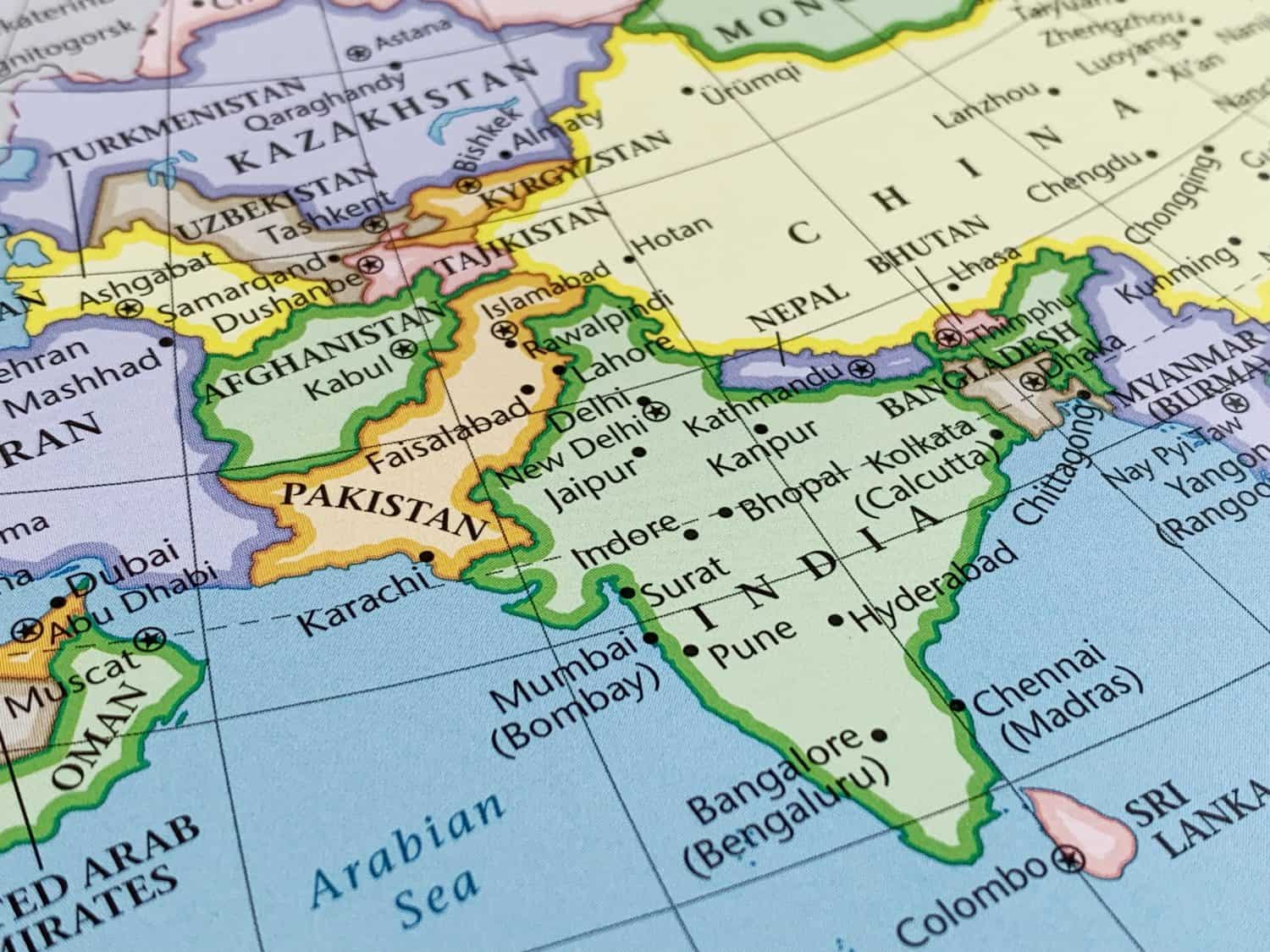
India.
- Average tariff rate on all products: 18.3%
- Tariff rates on non-agricultural and non-fuel products: 6.04%
India is probably one of the best examples of a powerful and wealthy country moving toward authoritarianism and using its power to oppress political opponents and strengthen right-wing power institutions. Narendra Modi, the current prime minister of India, had spearheaded India’s attacks against all the government institutions meant to hold the power of the executive in check. He has repeatedly intimidated political rivals and critics in the media, schools, universities, and more. He has worked to eliminate protections for freedom of speech and has repeatedly inflamed tensions between religious and ethnic minorities in order to oppress those he dislikes.
#5 Egypt
Egypt.
- Average tariff rate on all products: 19.0%
- Tariff rates on non-agricultural and non-fuel products: 5.7%
Egypt continues to suffer from extremely high inflation and a struggling economy. Its market began to make significant gains and saw impressive growth after decades of stagnation after implementing liberal market policies. These included drastically cutting customs fees and tariffs in 2003, though tariffs today remains relatively high.
#4 Algeria
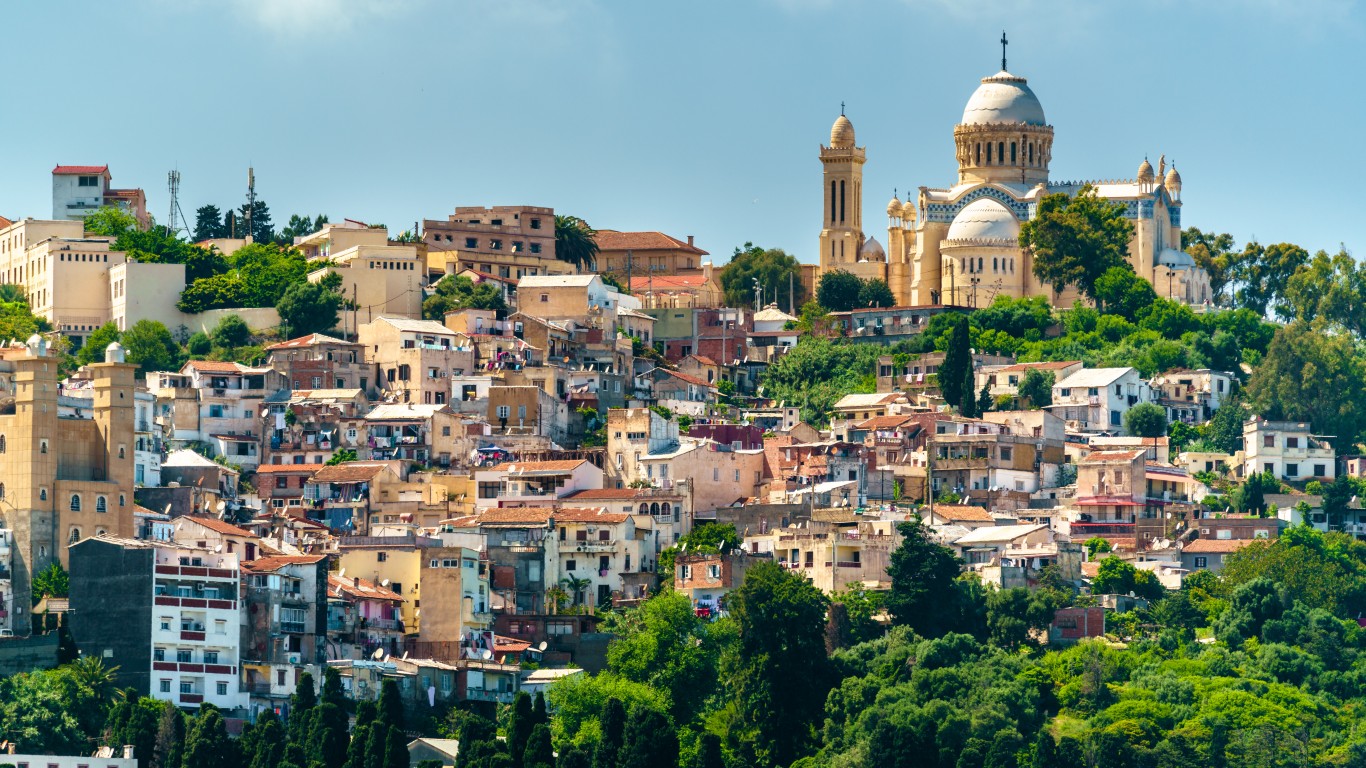
Algeria.
- Average tariff rate on all products: 19%
- Tariff rates on non-agricultural and non-fuel products: 10.25%
The Algerian government controls almost the entirety of the economy in the country, but it recently experienced a sharp rise in economic development and prosperity growth, putting it in the same league as countries like Brazil and China, due to the privatization of industries and diversifying its markets. However, the government recently began pausing its privatization efforts and implemented high restrictions on imports, which all but halted this economic growth.
#3 Iran
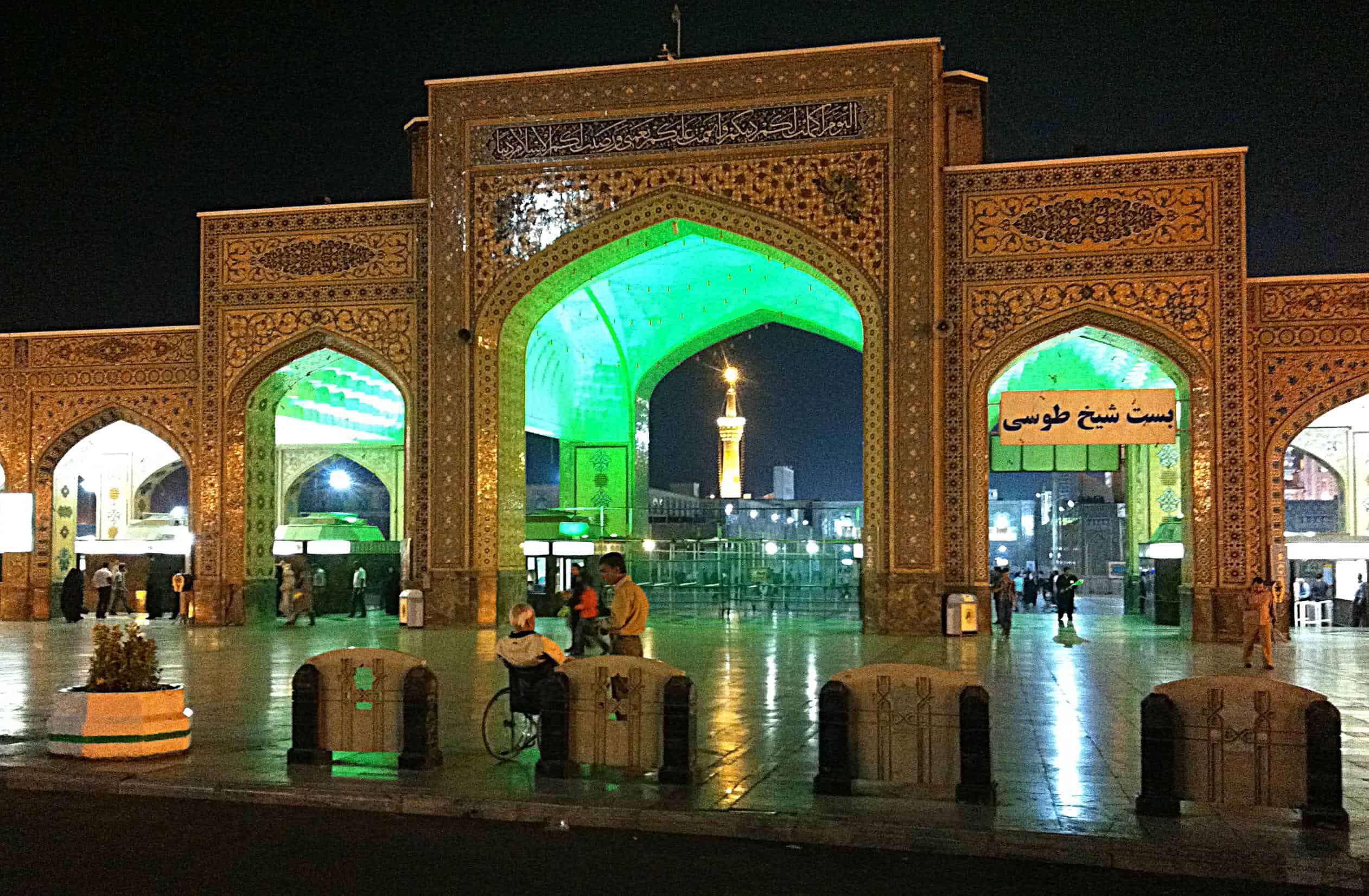
Iran.
- Average tariff rate on all products: 20.1%
- Tariff rates on non-agricultural and non-fuel products: 12.66%
The current authoritarian Islamic government has been in power ever since the 1979 Iranian Revolution caused by the 1953 Iran coup instigated by the United States in order to keep a U.S.-friendly dictator in power. Since then, the government has maintained high tariffs against many countries that it views as enemies. As a result, it provides substantial state subsidies for domestic companies to make up for the lack of cheap foreign goods, leading to chronic budget deficit issues.
#2 Sudan
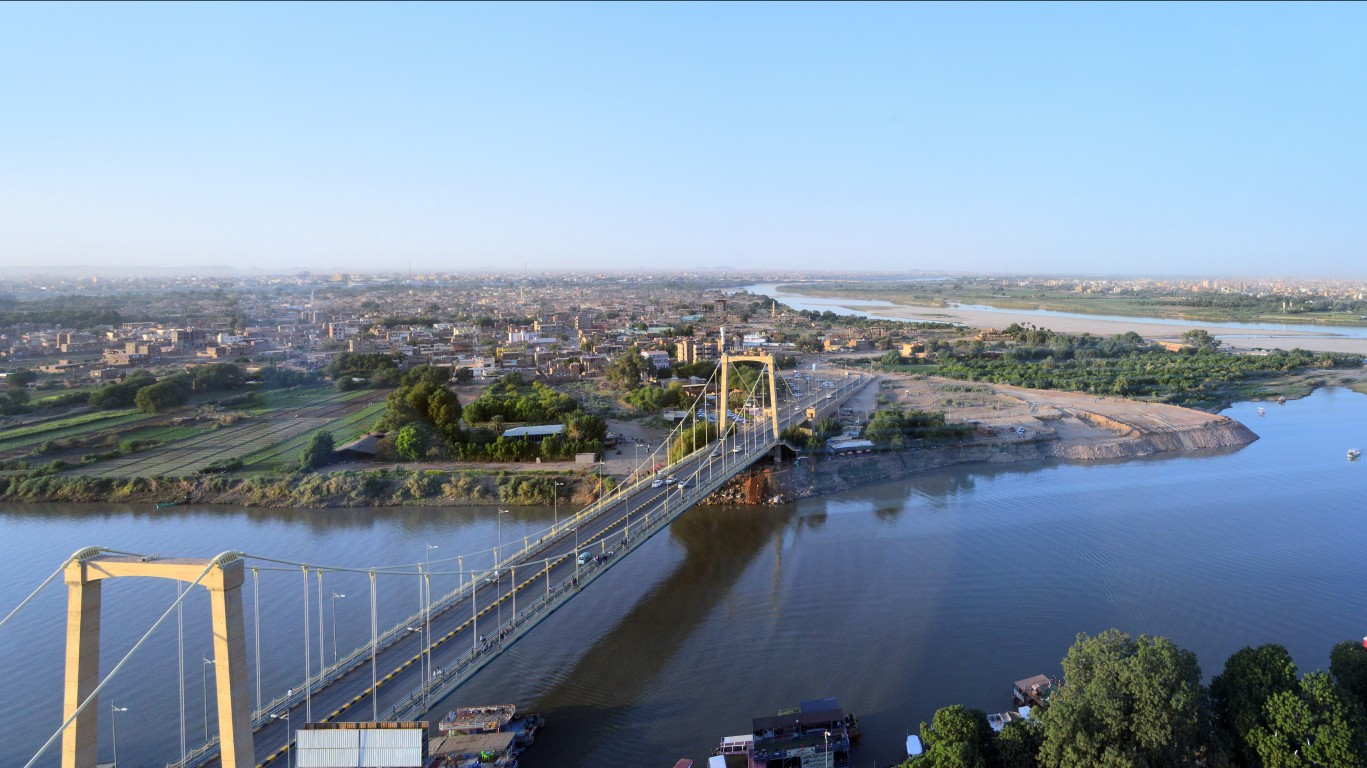
Sudan.
- Average tariff rate on all products: 21.6%
- Tariff rates on non-agricultural and non-fuel products: 0%
Sudan operated under Islamic religious law until 2020 when it finally became a secular state and is the target of numerous international sanctions and self-isolation. It is one of the most corrupt countries in the world and has extensive economic ties with China, which probably contributes to its continues use of high tariffs against other countries.
#1 Bahamas
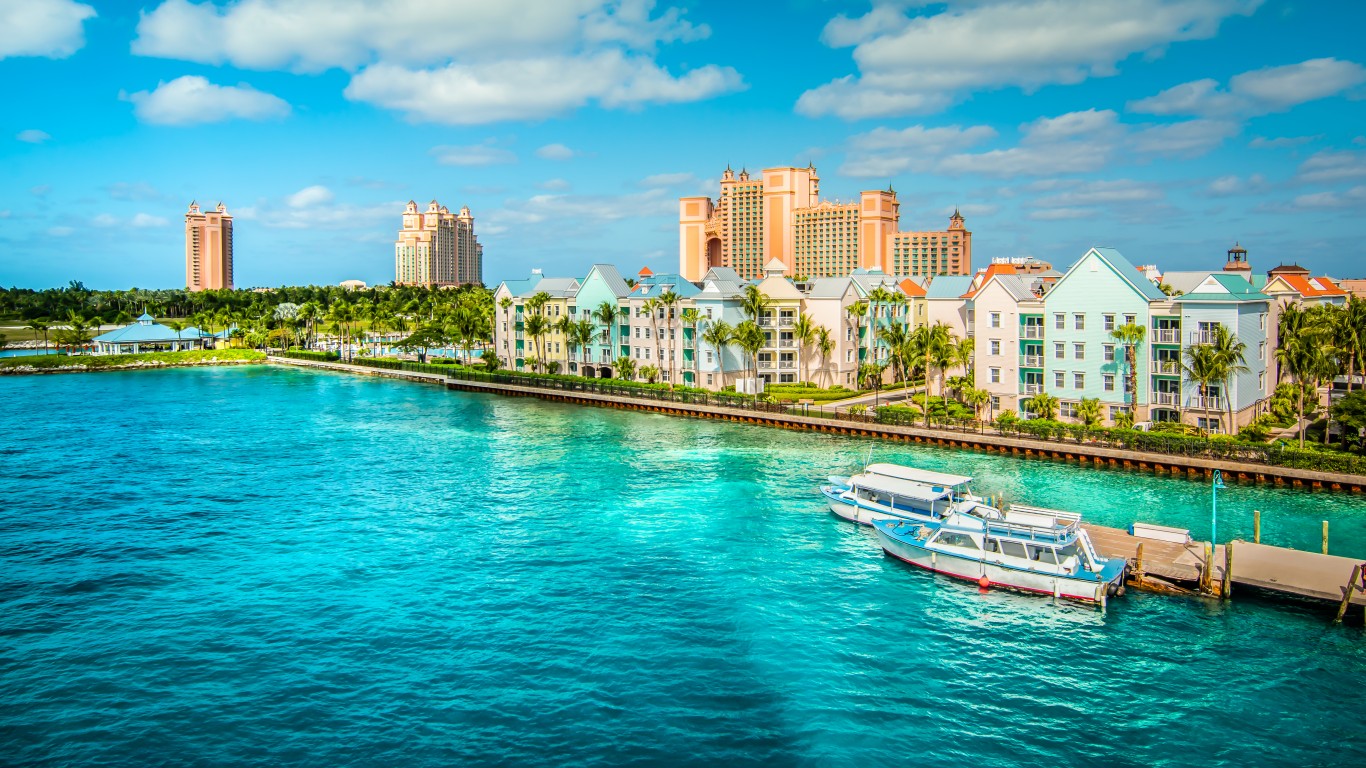
Bahamas.
- Average tariff rate on all products: 32.5%
- Tariff rates on non-agricultural and non-fuel products: 24.75%
Almost the entirety of the economy of the Bahamas is based on tourism and providing offshore, discreet finance services. It currently has the most offshore entities of any country in the world, providing 20% of the budget for the country. Most of the products used in the Bahamas are imported, and a steep tariff schedule means that most government revenue comes from tariffs along with other import fees.









 Top Gaining Stocks
 Top Losing Stocks