A New Wave of Bank Layoffs, With More to Come

Photo of Douglas A. McIntyre
By Douglas A. McIntyre Published
This post may contain links from our sponsors and affiliates, and Flywheel Publishing may receive compensation for actions taken through them.

Two things happened recently in the banking industry. First, The Wall Street Journal reported that JPMorgan Chase & Co. (NYSE: JPM) will fire 5,000. The other was that Moody’s ungraded four of America’s largest banks.

The Moody’s comments about Bank of America Corp. (NYSE: BAC), Morgan Stanley (NYSE: MS), Goldman Sachs Group Inc. (NYSE: GS) and Citigroup Inc. (NYSE: C) centered around their new aversion to risk. The opinions about these companies were posted in an analysis titled “Moody’s Concludes Review of 13 Global Investment Banks’ Rating,” which said:

In light of the new bank rating methodology, Moody’s rating actions on these 13 banking groups generally reflect the following considerations: (1) their “Strong” to “Very Strong -” bank-specific macro profiles ; (2) the banks’ adequate core financial ratios; (3) the negative qualitative adjustments made owing to the groups’ organizational complexity and balance sheet opacity; (4) the protections offered to depositors and senior creditors in the US, EU and Switzerland as assessed by Moody’s Advanced Loss Given Failure (LGF) analysis, reflecting the benefit of instrument volume and subordination protecting creditors from losses in the event of resolution; and (5) the moderate likelihood of government support for the operating companies of most of these banking groups and the low likelihood of such support for their holding companies.

It is a complex way to say that banks are less likely to have severe financial problems than in the past, due in part to the trashing they took during the crisis six years ago.

ALSO READ: 10 Stock to Own for the Next Decade

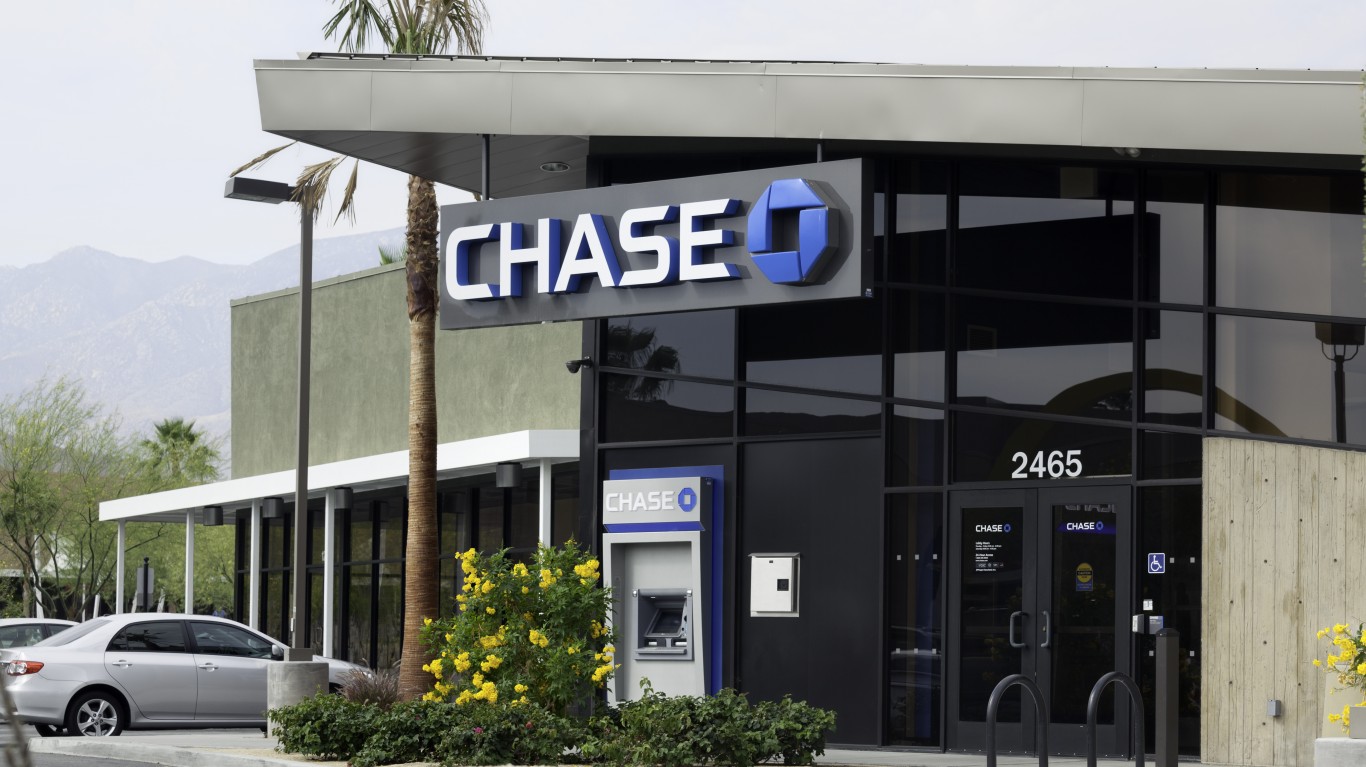
The JPMorgan layoffs are more about efficiency and less about risk. The Wall Street Journal report says that branch closings and Internet banking have made its expense levels for retail banking less onerous. Chase shares the problem of huge retail outlets with other banks, although purely investment banks do how have that problem.

The fact is that branches, particularly those with low customer traffic, have become anchor-like expenses. Mortgage applications can be done online. So can auto loans, deposits and bill payment. America’s largest banks have thousands of branches among them. Many of those locations are doomed, along with the people who work at them.

The reason JPMorgan Chase has moved aggressively to cut its retail employment is part of an industry trend that eventually will kill tens of thousands of jobs.


Photo of Douglas A. McIntyre
About the Author Douglas A. McIntyre →

Douglas A. McIntyre is the co-founder, chief executive officer and editor in chief of 24/7 Wall St. and 24/7 Tempo. He has held these jobs since 2006.

McIntyre has written thousands of articles for 24/7 Wall St. He is an expert on corporate finance, the automotive industry, media companies and international finance. He has edited articles on national demographics, sports, personal income and travel.

His work has been quoted or mentioned in The New York Times, The Wall Street Journal, Los Angeles Times, The Washington Post, NBC News, Time, The New Yorker, HuffPost USA Today, Business Insider, Yahoo, AOL, MarketWatch, The Atlantic, Bloomberg, New York Post, Chicago Tribune, Forbes, The Guardian and many other major publications. McIntyre has been a guest on CNBC, the BBC and television and radio stations across the country.

A magna cum laude graduate of Harvard College, McIntyre also was president of The Harvard Advocate. Founded in 1866, the Advocate is the oldest college publication in the United States.

TheStreet.com, Comps.com and Edgar Online are some of the public companies for which McIntyre served on the board of directors. He was a Vicinity Corporation board member when the company was sold to Microsoft in 2002. He served on the audit committees of some of these companies.

McIntyre has been the CEO of FutureSource, a provider of trading terminals and news to commodities and futures traders. He was president of Switchboard, the online phone directory company. He served as chairman and CEO of On2 Technologies, the video compression company that provided video compression software for Adobe’s Flash. Google bought On2 in 2009.

Featured Reads

Our top personal finance-related articles today. Your wallet will thank you later.

Continue Reading

Top Gaining Stocks

CBOE Vol: 1,568,143
PSKY Vol: 12,285,993
STX Vol: 7,378,346
ORCL Vol: 26,317,675
DDOG Vol: 6,247,779

Top Losing Stocks

LKQ
LKQ Vol: 4,367,433
CLX Vol: 13,260,523
SYK Vol: 4,519,455
MHK Vol: 1,859,865
AMGN Vol: 3,818,618