Can German Auto Companies Keep Competitive Their Advantage?

Photo of Douglas A. McIntyre
By Douglas A. McIntyre Published
This post may contain links from our sponsors and affiliates, and Flywheel Publishing may receive compensation for actions taken through them.

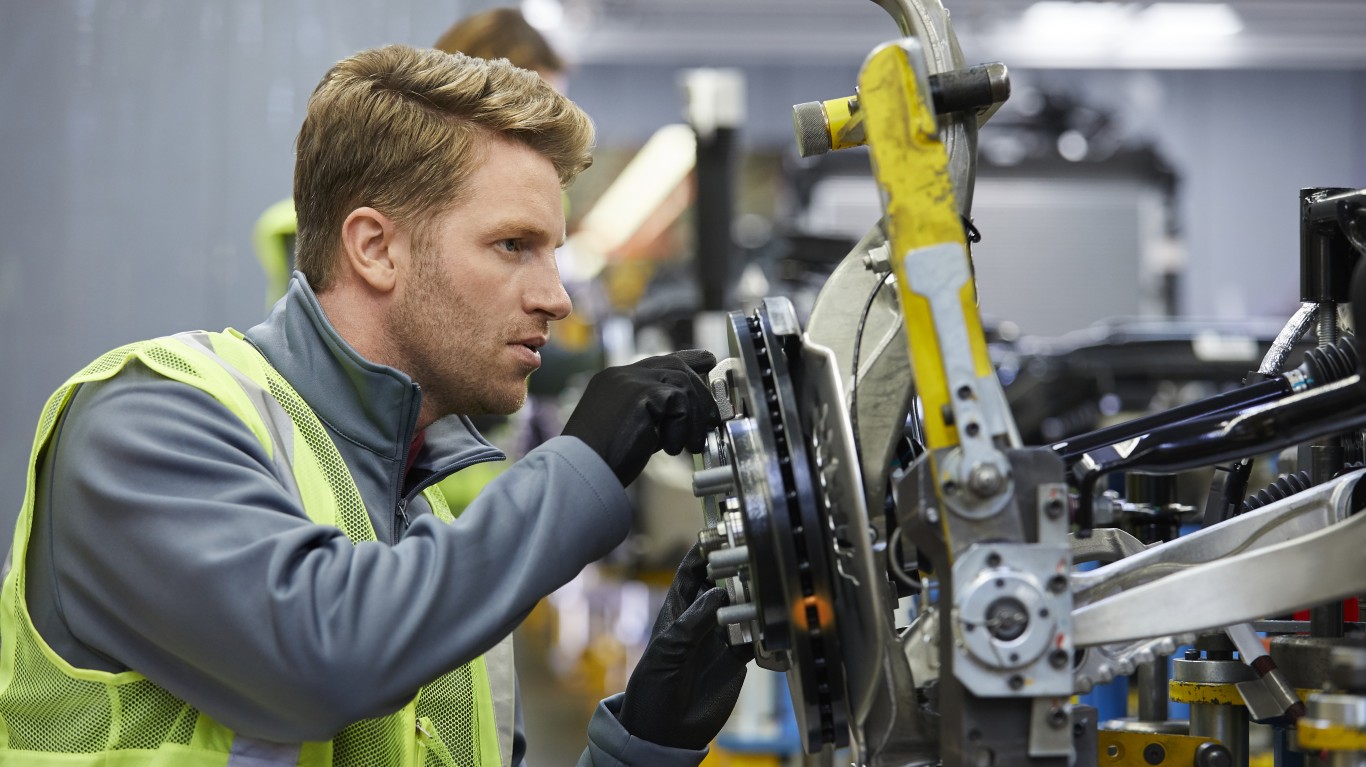
Germany auto workers are not low paid by the standards of almost any other auto workers in the world. That may not matter as much as it does in other nations. German luxury cars have high profits because of high sticker prices. Volkswagen has huge production facilities, which aid efficient labor forces, because it is the largest car company in Europe. However, recent increases in worker pay could catch up to the margins of these Germany companies, robbing them of their efficiencies and profits.

VW workers have just gotten large raises. According to Reuters:

Salaries of workers at VW’s six western German factories and the financial services division will be raised by 3.4 percent from September, followed by another 2.2 percent increase from July 2014, VW said.

That is a significant set of raises in an economy where inflation is nearly nonexistent.

German car companies have moved further down the path that robbed the U.S. industry of profits, and it has started to do the same in Japan, which was once a relatively low-cost producer. The relatively lower costs of labor at Toyota Motor Corp. (NYSE: TM) and Honda Motor Co. Ltd. (NYSE: HMC) helped it swamp the American market with high-quality Japanese cars with modest sticker prices some 30 years ago. Japanese car workers eventually agitated for better wages, particularly based on how well their parent companies did. The Japanese manufacturers lost much of their financial advantage

High labor costs at U.S. car companies where driven as the UAW became more powerful and was able to milk better hourly wages and extravagant benefits from General Motors Co. (NYSE: GM), Ford Motor Co. (NYSE: F) and Chrysler. These contracts where not undermined, in many cases, until the Chapter 11 filings of GM and Chrysler

Even with the recovery of the U.S. car industry, American workers have not gotten as many jobs back as they might have as sales increase. These auto manufacturers wisely have moved some of their production to Mexico, which remains a market in which assembly line workers make very little compared to those in developed nations.

VW has been unable to hold the line on worker pay and may regret that soon, particularly as car sales falter in Europe. This is a situation not unlike the one the American car companies faced in 2008 and 2009 as a recession and high labor costs killed the U.S. industry.


Photo of Douglas A. McIntyre
About the Author Douglas A. McIntyre →

Douglas A. McIntyre is the co-founder, chief executive officer and editor in chief of 24/7 Wall St. and 24/7 Tempo. He has held these jobs since 2006.

McIntyre has written thousands of articles for 24/7 Wall St. He is an expert on corporate finance, the automotive industry, media companies and international finance. He has edited articles on national demographics, sports, personal income and travel.

His work has been quoted or mentioned in The New York Times, The Wall Street Journal, Los Angeles Times, The Washington Post, NBC News, Time, The New Yorker, HuffPost USA Today, Business Insider, Yahoo, AOL, MarketWatch, The Atlantic, Bloomberg, New York Post, Chicago Tribune, Forbes, The Guardian and many other major publications. McIntyre has been a guest on CNBC, the BBC and television and radio stations across the country.

A magna cum laude graduate of Harvard College, McIntyre also was president of The Harvard Advocate. Founded in 1866, the Advocate is the oldest college publication in the United States.

TheStreet.com, Comps.com and Edgar Online are some of the public companies for which McIntyre served on the board of directors. He was a Vicinity Corporation board member when the company was sold to Microsoft in 2002. He served on the audit committees of some of these companies.

McIntyre has been the CEO of FutureSource, a provider of trading terminals and news to commodities and futures traders. He was president of Switchboard, the online phone directory company. He served as chairman and CEO of On2 Technologies, the video compression company that provided video compression software for Adobe’s Flash. Google bought On2 in 2009.

Continue Reading

Top Gaining Stocks

CBOE Vol: 1,568,143
PSKY Vol: 12,285,993
STX Vol: 7,378,346
ORCL Vol: 26,317,675
DDOG Vol: 6,247,779

Top Losing Stocks

LKQ
LKQ Vol: 4,367,433
CLX Vol: 13,260,523
SYK Vol: 4,519,455
MHK Vol: 1,859,865
AMGN Vol: 3,818,618