


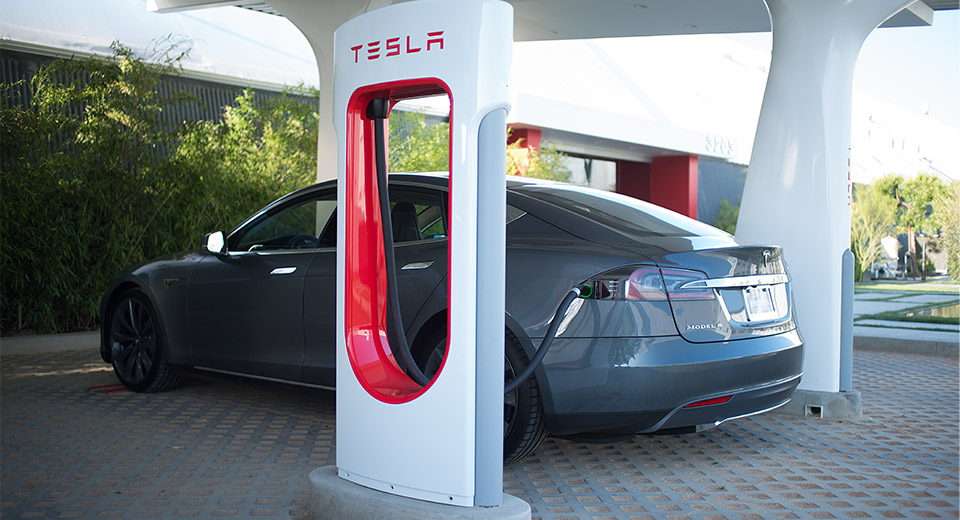
Stocks based on hope more than fundamentals get hit had when the overall markets sell off. This has been particularly true of Tesla Motors Inc. (NASDAQ: TSLA). Its stock has fallen from $262 to $230 in five days. In one month the stock is down 14%. At the current rate of free fall, the shares could breach $200 on the way down.
Tesla disappointed Wall Street two months ago with the disclosure it would not sell 55,000 cars this year as previously forecast. The number may be as low as 50,000. Shares collapsed 10% then. Tesla cannot afford a disappointing encore next year.
And Wall Street sees risk measured in instability. The primary reasons it is hard to forecast Tesla sales are 1) it will have two models for sale in 2016 instead of the one model it sells now, and 2) there is an ongoing concern about Tesla’s production timing. These two issues come together in one product, which is the Tesla X sport utility vehicle. In management’s letter to investors for the most recent quarter, founder Elon Musk and Chief Financial Officer Deepak Ahuja wrote:
As we prepare to launch Model X in September, we are building more validation vehicles, executing final engineering and testing work, enabling our new manufacturing equipment and finalizing arrangements with our suppliers. We have been producing release candidate Model X bodies in our new body shop equipped with more than 500 robots as we fine-tune and validate our production processes.
This means Tesla still has a great deal of work to do in just a few weeks to hit the Model X launch date. If it cannot, investors will calculate that the forecasts for the company to sell 300 cars a day next year are shaky.
While there is not a great deal of public analysis of how Tesla’s sales will increase over the next several years, Tesla management claims its Gigafactory will produce 500,000 vehicles per year in the “latter part of the decade.” But what about 2016? And experts who have predictions based on a belief of Musk’s view of Tesla’s prospects know they rely on wildly popularity demand for the Model X. That means it would need to be a bigger sales draw than the Model S. If it is, and production capacity can come near meeting demand next year, the electric car company should sell 300 cars a day. But, the margin for error is thin. Musk was not clear about why the company will not hit 2015 forecasts. If demand is strong then the constraint in production has to be the impediment. Right now, a fully functioning, fully completed Gigafactory is dream.
Production problems are not unique to Tesla. The industry in general has not perfected matching production with demand. Case in point, Ford Motor Co. (NYSE: F) continues to miss its production target for the best-selling vehicle in the United States, the F-150 pickup. That means, after more than a century since its founding, the second largest car company in America has harmed itself by missing dates. A young, small car company, with much less experience in production management, can do just a poorly as a large one when it comes to timing of production.
However, Tesla’s biggest enemy is not itself. Every major company in the world would like to have its own versions of Tesla models. Right now, the largest manufacturers are playing catch up. One of them, at least, will match the Tesla formula in the next few years. Tesla’s goal of reaching sales levels close to 500,000 a year will start to boil down to direct competition.
There is nothing of substance to keep Tesla from selling 300 cars a day next year, if it can launch a new model on time, and then can build it in volume.
ALSO READ: Are Ford and GM the New Fannie Mae and Freddie Mac?







 Top Gaining Stocks
 Top Losing Stocks