


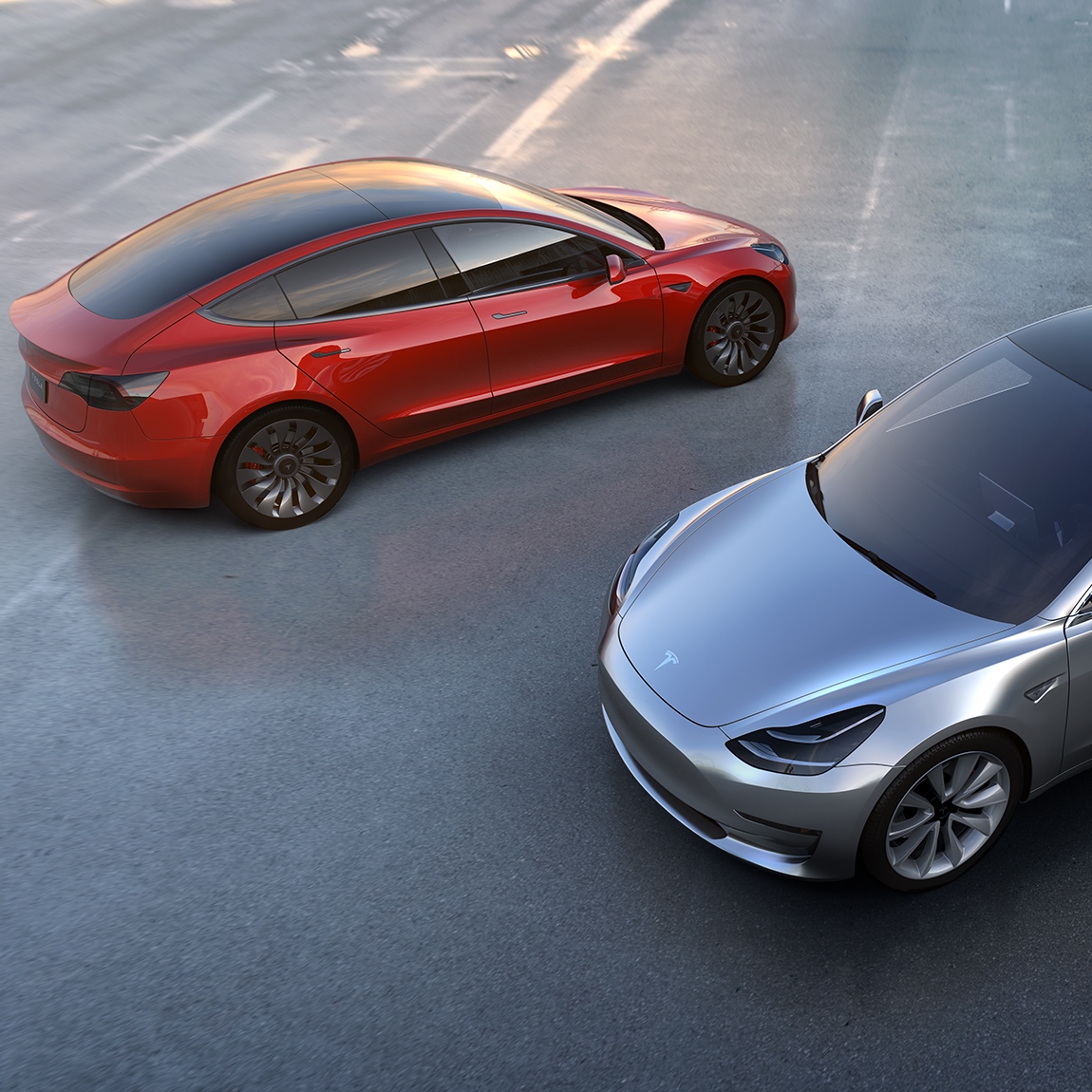
Tesla Inc. (NASDAQ: TSLA) is delivering the first 30 of its new Model 3 sedans Friday to much fuss and fanfare. The company has received some 500,000 orders for the new car, along with a refundable deposit of $1,000 with each order.
The company has said it will ramp production of the Model 3 to 20,000 units by December. That’s like going from 0 to 60 mph in less than 2.3 seconds. But the Tesla Model S P100D achieved that earlier this year, making it the first production car ever to post that kind of acceleration. Tesla’s goal is a production rate of 500,000 vehicles a year by the end of 2018.
Does that mean anything is possible for the pioneering car company?
Karl Bauer of Kelley Blue Book noted:
The rate of the Model 3’s production ramp up has never been accomplished, even by high-volume automakers with far more experience. The Model 3’s durability testing is less extensive than any previous high-volume vehicle. And Tesla’s ratio of dealers and service centers to support half-a-million annual sales has never before been attempted. [Tesla CEO Elon] Musk’s fans already see him as genius inventor Tony Stark. A year from now, if he hits the goal and is selling half-a-million cars to overwhelmingly satisfied customers, even the skeptics might dub him Iron Man.
[nativounit]
The Model 3’s success will not be in how fast it moves from 0 to 60 mph but in how successful the company can be selling an all-electric car with a range of 215 miles priced at $35,000.
If the company makes a great product and those first buyers are highly satisfied with the Model 3, word-of-mouth advertising could keep the orders rolling in.
But to meet the demand — which should grow not only for the Model 3, but for competitors like the Chevy Bolt and other all-electrics either on the market or on their way — a supply chain for battery production is critical.
Tesla’s Nevada Gigafactory will be capable of producing 50,000 megawatts of battery packs by 2020, if all goes according to schedule. If a 60 kWh battery pack is the standard for a Model 3, the Gigafactory could supply enough batteries to meet that demand, but more of the factories would be needed to supply what Tesla hopes would be swelling demand for the cars.
In other words, building the chassis and body and electronics is one thing. Keeping up with the Fords and GMs of the world in those areas is not the big problem. The big problem is building enough battery packs to support growing production volume.
And all this growth is sure to take piles and piles of cash. That’s not an insurmountable problem, provided that Tesla comes out of the blocks hard and keeps delivering a top-notch product at ever growing volumes.
[wallst_email_signup]





 Top Gaining Stocks
 Top Losing Stocks