


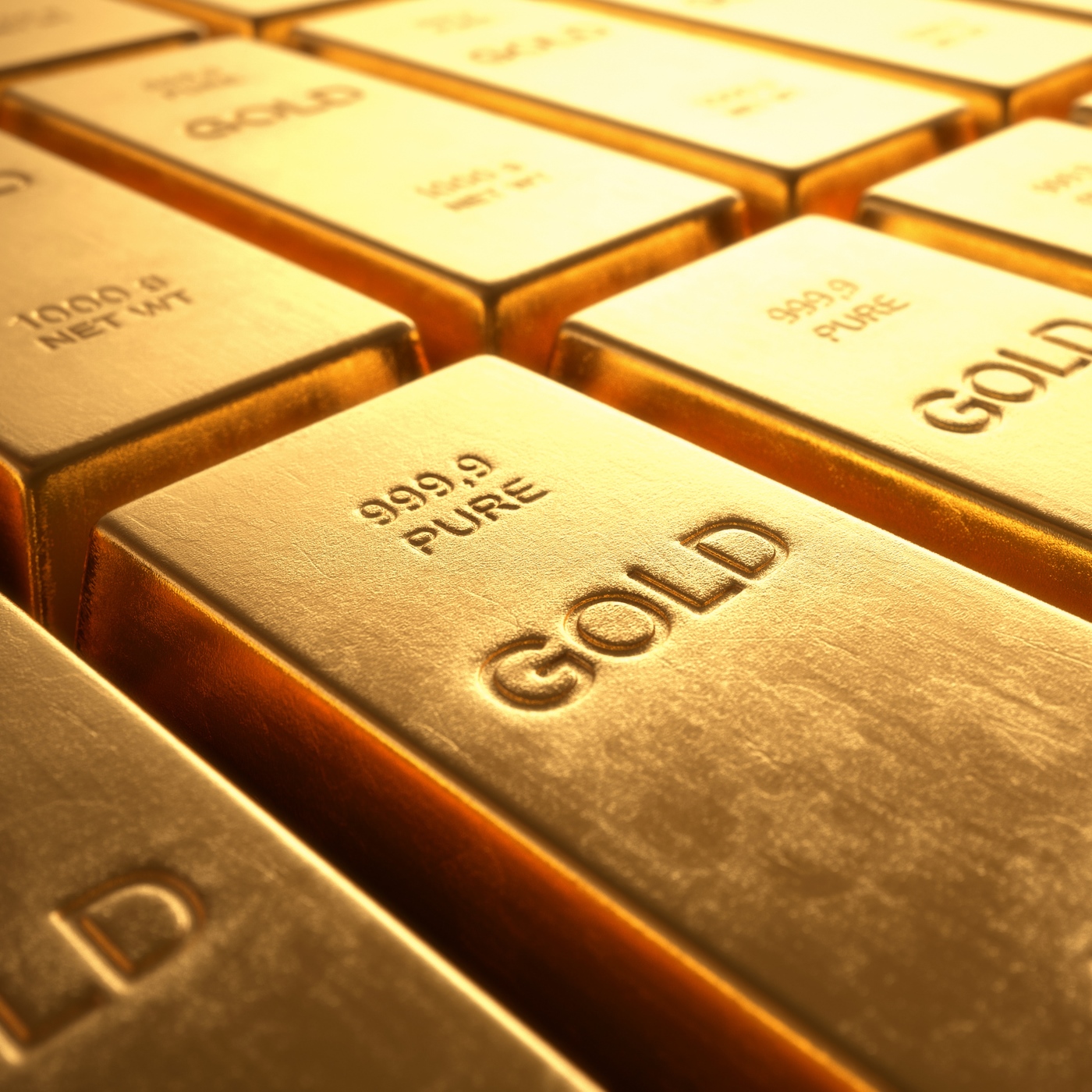
If you see gold prices up close to $1,300 per ounce, it’s probably a good bet that demand for the shiny yellow metal has been strong. And the price of gold is up over 10% in dollar terms so far in 2017. Would you believe that world gold demand trends, and even new gold supply, were lower in the third quarter of 2017?
The World Gold Council, which pretty much has a vested interest in being bullish on gold, released its third-quarter global demand trends report. The organization showed that the third quarter of 2017 experienced a 9% year-over-year drop in gold demand. Year-to-date demand was similarly weak, down by 12%. The World Gold Council saw global demand as 915 tonnes during the third quarter.
There are still some bright spots in gold. Investors and central banks have seen different directions, and there have been some push-pull trends from technology and jewelry.
While overall demand is down, it appears that investors and speculator exchange traded funds (ETFs) had another quarter of positive inflows. That being said, the 18.9 tonnes bought by ETFs in the third quarter compares to the 144.3 tonnes demand in the third quarter of 2016. Gold bars and coins investment rose by 17% to 222.3 tonnes, but the World Gold Council said that this demand was from a low base.
[nativounit]
The World Gold Council showed that inflows into gold-backed ETFs stalled and that gold bar and coin growth was driven by China. The report said:
Investors continued to favor gold’s risk-hedging properties, but the greater focus was on surging stock markets. … Global investment demand for bars and coins rose by 17%, from relatively weak year-earlier levels. Mainland investors bought on price dips, clocking up a fourth consecutive quarter of growth.
If you use general supply and demand trends to make for a fair market price from your economics class, then maybe supply constraints kept gold prices from falling. The World Gold Council said that total supply dropped by 2% in the third quarter. Its report showed that overall mine production was lower at the same time that there was lower recycling activity:
- Mine production was down 1% and saw the fifth consecutive quarter of net de-hedging. Mine production was still shown to be at a record year to date, but declines were seen in mining in China, Tanzania and Burkino Faso. Gains were seen in Canada, Argentina and Suriname.
- Recycling was down 6%, this was cited as a continued normalization after surging in 2016. Europe and the Middle East were the biggest drivers of the year-over-year decline in recycling, noting issues in the United Kingdom, Egypt and Turkey.
An area still suffering weakness is in jewelry, with the drop in demand here accounting for 17 tonnes of the entire decline. A relatively weak quarter in India, due to tax and regulatory changes, was cited as the main reason for the annualized decline in gold demand for jewelry.
Technology users have reversed their prior trends of lower gold demand. This marked the fourth consecutive quarter of higher technology demand (citing LEDs and smartphone 3D sensors).
[recirclink id=424629]
Central banks remain a bright spot when it comes to buying gold. The world’s central banks netted purchases of 111 tonnes of gold, and that was up 25% from the third quarter of 2016. Russia, Turkey and Kazakhstan were shown to have remained the dominant buyers, with more than 90% of the total central bank gains. This was broken out as follows for the third quarter of 2017:
- Russia was the largest buyer, accumulating 63 tonnes for a grand total holding of 1,778.9 tonnes. Year to date, Russia’s gold reserves have gone up almost 164 tonnes.
- Turkey was the second largest central bank purchaser of gold, buying 30.4 tonnes. Turkey’s reserves (outside of commercial bank holdings) rose to 167.4 tonnes, and this is said to be more than 50 tonnes higher than just at end of April.
- Kazakhstan was the third largest central bank buyer of gold by adding 10.3 tonnes. Its central bank has now increased gold reserves each month for the past five years, accumulating some 185.3 tonnes.
- Other central banks increasing their gold reserves were Qatar (3.1 tonnes), Kyrgyz Republic (1.3 tonnes), Indonesia (1.2 tonnes) and Mongolia (0.4 tonnes).
- Germany sold 0.4 tonnes for its coin-minting program, and declines were seen from Tajikistan (−1.3 tonnes) and Malaysia (−0.6 tonnes).
The third quarter is already in the rear-view mirror and has been for well over a month now. That being said, gold was last seen trading up 0.5% at $1,287.65 per ounce on Thursday. Gold reached as high as $1,350 for a brief period at the start of September, but the price of gold has been in a narrow range of $1,265 to $1,300 for most of the days since the end of the third quarter.
[wallst_email_signup]







 Top Gaining Stocks
 Top Losing Stocks