The US Postal Service Tries to Save Itself With Higher Prices

Photo of Douglas A. McIntyre
By Douglas A. McIntyre Updated Published
This post may contain links from our sponsors and affiliates, and Flywheel Publishing may receive compensation for actions taken through them.
The US Postal Service Tries to Save Itself With Higher Prices

© Thinkstock

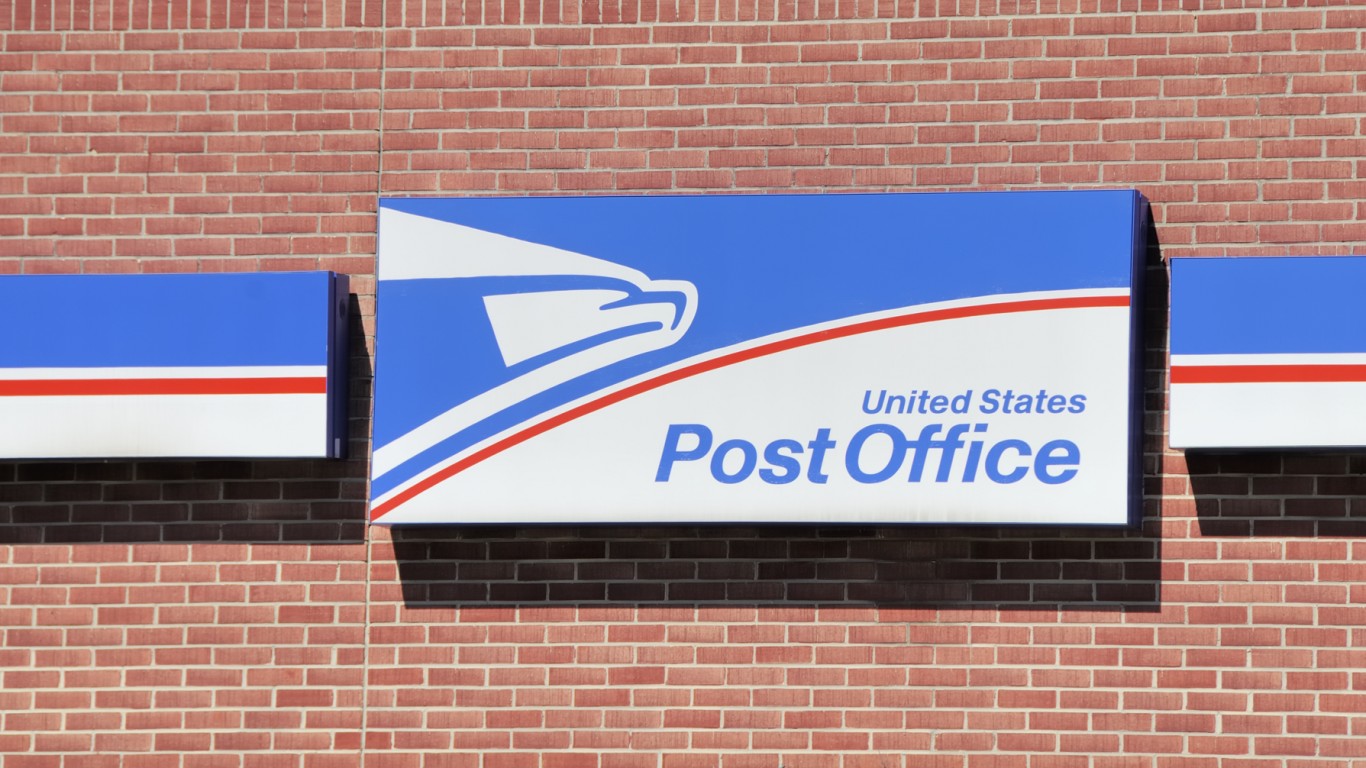
The United States Postal Service (USPS) continues to be plagued by high labor costs and an increasing irrelevance. Now it hopes a stamp price increase will help offset these problems. But its troubles are too deep.

The organization announced:

The proposed prices, approved by the Governors of the Postal Service, would raise Mailing Services product prices approximately 2.5 percent. Shipping Services price increases vary by product. For example, Priority Mail Express will increase 3.9 percent and Priority Mail will increase 5.9 percent. Although Mailing Services price increases are based on the Consumer Price Index (CPI), Shipping Services prices are primarily adjusted according to market conditions. The Governors believe these new rates will keep the Postal Service competitive while providing the agency with needed revenue.

If favorably reviewed by the PRC, the new prices will include a 5-cent increase in the price of a First-Class Mail Forever stamp, from 50 cents to 55 cents. The single-piece additional ounce price will be reduced to 15 cents, so a 2-ounce stamped letter, such as a typical wedding invitation, will cost less to mail, decreasing from 71 cents to 70 cents.

[nativounit]

The new prices are scheduled to take effect on January 27, 2019. In theory, the Postal Regulatory Commission could turn them down.

When the USPS released its fiscal third-quarter results, (April 1, 2018, to June 30, 2018), it showed revenue was up 2.4% to $17.1 billion. However, it had a net loss of $1.5 billion, compared to a loss of $2.1 billion in the year-ago quarter.

The USPS supports an army of people and vehicles. This included 503,103 career employees in 2017 and a non-career employees count of 141,021. It also supports 30,825 USPS-managed retail post offices. Critics claim that it does not need nearly this many locations. Critics also claim there is no reason for letters and packages to be delivered each day, that service could be cut to three days a week with little harm to customer service.

Raising rates, particularly with a business model under siege by email, electronic delivery of documents and rival package delivery services, will do very little to change the USPS’s fate.

[wallst_email_signup]

Photo of Douglas A. McIntyre
About the Author Douglas A. McIntyre →

Douglas A. McIntyre is the co-founder, chief executive officer and editor in chief of 24/7 Wall St. and 24/7 Tempo. He has held these jobs since 2006.

McIntyre has written thousands of articles for 24/7 Wall St. He is an expert on corporate finance, the automotive industry, media companies and international finance. He has edited articles on national demographics, sports, personal income and travel.

His work has been quoted or mentioned in The New York Times, The Wall Street Journal, Los Angeles Times, The Washington Post, NBC News, Time, The New Yorker, HuffPost USA Today, Business Insider, Yahoo, AOL, MarketWatch, The Atlantic, Bloomberg, New York Post, Chicago Tribune, Forbes, The Guardian and many other major publications. McIntyre has been a guest on CNBC, the BBC and television and radio stations across the country.

A magna cum laude graduate of Harvard College, McIntyre also was president of The Harvard Advocate. Founded in 1866, the Advocate is the oldest college publication in the United States.

TheStreet.com, Comps.com and Edgar Online are some of the public companies for which McIntyre served on the board of directors. He was a Vicinity Corporation board member when the company was sold to Microsoft in 2002. He served on the audit committees of some of these companies.

McIntyre has been the CEO of FutureSource, a provider of trading terminals and news to commodities and futures traders. He was president of Switchboard, the online phone directory company. He served as chairman and CEO of On2 Technologies, the video compression company that provided video compression software for Adobe’s Flash. Google bought On2 in 2009.

Featured Reads

Our top personal finance-related articles today. Your wallet will thank you later.

Continue Reading

Top Gaining Stocks

CBOE Vol: 1,568,143
PSKY Vol: 12,285,993
STX Vol: 7,378,346
ORCL Vol: 26,317,675
DDOG Vol: 6,247,779

Top Losing Stocks

LKQ
LKQ Vol: 4,367,433
CLX Vol: 13,260,523
SYK Vol: 4,519,455
MHK Vol: 1,859,865
AMGN Vol: 3,818,618