


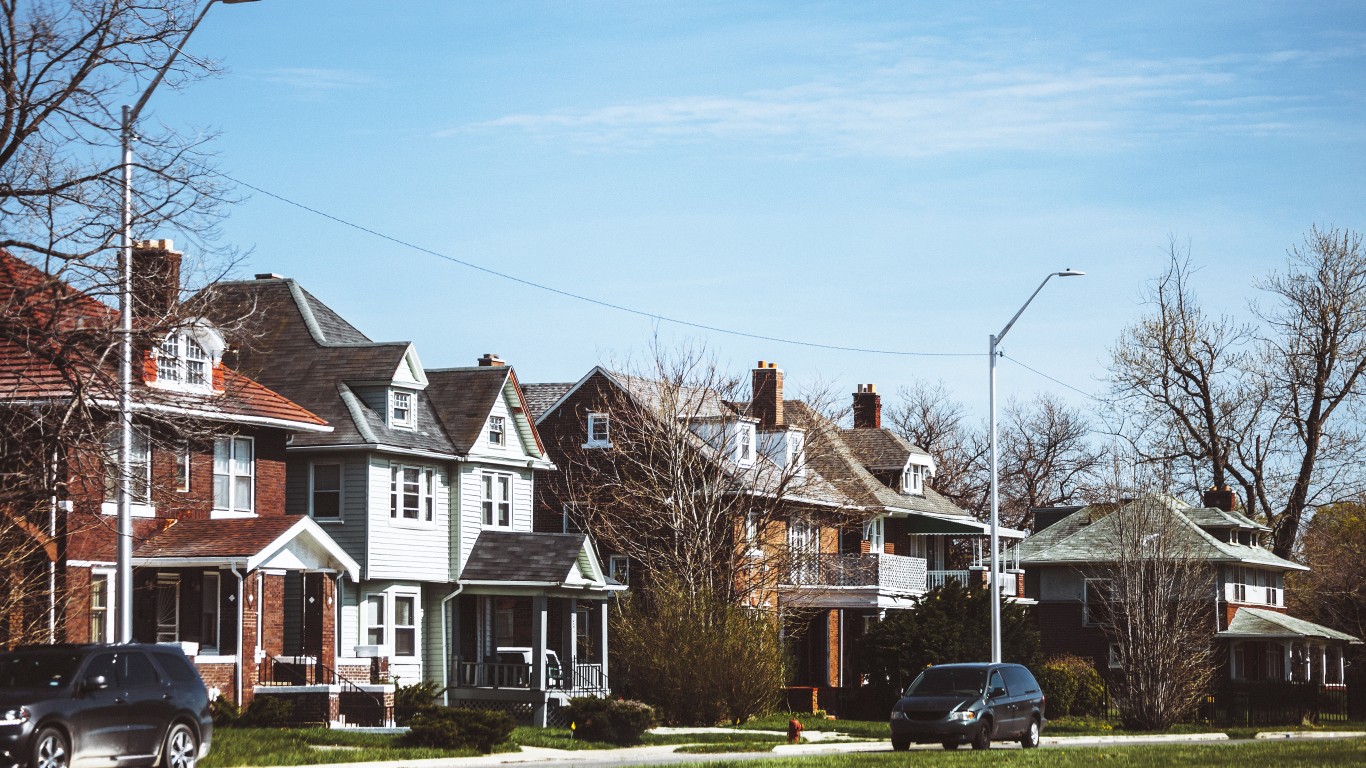
 Rumor has it that several auctioneers collapsed from exhaustion during the four-day process of selling 9,000 homes and properties which have been seized by tax collectors in Wayne Country, Michigan. Detroit sits inside the borders of the Wayne Country and the old Polish borough of Hamtramck rests inside Detroit like Vatican City does Rome. There are a few higher-income enclaves in Detroit, like Gross Pointe, and their populations shrink by the day.
The Detroit newspapers and national news services covered the property auction with great interest. Chronicling the fall of The Motor City has been great sport for the media. Magazine publisher Time,Inc., which itself has fallen on extremely hard times, bought a house in Detroit and it operates its “Assignment Detroit” out of the building. The project has allowed the publishing giant to send journalists and photographers from Time Fortune, Money, and Sports Illustrated around the city to tell the story of its last days as a viable American metropolis.
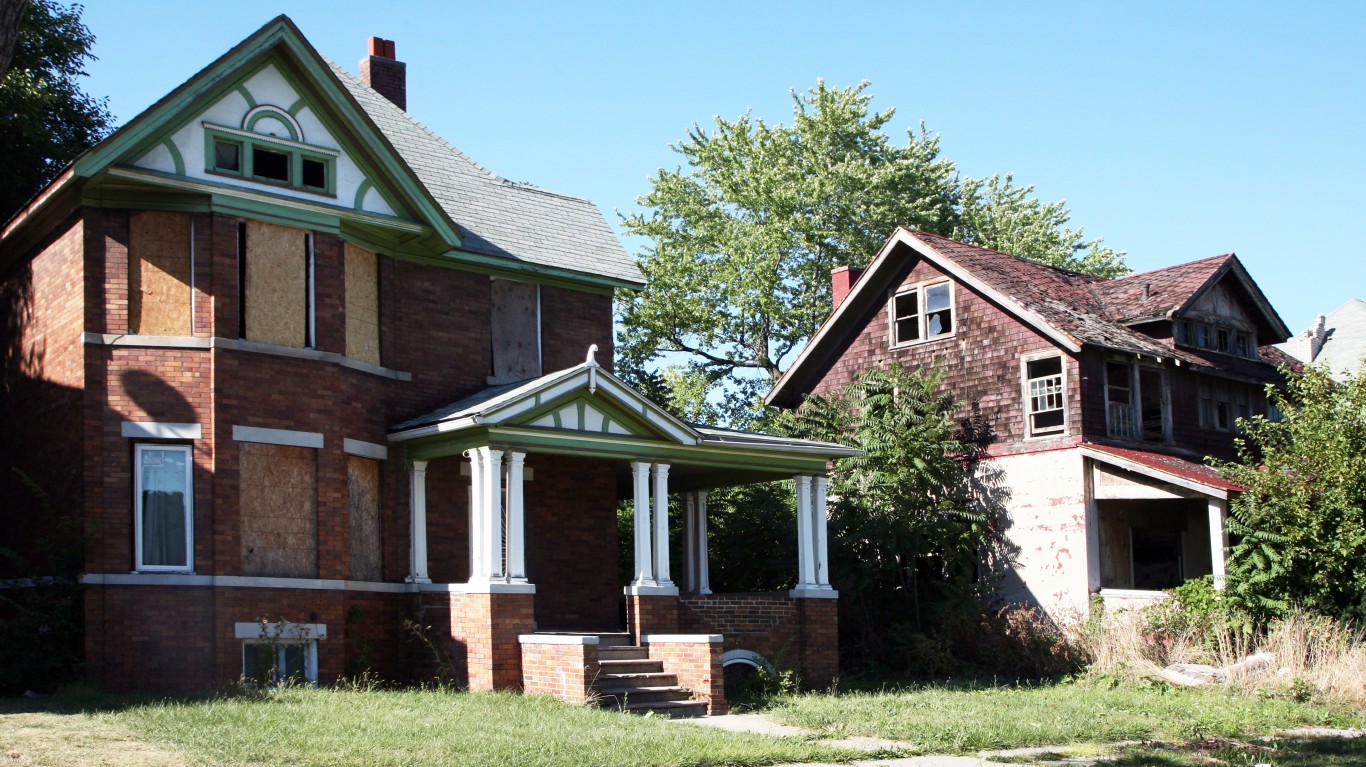
The dozens of reporters who watched the Wayne Country auction saw that less than 20% of the properties were sold, despite a minimum bid of $500. No one wants to live in most areas of Detroit even if they get the homes for free. A homeowner might find himself in a neighborhood where no one occupies a house within a ten block radius. It would be both a lonely and a dangerous way to live.
Reuters reported that all the property for sale, if it was to be combined into one parcel, would be the size of Central Part. It is an ironic comparison since the land under Central Park may be the most valuable real estate anywhere in the world. An auction of Central Park would probably bring in more money than the value of all the real estate in Michigan with enough to buy recession-ravaged Rhode Island as well.
The media fascination with the crumbling of the old industrial cities and states may have shed some light on the plight of the regions, but the exposure has not done the regions any good. When the media leaves Wayne County, there will still be 7,000 properties that went unsold during the auction. No one has come up with a government program to solve the matter. An $8,000 first-time home buyer tax credit will not solve Detroit’s problem or those of other troubled cities like Merced, California where real estate values are down 38% in one year.
Certainly, the federal government has not admitted that there are large parts of the economic and financial disasters of the last two years that it cannot fix. Instead, Congress and the Administration have given into the temptation, a bear trap for politicians, that it is best to tell citizens that there is no problem so severe or intractable that the government cannot solve it. Some people and property have to be abandoned and some situations must resolve on their own. The omnipotence of the government, if it ever did exist, does not exist now.
As the federal debt grows, and it is supposed to hit its mandated cap of $12.1 trillion later this month, the illusion continues to exist that there is enough money for everything and that no child, jobless person, or elderly American will be left behind. No matter how much politicians wish it or hope it or say it to keep the support of their voters, it is not true. There is some young person dying of cancer without health insurance somewhere in America. There are many people like this and the government can not afford to ease all the nation’s suffering.
Many economists think the federal debt will go over $20 trillion within a decade and at that point it will reach a level of 100% of GDP. The figure it is not only extraordinarily large; it is so big that the nation would need everyone to be employed and making $100,000 a year to get receipts large enough to pay it off before most currently middle-aged Americans are dead.
The lessons of Detroit are mostly too old now to be worth repeating: one city that bet its entire fortune on one industry and that industry was then either badly managed, unlucky, or both. Detroit’s problem was made much worse by a recession that magnified almost every fault in the economy by several times what it would have been in robust economic times. And, finally, it became a city so deserted, dangerous, devastated and dirty that houses there cannot even be given away for free.
Detroit has been entirely abandoned by the federal government. It is not a sin particularly nor will anyone in high office admit it. And, Detroit is not the last place or program that the government will have to leave behind. The statement that there is not enough rescue money to go around does not even begin to describe it.








 Top Gaining Stocks
 Top Losing Stocks