



With today commemorating one of the darkest and saddest days in the history of the United States, the 9/11 attacks in 2001, it falls this time in a year that has seen some of the most dramatic and impactful changes to society, not only in America, but around the world. The COVID-19 pandemic swept through the world in the first quarter of this year and has changed, at least for now, life as we were all accustomed to in a multitude of ways.
The change has been so radical that long-held views on everything from going out to a sporting event, living in a major metropolitan area or riding on a subway have radically been altered. The question for many is are the predictions for much of this truly a “new normal” or is it just a temporary by-product of the current situation we are in as a result of the pandemic?
[in-text-ad]
The global team at Jefferies has conducted a wide-ranging global survey. In a new and fascinating report, they said this about how the survey was conducted:
We surveyed over 5,500 consumers in 11 countries: USA, China, Japan, the UK, France, Italy, Germany, Spain, Hong Kong, India and Australia. We asked over 50 questions, covering health, employment, attitudes to government policy, spending habits, personal investments and more. There are implications for most sectors and we used questions from our April Survey to measure the extent to which anticipated behavioural shifts have stuck.
[nativounit]
The report also noted this when discussing the reaction of those who took part in the survey:
Humanity remains optimistic: two-thirds of respondents still think the crisis might be good for us, changing the way we do things; the same proportion think companies have acted responsibly. Three-quarters agree that we must think of the common good, only marginally down after four months in which people have had to put that admirable sentiment into practice. More cautiously, the virus still worries over 80% of people at a personal level and levels of concern about household financial positions remain elevated in Europe. Covid fatigue does show in lower confidence that governments are taking the right steps, and this has fallen most in the UK.
As we have noted before here at 24/7 Wall Street, the new work-from-home implications will forever change how corporate America views employees working in home offices. One thing is for sure, given the technology advances, it is a very good thing the coronavirus surfaced this year and not in say 2000, as our ability to work with associates, teleview presentations and meetings remotely was almost nonexistent then.
The analysts noted this about the new 21st-century workplace:
There are fascinating insights regarding prior and future working-from-home plans: on average consumers expect to WFH an extra half day per week, but given how many cannot choose to WFH at all, office-type workers seem likely to do a whole extra day a week at home. If that proves true, the consequences for city transport and office space, among others, could be severe
Jefferies has six surprises from the exhaustive survey, and six predictions, all of which may loom large for the future.
Surprises:
1) Half of US and European respondents still don’t feel happy booking a 2021 holiday.
2) More than 20% of people who went to bars and restaurants pre-crisis have not been post crisis.
3) Doing chores in your saved commute time is as popular a choice in Europe as entertainment, health or sleep.
4) When we do commute, the car is the most popular incremental mode, while ride-sharing is the least
5) Only 30% of employers have a plan to return to work by year-end 2020, while European and Asian employees are more willing to return immediately than US workers.
6) 40% of consumers say that they have done more do-it-yourself in lockdown, and nearly six in ten intend to keep the habit.
Predictions:
1) Healthy living becomes like wearing a seat-belt.
2) The house is a castle.
3) Public transport: public enemy.
4) The stands are empty, the armchairs are full.
5) Eating in: the new going out.
6) Business as virtual.
The predictions are hardly earth-shattering, as they basically reflect many of the situations and changes that most Americans and others around the world are already facing and adapting to. With that noted, the structural changes that will happen as a result of the pandemic could have a profound effect on our world and citizens for years to come.
[recirclink id=737162]
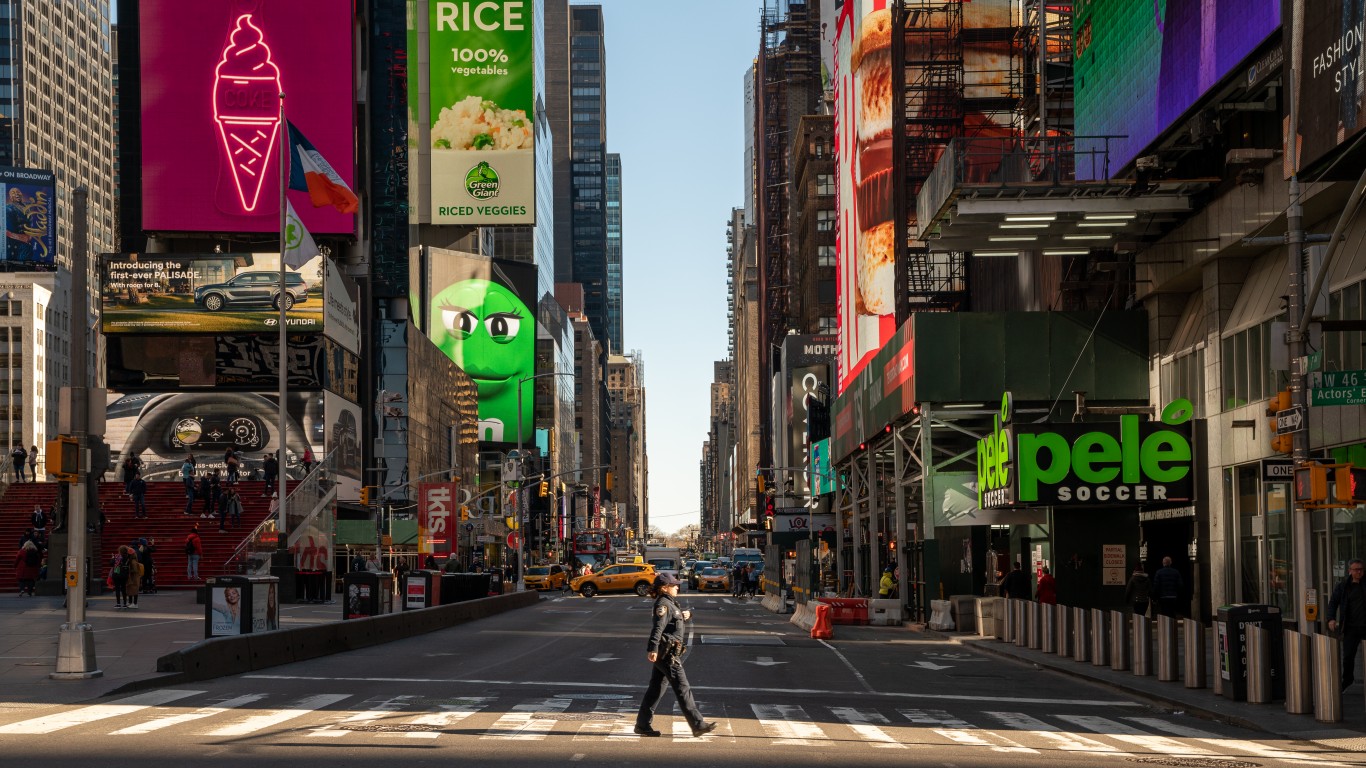
In one stark example of the future for big cities where people live on top of each other, the number of empty rental apartments in Manhattan nearly tripled compared with last year, according to a report from Douglas Elliman and Miller Samuel. The inventory of empty units, which rose to 15,000 in August, compared with 5,600 a year ago, is the largest since data started being collected 14 years ago, the report said. Hopes for a rebound in the fall or the end of 2020 look increasingly unlikely.
That is just one major city. It’s pretty obvious by the massive increase in new and previously owned homes purchases that many are saying goodbye to urban life. That is just one of the dramatic changes, and there will surely be many more. However, it appears very possible that many positives will come out of this. On a larger scale, and as a whole for a global society, that could prove to be a very positive situation, especially when a successful vaccine is introduced.
[wallst_email_signup]









 Top Gaining Stocks
 Top Losing Stocks