


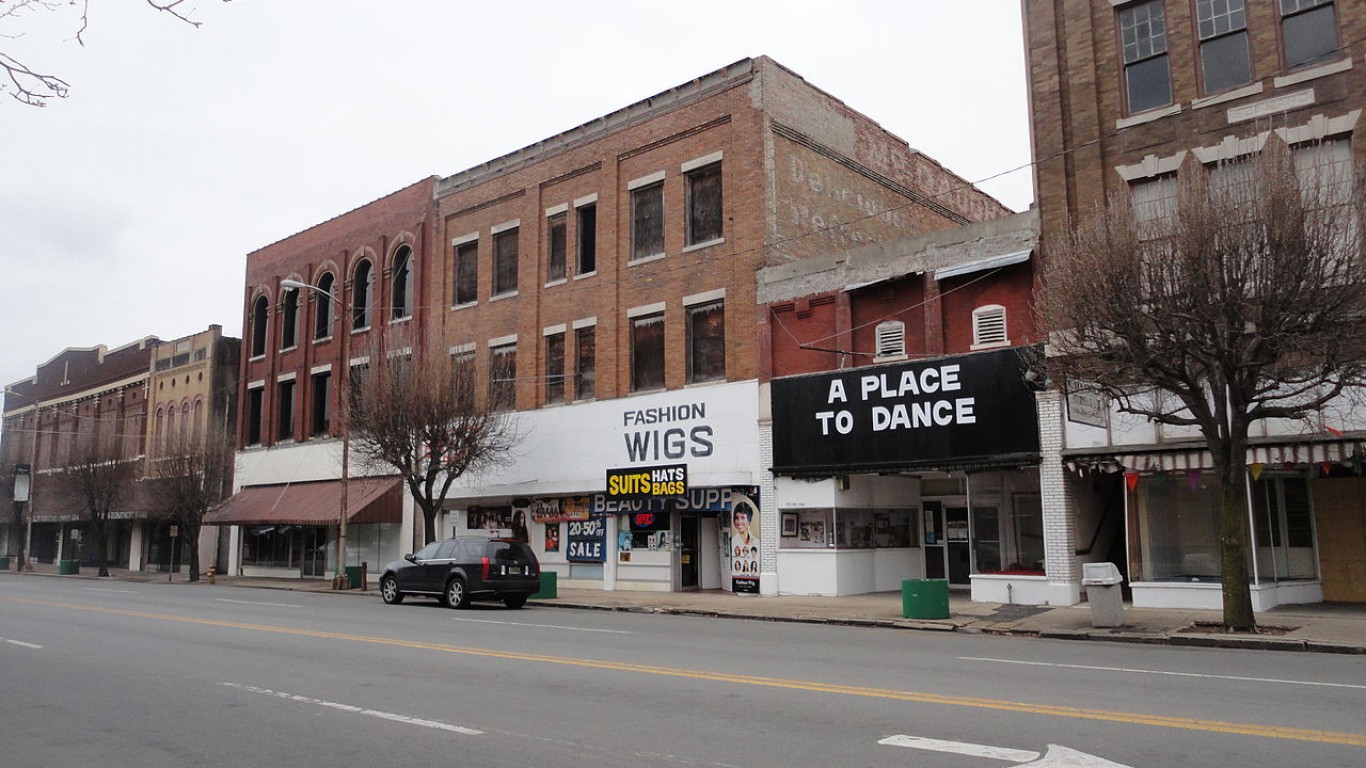
Population growth has slowed in the United States in recent years. The U.S. population increased by just 0.48% from 2018 to 328.2 million people in 2019, the slowest growth in a century. While the national population grew, many places actually lost a significant share of their populations, mostly to residents moving away.
Dozens of major metropolitan areas across the country saw their populations contract by at least 4%. While some of the declines were through natural changes (births minus deaths), the majority were due to net migration, as many more residents packed up their belongings and moved away than moved to the area.
To determine America’s fastest shrinking city, 24/7 Wall St. reviewed data from the U.S. Census Bureau’s Population and Housing Estimates Program to find the metropolitan statistical areas that lost the largest percentage of their total population from July 1, 2010, to July 1, 2019.
Shrinking metro areas tend to struggle economically. Of the 26 metro areas that were finalists for the fastest shrinking city, just one has a 2019 median household income greater than the U.S. median of $65,712, and just three have a 2019 poverty rate lower than the national rate of 12.3%. Residents often leave economically depressed areas in search of better jobs and higher incomes.
[nativounit]
Most of the metro areas that are finalists for the fastest shrinking city are in the Rust Belt region. In this part of the Midwest, the economy once relied on manufacturing, but it has struggled as those jobs have dwindled. Many people have abandoned the region, moving south to areas with lower taxes, friendlier business climates and more economic opportunities.
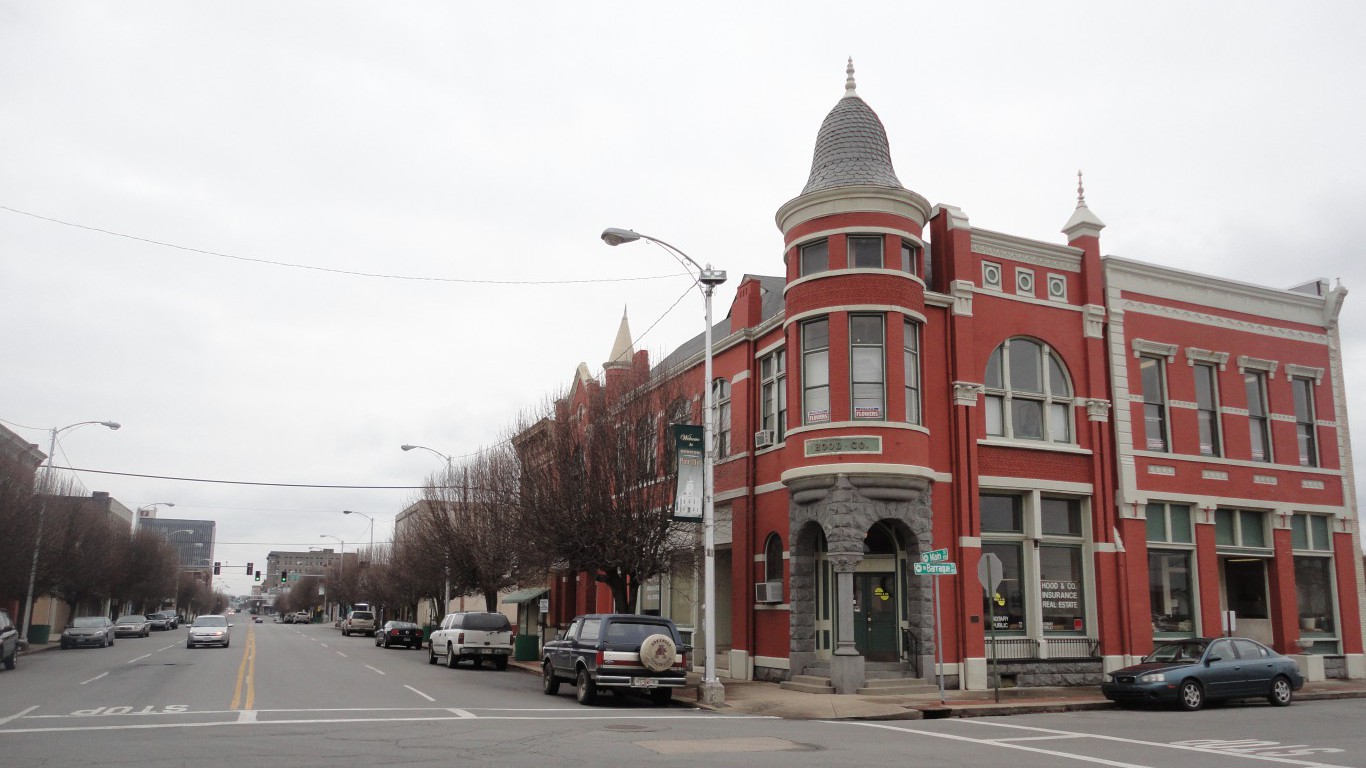
The Pine Bluff, Arkansas, metro area is by far the fastest shrinking place in America, losing 12.4% of its population from 2010 to 2019. No other place lost even a 10th of its population in that decade. Even though Pine Bluff had more births than deaths during the decade, its population declined from over 100,000 to less than 88,000, as many more people moved away from the area than moved to it.
As is the case in virtually every other city on this list, Pine Bluff is struggling economically. Its median household income for 2019 was just $41,541, about $24,000 lower than the U.S. median. Its poverty rate of 23.6% is also the sixth highest in the nation. Even though incomes increased by 24.2% from 2010 to 2019, the poverty rate climbed by 1.2 percentage points, even as the U.S. rate declined by 3.0 percentage points.
To determine America’s fastest shrinking cities, 24/7 Wall St. reviewed data from the U.S. Census Bureau’s Population and Housing Estimates Program. Metropolitan statistical areas were ranked based on the percentage change in total population from July 1, 2010, to July 1, 2019. Data on population change due to natural change (the net difference between births and deaths) and to net migration also came from the Census Bureau. Supplemental data on median household income came from the Census Bureau’s 2019 American Community Survey. Data on annual unemployment rate and employment changes came from the Bureau of Labor Statistics. These data are from before the COVID-19 pandemic.
Click here to see America’s fastest shrinking cities.
[wallst_email_signup]










 Top Gaining Stocks
 Top Losing Stocks