Economy’s Huge Slowdown Expected by Goldman Sachs

Photo of Douglas A. McIntyre
By Douglas A. McIntyre Published

Quick Read

  • Goldman Sachs is pessimistic about the prospects for gross domestic product growth in 2025.

  • Tariffs are expected to hamper the economy, likely causing a recession.

This post may contain links from our sponsors and affiliates, and Flywheel Publishing may receive compensation for actions taken through them.
Economy’s Huge Slowdown Expected by Goldman Sachs

© Kwangmoozaa / iStock via Getty Images

After years of healthy growth, which began during the COVID-19 pandemic, Goldman Sachs expects only a 1% increase in the 2025 gross domestic product (GDP). The analysis covers the period from Q4 2024 to Q4 2025. If the figure is accurate, the United States might narrowly dodge recession. Even if that happens, Goldman says unemployment will rise to 4.5% and inflation to 3.5%. Goldman’s pessimism is driven by an expectation of the effects of tariffs.

Consumer demand causes a drop in GDP and lowers business capital investments. Access to loans gets harder, and company earnings drop. Consumer spending accounts for about 75% of GDP.

The consumer has already signaled caution. According to the University of Michigan Survey of Consumers, its index fell to 57.8 in March, down 10.5% from February. Joanne Hsu, the survey’s director, said. “Consumers from all three political affiliations are in agreement that the outlook has weakened since February.” She blamed Washington’s quick pace of change in economic policies.

A Tariff-Driven Recession?

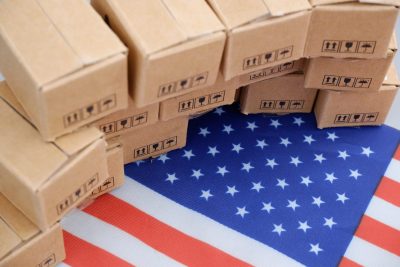
PeopleImages / Getty Images

Worry that tariffs will hamper the economy and cause a recession.

Nearly every forecast about GDP and the consumer rests on the effects of tariffs. Most economists believe they will drive inflation, and, in some industries, this inflation will be large. One recent study of car prices showed the average price of a new car will jump by 6%. A tariff on oil will increase gasoline prices. A tariff on timber will increase the price of building houses. Nations may impose tariffs on U.S. goods in response, making them more expensive and stunting their growth overseas.

GDP growth of 1% means the economy is at risk of going into recession. Recessions almost always cause a sharp drop in stock prices. These declines cause people who own stocks to become much more cautious about spending money. As they become cautious, their buying patterns often harm GDP growth.

A tariff-driven recession depends on how broad and large the tariffs are. The Trump administration says its plan is for them to be highly aggressive. That will hamper the economy, and Goldman Sachs thinks it knows how much.

Consumer Confidence Crash? Why People Are Still Nervous About the Economy

Photo of Douglas A. McIntyre
About the Author Douglas A. McIntyre →

Douglas A. McIntyre is the co-founder, chief executive officer and editor in chief of 24/7 Wall St. and 24/7 Tempo. He has held these jobs since 2006.

McIntyre has written thousands of articles for 24/7 Wall St. He is an expert on corporate finance, the automotive industry, media companies and international finance. He has edited articles on national demographics, sports, personal income and travel.

His work has been quoted or mentioned in The New York Times, The Wall Street Journal, Los Angeles Times, The Washington Post, NBC News, Time, The New Yorker, HuffPost USA Today, Business Insider, Yahoo, AOL, MarketWatch, The Atlantic, Bloomberg, New York Post, Chicago Tribune, Forbes, The Guardian and many other major publications. McIntyre has been a guest on CNBC, the BBC and television and radio stations across the country.

A magna cum laude graduate of Harvard College, McIntyre also was president of The Harvard Advocate. Founded in 1866, the Advocate is the oldest college publication in the United States.

TheStreet.com, Comps.com and Edgar Online are some of the public companies for which McIntyre served on the board of directors. He was a Vicinity Corporation board member when the company was sold to Microsoft in 2002. He served on the audit committees of some of these companies.

McIntyre has been the CEO of FutureSource, a provider of trading terminals and news to commodities and futures traders. He was president of Switchboard, the online phone directory company. He served as chairman and CEO of On2 Technologies, the video compression company that provided video compression software for Adobe’s Flash. Google bought On2 in 2009.

Featured Reads

Our top personal finance-related articles today. Your wallet will thank you later.

Continue Reading

Top Gaining Stocks

CBOE Vol: 1,568,143
PSKY Vol: 12,285,993
STX Vol: 7,378,346
ORCL Vol: 26,317,675
DDOG Vol: 6,247,779

Top Losing Stocks

LKQ
LKQ Vol: 4,367,433
CLX Vol: 13,260,523
SYK Vol: 4,519,455
MHK Vol: 1,859,865
AMGN Vol: 3,818,618