


West Texas Intermediate (WTI) crude oil has dropped below $30 a barrel Monday morning as the economic impact of the coronavirus pandemic threatens to chill demand for crude by the most ever. Daily demand could drop by as much as 10 million barrels a day before recovering.
A combination of increased production from Russia and Saudi Arabia coupled with lower demand as businesses temporarily close to help prevent coronavirus from spreading are the forces at work.
Last Friday, Saad Rahim, chief economist at Trafigura, one of the world’s largest crude oil trading houses, said that oil demand could fall by “close to” 10 million barrels a day. That estimate was underscored by IHS Markit vice president and head of oil markets, Jim Burkhard, who told Bloomberg, “The last time that there was a global surplus of this magnitude was never. Prior to this, the largest six-month global surplus this century was 360 million barrels. What is coming will be twice that or more.”
The prior record surplus came in 2015 and 2016, when OPEC opened the taps on production in an effort to drive U.S. shale producers out of the market.
IHS Markit estimates that excess production could range from 4 million to 10 million barrels a day from February to May. Oversupply in March and April could reach 10 million barrels. These estimates refer to the bottom, not the average for the year. Demand is expected to pick up in the second half of the year, but that depends heavily on how long and how deep the coronavirus pandemic turns out to be.
[nativounit]
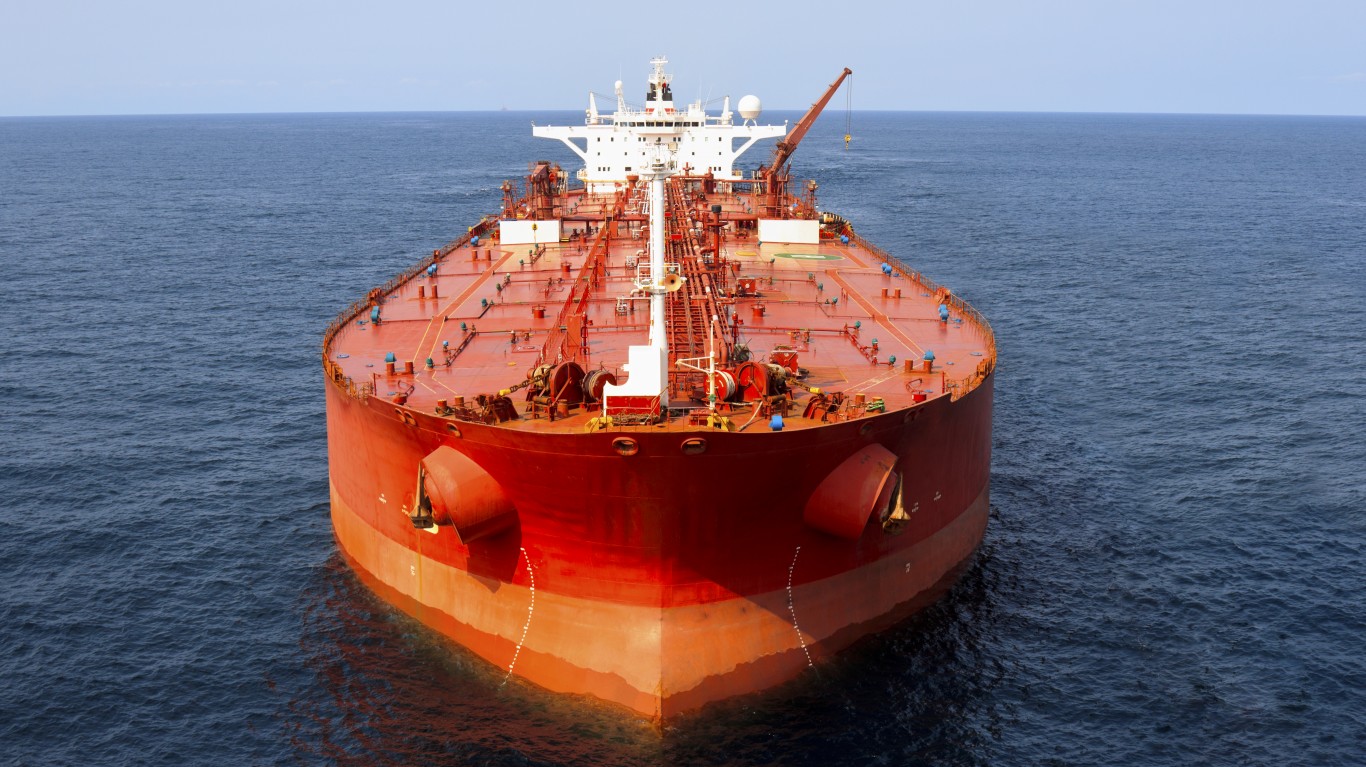
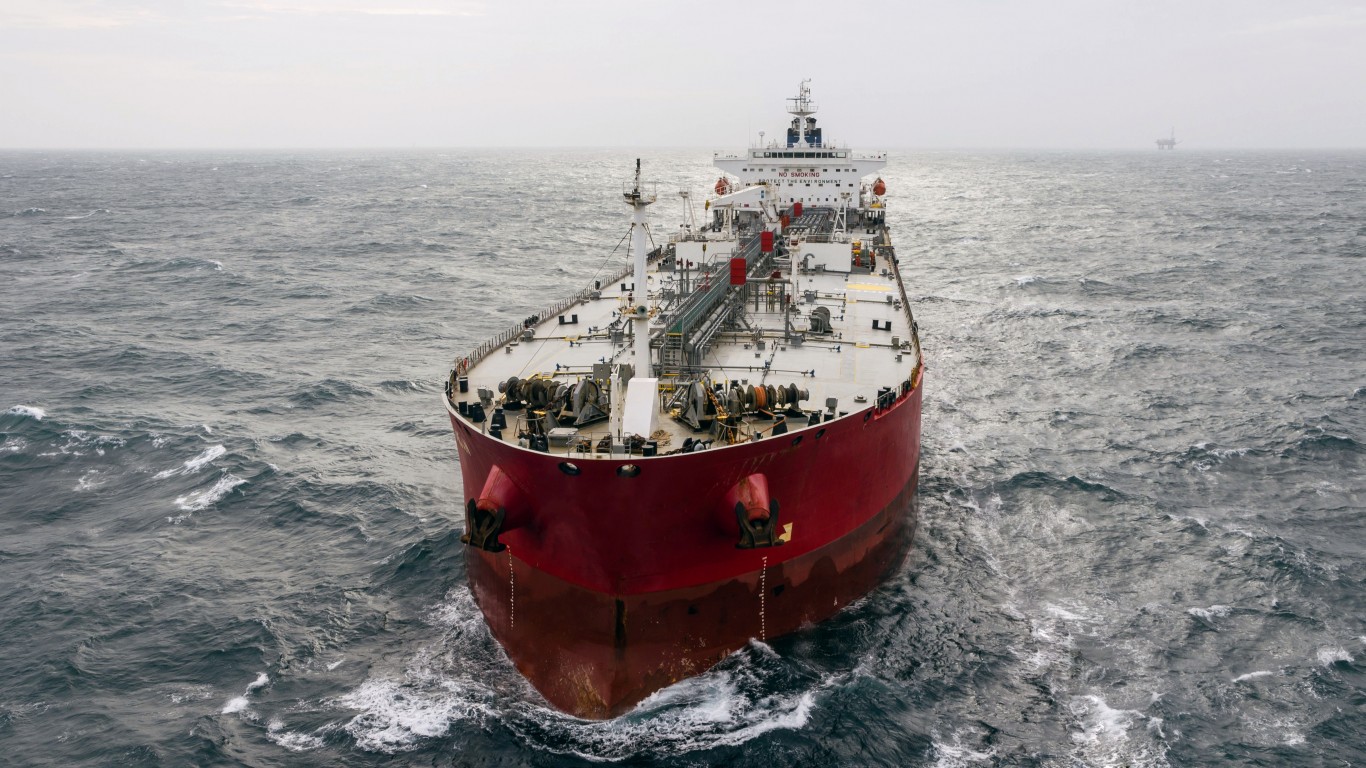
The Saudis are showing no sign of turning off the spigots in response to the coronavirus impact. The country’s tanker firm, Bahri, as of Friday had chartered 15 very-large crude carriers (VLCCs), each capable of carrying 2 million barrels, in addition to Bahri’s own fleet. The company will pay as much as $370,000 a day for the ships, an increase of 12 times the daily rate for routes to Asia. According to Lloyd’s List, 52 VLCCs were chartered last week.
U.S. producers could bear the brunt of the crude surplus for the remainder of this year and next. U.S. output could fall by 2 million to 4 million barrels a day, according to IHS Markit.
These estimates are wiping out the gains that U.S. producers posted last Friday. In early trading Monday, most oil company stocks traded down more than 5%, and one down about 20%.
Pipeline company Plains All American LP (NYSE: PAA) traded down about 20% early Monday, as did exploration and production company Apache Corp. (NYSE: APA).
[recirclink id=652477][wallst_email_signup]









 Top Gaining Stocks
 Top Losing Stocks