


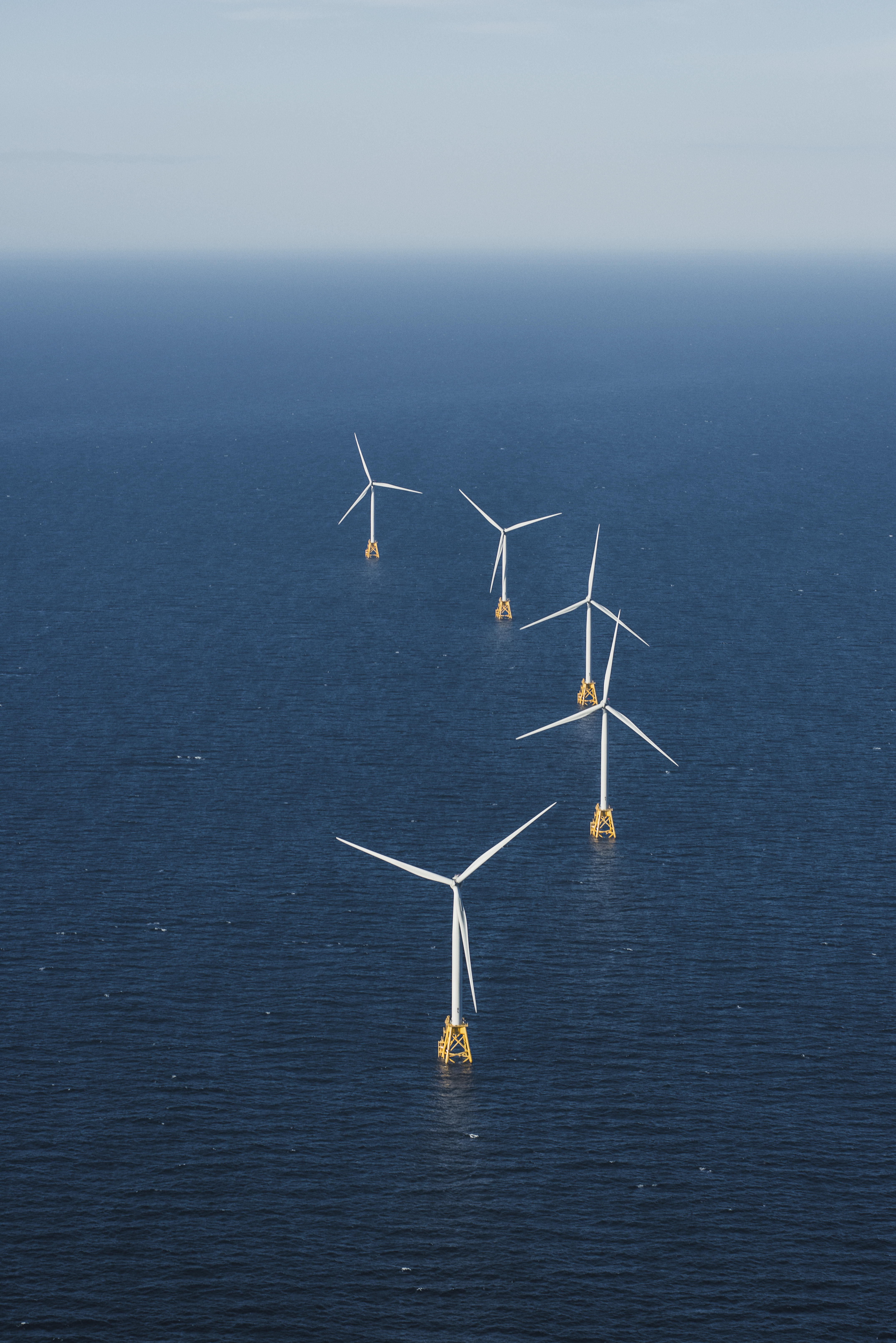
 The US has no offshore wind power generation capability — yet. That could change by the end of this month as US Interior Secretary Ken Salazar has promised a decision on the long-delayed Cape Wind Project proposed for the shallow waters of Nantucket Sound off the Massachusetts coast. The project is designed to install 130 turbines at a cost of more than $1 billion to generate up to 468 megawatts of electricity.
The project has gotten approval from the Environmental Protection Agency and has stood up against a variety of court challenges since it was first proposed in 2001. Some local native American tribes object to the project on religious grounds and other concerns that have been raised include navigation issues for fishermen and ferry boats, historical preservation, and a drop in tourism. The Federal Aviation Administration still needs to weigh in on possible impacts on air travel. Most of these issues have been addressed and not been determined to be sufficient to stop the project.
Ironically, perhaps, Greenpeace and the Sierra Club, among other environmental groups, support construction of the wind farm citing clean energy, efficiency, and moving forward with the federal government’s goal of producing 20% of US energy demand from wind power by 2030, a goal set during the last year of the Bush administration. That’s a 10X increase over current wind generation capacity.
One local resident who does not support Cape Wind is William Koch, one of three sons of the founder of Koch Industries, a privately held company that is estimated to be worth about $100 billion. Koch opposes Cape Wind on aesthetic grounds, but also considers the project to be based on poor economics.
The US supports wind power generation with a production tax credit of $0.021 for every kilowatt-hour produced and an accelerated depreciation schedule. These incentives are often the target of criticism because they appear to tilt the playing field in favor of a technology that is not good enough to stand on its own.
Of course supporters of wind power point to the external costs that US citizens, not power generators, pay as a result of burning hydrocarbons. Putting a price on carbon, through a carbon tax or a cap-and-trade mechanism, more than even out the perceived tilt in favor of wind generation.
A hidden cost of wind power is the cost of building a transmission infrastructure to get the power to consumers. The following map overlays the current electricity grid with the windiest places in the US.
 The northern Plains and the Northern Rockies have the greatest onshore wind potential, but lack required transmission lines. The Atlantic and Pacific coasts and the Great Lakes offer the greatest potential for offshore wind development. The big advantage to offshore development is that the infrastructure either already exists or would be far cheaper to build because the distances involved are just a few miles, not several hundred.
If Secretary Salazar puts his stamp of approval on the Cape Wind project, there are other offshore projects totaling more than 6,300 megawatts in the planning stages. The largest is proposed for Lake Michigan off western Michigan. The $4 billion wind farm would be located just 4 miles offshore the little town of Pentwater, a resort and retirement community where residents worry that the huge farm would push down property values. The energy generated by the wind farm would be put on the regional grid and travel to Detroit and Chicago.
Another group is proposing a $400 million wind farm just offshore of Evanston, Illinois, just north of Chicago. Other states, including Ohio and New York, are assessing the possibilities of developing the wind resources of the Great Lakes.
Wind power development is greatest in the European Union, where about 75,000 megawatts have been installed, representing 9% of the EU’s total capacity. Massive new projects, both onshore and offshore, are planned or under construction in Europe, with the largest being a $2 billion onshore project to install 1,500 megawatts of wind power in Romania.
As an alternative generator of electricity, wind power is the current clear choice to replace coal-fired plants. Wind is cheaper than solar, more ubiquitous than geothermal, and has less of an environmental impact than hydroelectric. It currently costs about $1.75 million to install a megawatt of wind generation, and the turbine price is falling, down 18% in 2009. The price will continue to go down as more capacity is installed and as long as governments continue to work at reducing carbon emissions.
There are several clear benefits to adding more wind power generation in the US, but the going will get more difficult as the benefits of developing wind farms offshore becomes more clear. The ‘Not In My Back Yard’ effect will be loud and strong as shallow-water wind farms encroach on high-value coastal real estate. Counting on 20% of US electricity from wind power in the next 20 years is not a bet that an experienced poker play would likely take.
Paul Ausick





 Top Gaining Stocks
 Top Losing Stocks