The Weakness of Taking Companies Private: The Story of J.C. Penney, BlackBerry, Et Al.

Photo of Douglas A. McIntyre
By Douglas A. McIntyre Updated Published
This post may contain links from our sponsors and affiliates, and Flywheel Publishing may receive compensation for actions taken through them.

The notion of taking companies private is probably as old as the one of taking them public. The first generally takes money from outside shareholders. The other seizes assets back, usually at a bargain much worse than the IPO price.

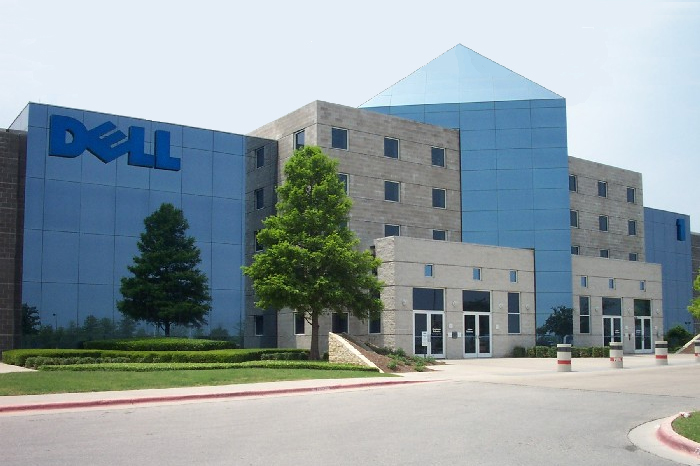
As of now, Dell Inc. (NASDAQ: DELL) and BlackBerry Ltd. (NASDAQ: BBRY) are at various stages of going private (maybe). Add to that list J.C. Penney Co. Inc. (NYSE: JCP), and a longer time ago, Best Buy Co. Inc. (NYSE: BBY). Dell and the founders of BlackBerry and Best Buy might be part of a package, which in theory makes any deal less leveraged. As if that mattered. A bad transaction is a bad transaction, even if it is aided by some amount of financial engineering.

The most popular reason for a “take-private” transaction is that management believes the company they run is misunderstood. Actually, that is a difficult case to make when a public corporation has shares that trade in the tens of millions of shares a day, and are watched like a hawk by analysts. The case that management knows better is a case for the public stupidity of shareholders. Nevertheless, being misunderstood is an excuse management can take to their boards and shareholders.

Dell and Best Buy have the advantages of business models that are temporarily successful, from the foundations of balance sheets, cash flow and some degree of stable revenue. Each will be ruined eventually by advances of rival technology. But neither is at the two-minute warning.

BlackBerry and J.C. Penney each sits in a desperate position, with the larger retailer worse off. A private transaction for either would mean a complete restructuring of balance sheets — to buy time. The time bought in each case would be worthless. The rot of failure already has taken its toll.

Michael Dell’s theory about the company he founded is that, if shielded from the public, it can use all its balance sheet resources to make the business right. The flaw in that is the Dell already has made things so wrong for so many years. Shareholders would be better off rid of him. At the other end of the spectrum, the frenzy of management turmoil at J.C. Penney is like a long Greek play. The end is never in sight until it is well over.


Photo of Douglas A. McIntyre
About the Author Douglas A. McIntyre →

Douglas A. McIntyre is the co-founder, chief executive officer and editor in chief of 24/7 Wall St. and 24/7 Tempo. He has held these jobs since 2006.

McIntyre has written thousands of articles for 24/7 Wall St. He is an expert on corporate finance, the automotive industry, media companies and international finance. He has edited articles on national demographics, sports, personal income and travel.

His work has been quoted or mentioned in The New York Times, The Wall Street Journal, Los Angeles Times, The Washington Post, NBC News, Time, The New Yorker, HuffPost USA Today, Business Insider, Yahoo, AOL, MarketWatch, The Atlantic, Bloomberg, New York Post, Chicago Tribune, Forbes, The Guardian and many other major publications. McIntyre has been a guest on CNBC, the BBC and television and radio stations across the country.

A magna cum laude graduate of Harvard College, McIntyre also was president of The Harvard Advocate. Founded in 1866, the Advocate is the oldest college publication in the United States.

TheStreet.com, Comps.com and Edgar Online are some of the public companies for which McIntyre served on the board of directors. He was a Vicinity Corporation board member when the company was sold to Microsoft in 2002. He served on the audit committees of some of these companies.

McIntyre has been the CEO of FutureSource, a provider of trading terminals and news to commodities and futures traders. He was president of Switchboard, the online phone directory company. He served as chairman and CEO of On2 Technologies, the video compression company that provided video compression software for Adobe’s Flash. Google bought On2 in 2009.

Featured Reads

Our top personal finance-related articles today. Your wallet will thank you later.

Continue Reading

Top Gaining Stocks

CBOE Vol: 1,568,143
PSKY Vol: 12,285,993
STX Vol: 7,378,346
ORCL Vol: 26,317,675
DDOG Vol: 6,247,779

Top Losing Stocks

LKQ
LKQ Vol: 4,367,433
CLX Vol: 13,260,523
SYK Vol: 4,519,455
MHK Vol: 1,859,865
AMGN Vol: 3,818,618