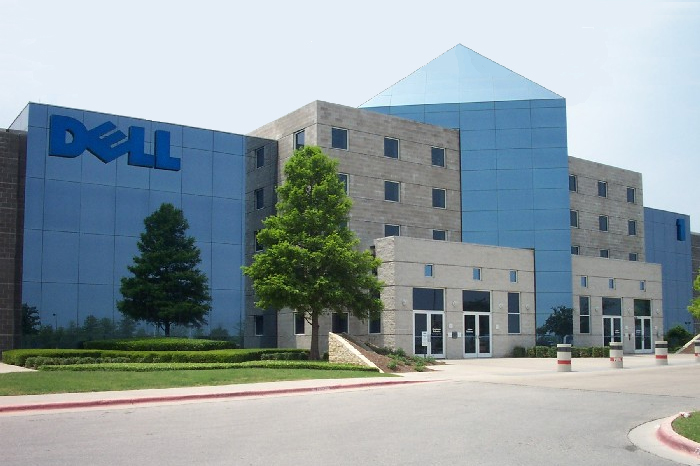
Why a New Dell Buyout?

Photo of Douglas A. McIntyre
By Douglas A. McIntyre Published
This post may contain links from our sponsors and affiliates, and Flywheel Publishing may receive compensation for actions taken through them.

Financial firm Blackstone Group L.P. (NYSE: BX) may make a offer to take Dell Inc. (NASDAQ: DELL) private, an offer that would be higher than one from Michael Dell and Silver Lake. Such a move would be risky, given on the PC firm’s earnings and the future of its major businesses.

A new Dell owner would have several options. The most obvious would be to cut costs through significant layoffs. Or, Dell could sell some of its divisions. The first risks cutting muscle along with fat, particularly because Dell already has had rounds of layoffs. The second risks that an auction of Dell businesses will bring disappointing results.

A new Dell owner could just fire people as sales decline, particularly at its PC division. It is an ages old tactic that sometimes works, if the balance is perfect. Cut too much and a legacy business that could make money for a while, even as its shrinks, could be understaffed. Cut too little and the chance to maintain some level of operating income disappears.

Dell still makes enough money that lower expenses might preserve operating income, but that current operating level may be too low to support a large load of debt. Dell’s net income last year was $2.4 billion, down from $3.5 billion the previous year. Margins at the consumer PC division, which is about a fifth of Dell’s revenue, fell just below zero as the revenue from this operation dropped 20%. That left Dell’s sales to businesses and enterprises to make up some of the revenue. However, enterprise sales face efforts from more successful rivals like Oracle Corp. (NASDAQ: ORCL) and International Business Machines Corp. (NYSE: IBM). Even severely crippled rival Hewlett-Packard Co. (NYSE: HPQ) remains in many of these businesses. HP maybe wounded but it is not dead.

Dell’s other large business is its services division, which has been troubled for several years. Dell has tried to bolster this segment through a frenzy of M&A, the most notable being the purchases of EDS and Perot Systems. The net effects of these transactions were write-downs based on analyses that Dell had paid to much.

With problems at many Dell divisions, it is hard to understand which it could sell for much, unless it wants to jettison the only operations that make substantial money.

Private equity purchases of large public companies generally are based on the idea that a private company can be better run than a public one, even if it is saddled with debt. So little about Dell is attractive that it is impossible to see how that would work.


Photo of Douglas A. McIntyre
About the Author Douglas A. McIntyre →

Douglas A. McIntyre is the co-founder, chief executive officer and editor in chief of 24/7 Wall St. and 24/7 Tempo. He has held these jobs since 2006.

McIntyre has written thousands of articles for 24/7 Wall St. He is an expert on corporate finance, the automotive industry, media companies and international finance. He has edited articles on national demographics, sports, personal income and travel.

His work has been quoted or mentioned in The New York Times, The Wall Street Journal, Los Angeles Times, The Washington Post, NBC News, Time, The New Yorker, HuffPost USA Today, Business Insider, Yahoo, AOL, MarketWatch, The Atlantic, Bloomberg, New York Post, Chicago Tribune, Forbes, The Guardian and many other major publications. McIntyre has been a guest on CNBC, the BBC and television and radio stations across the country.

A magna cum laude graduate of Harvard College, McIntyre also was president of The Harvard Advocate. Founded in 1866, the Advocate is the oldest college publication in the United States.

TheStreet.com, Comps.com and Edgar Online are some of the public companies for which McIntyre served on the board of directors. He was a Vicinity Corporation board member when the company was sold to Microsoft in 2002. He served on the audit committees of some of these companies.

McIntyre has been the CEO of FutureSource, a provider of trading terminals and news to commodities and futures traders. He was president of Switchboard, the online phone directory company. He served as chairman and CEO of On2 Technologies, the video compression company that provided video compression software for Adobe’s Flash. Google bought On2 in 2009.

Featured Reads

Our top personal finance-related articles today. Your wallet will thank you later.

Continue Reading

Top Gaining Stocks

CBOE Vol: 1,568,143
PSKY Vol: 12,285,993
STX Vol: 7,378,346
ORCL Vol: 26,317,675
DDOG Vol: 6,247,779

Top Losing Stocks

LKQ
LKQ Vol: 4,367,433
CLX Vol: 13,260,523
SYK Vol: 4,519,455
MHK Vol: 1,859,865
AMGN Vol: 3,818,618



