



By David Callaway, Callaway Climate Insights
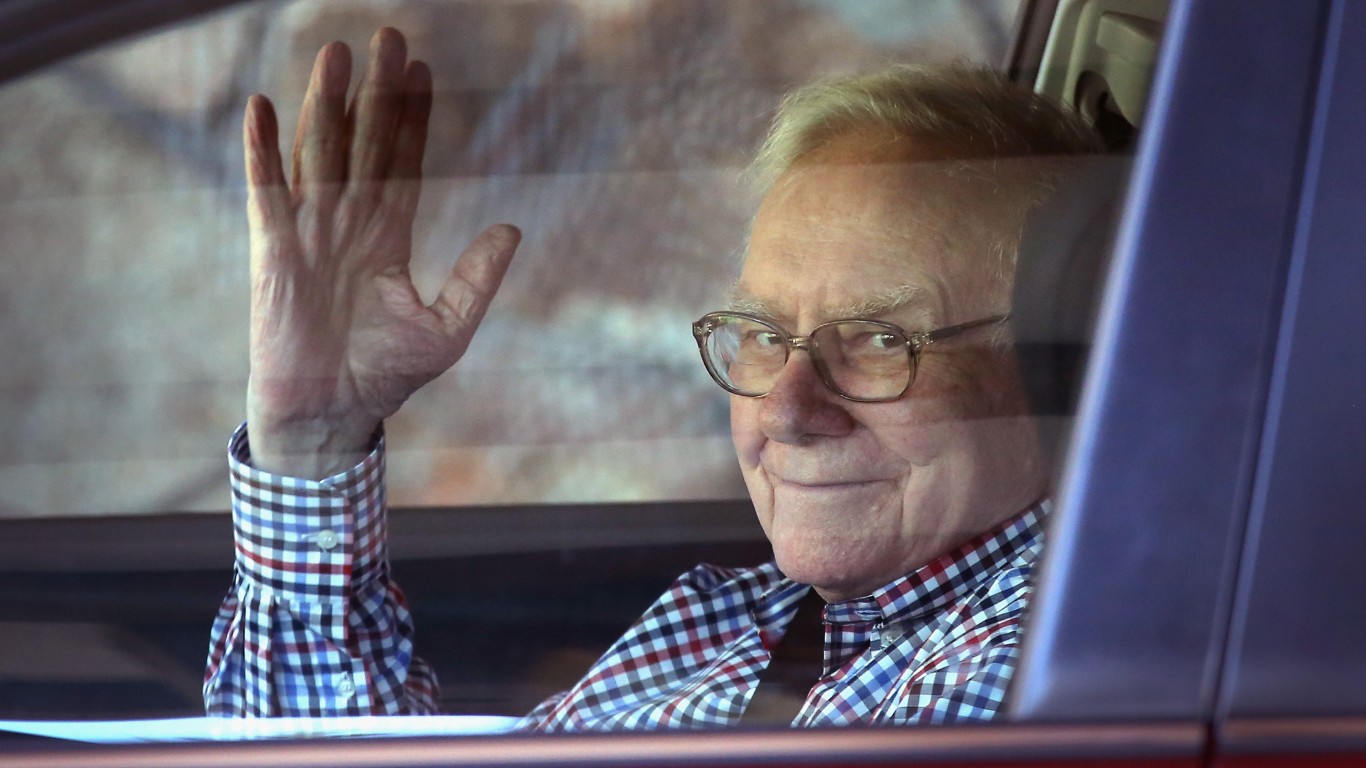
Warren Buffett wasn’t always a fan of Apple. Back during the original tech bubble 20 years ago, he famously eschewed all things tech, saying he preferred to invest in companies he understood. Eventually, he relented and Apple is now Berkshire Hathaway’s (BRK.A BRK.B) second-largest holding.
As a longtime student of Buffett who once interviewed him during a hostile takeover for Gillette Co. in the 1980s, I see a similar stance in the legendary investor’s refusal to engage with his largest shareholders over climate change. Buffett and partner Charlie Munger spent more time defending their investment in Chevron at their annual meeting over the weekend than discussing shareholder efforts to require more climate reporting.
Two resolutions, one simply to require annual reporting of Berkshire’s climate efforts, were defeated soundly — as expected — because Buffett owns a third of the shares. Shareholders said the fact that the resolutions got about a quarter of the votes was significant, as it was twice what similar resolutions got last year. But given the backing of CalPERs and BlackRock (BLK) on the resolutions, I would have hoped for better.
Buffett and Munger, at 90 and 97, respectively, have seen plenty of business fads come and go, and their investments are generally big established companies like Bank of America (BAC), Coca-Cola (KO), Chevron (CVX) and Apple (AAPL). If there is a successful economic transition away from fossil fuels, they won’t be around to see it.
Over the same weekend, it was reported that environmental, social and governance (ESG) assets are nearing the $2 trillion mark. With respect to the Oracle of Omaha, the market is leaving him behind on this one.
More insights below. . . .
Monday’s subscriber insights: A sample of our best offerings
. . . . The transition to renewable energies in transportation is going to be long and rocky, but Volkswagen (VWAGY) and Lufthansa (DLAKY) are each applying German ingenuity to their fuel issues today, including experimenting with low-carbon fuel and sharkskin suits for aircraft to reduce drag. Read more here. . . .
. . . . Record global equity markets in the first quarter helped propel ESG funds — and vice versa — to almost $2 trillion in assets under management, according to Morningstar. With Europe dominating and hundreds of new funds still coming to market, U.S. asset managers must look for a saturation point. Read more here. . . .
. . . . The boom in electric vehicle growth is boosting stocks of companies who make charging stations, but revenue for companies like Blink Charging (BLNK) are lagging investor momentum. A race for scale is on, even as EV sales growth will take years to justify the parking spaces being set aside for it today. Read more here. . . .
Data driven: UK fuel duty frozen in traffic
. . . . The UK’s fuel duty has been frozen since 2010, and that has raised the nation’s overall CO₂ footprint by as much as 5%, according to a recent analysis by the Carbon Brief. Whether to unfreeze the UK fuel duty has been a point of contention, prompting the Carbon Brief, a UK based and data focused climate publication, to examine the potential effects of such a policy. Last month, the spring budget froze fuel duty for the 11th year in a row.
The fuel duty has not been adjusted for inflation since 2010, giving consumers a real price cut on petrol and diesel and keeping gasoline 20% cheaper than it would have been if the UK’s June 2010 budget plan had been fully implemented. The freeze cost the UK over $13 billion in the 2019-20 fiscal year, according to the Institute of Financial Studies. While the institute thinks the UK’s duty is high by international standards, it doesn’t reflect the nation’s traffic congestion.
With an ineffective fuel duty in place, transportation related emissions steadily rose, and in 2015, the transportation sector became the UK’s largest contributor of greenhouse gas emissions. In the past decade, the UK’s CO₂ emissions have dropped by 29%, the paper says, but transportation emissions have risen 3%. — George Barker. . . .












 Top Gaining Stocks
 Top Losing Stocks