The Last Time the Market Dropped 50%

Photo of Douglas A. McIntyre
By Douglas A. McIntyre Published

24/7 Wall St. Key Points

  • The market touched bear territory last week, but that is nothing compared to the last brutal bear market.

  • A wounded financial system that has no means to improve itself could cause a huge stock market drop.

This post may contain links from our sponsors and affiliates, and Flywheel Publishing may receive compensation for actions taken through them.
The Last Time the Market Dropped 50%

© solarseven / iStock via Getty Images

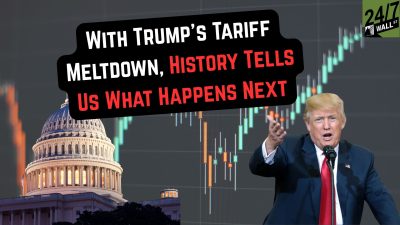
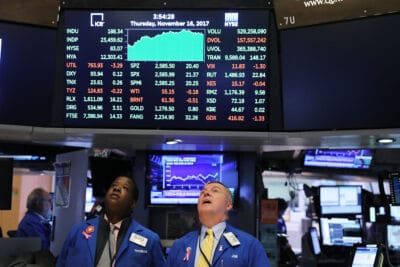
The market touched bear territory last week, as the S&P 500 was briefly down 20%. However, that is nothing compared to the last brutal bear market. During the financial crisis, the market dropped 51% in 2008 from where it was in mid-2007. It did not recover completely until 2013. At that point, the global financial system went through a meltdown that almost collapsed the U.S. banking system. Some nations, led by Greece, came close to reaching a point where they were nearly “bankrupt.” In the United States, it took massive government intervention to save the economy from a disaster like that which triggered the Great Depression.

Another Crisis Coming?

tariff-driven inflation
welcomia / iStock via Getty Images

Will the global economy collapse?

The question is whether tariffs, in particular, can collapse the global economy. Several factors indicate it may. And shortage-driven inflation cannot be immediately crushed by the Federal Reserve.

Instead of locking up the credit market, as in 2008, the catastrophe today would be shaped by a combination of inflation and the complete disappearance of some consumer and business products. The effect of 125% tariffs between the two largest economies in the world could trigger hyper-inflation. Car prices could be the least of the problems. Consumers rarely have to buy a car. The average car on the road in the United States is 12 years old. People can hold on to autos.

Among the greatest dangers is that some essential products could disappear. A significant portion of the components of many pharmaceuticals come from China. The American healthcare system would face an unprecedented challenge.

Some items might disappear almost completely, which means the prices of the meager inventories would cripple some industries. Among the most obvious of these is solar power. Almost all components of these come from China.

Inflation reached 17% in 1980. This was mostly because of an energy shortage. If anything, the United States has an abundance of energy today. However, the consumer price index is made up of much more than energy. Key components include autos, apparel, and medical expenses. The prices of each of these could rise well into double-digit percentages. China produces about 40% of the global textile supply.

A huge stock market drop would be caused by a wounded financial system that has no means to improve itself. Shortage-driven inflation would be included on that list.

Are We Heading for Stagflation? The Real Story Behind Inflation Fears

Photo of Douglas A. McIntyre
About the Author Douglas A. McIntyre →

Douglas A. McIntyre is the co-founder, chief executive officer and editor in chief of 24/7 Wall St. and 24/7 Tempo. He has held these jobs since 2006.

McIntyre has written thousands of articles for 24/7 Wall St. He is an expert on corporate finance, the automotive industry, media companies and international finance. He has edited articles on national demographics, sports, personal income and travel.

His work has been quoted or mentioned in The New York Times, The Wall Street Journal, Los Angeles Times, The Washington Post, NBC News, Time, The New Yorker, HuffPost USA Today, Business Insider, Yahoo, AOL, MarketWatch, The Atlantic, Bloomberg, New York Post, Chicago Tribune, Forbes, The Guardian and many other major publications. McIntyre has been a guest on CNBC, the BBC and television and radio stations across the country.

A magna cum laude graduate of Harvard College, McIntyre also was president of The Harvard Advocate. Founded in 1866, the Advocate is the oldest college publication in the United States.

TheStreet.com, Comps.com and Edgar Online are some of the public companies for which McIntyre served on the board of directors. He was a Vicinity Corporation board member when the company was sold to Microsoft in 2002. He served on the audit committees of some of these companies.

McIntyre has been the CEO of FutureSource, a provider of trading terminals and news to commodities and futures traders. He was president of Switchboard, the online phone directory company. He served as chairman and CEO of On2 Technologies, the video compression company that provided video compression software for Adobe’s Flash. Google bought On2 in 2009.

Featured Reads

Our top personal finance-related articles today. Your wallet will thank you later.

Continue Reading

Top Gaining Stocks

CBOE Vol: 1,568,143
PSKY Vol: 12,285,993
STX Vol: 7,378,346
ORCL Vol: 26,317,675
DDOG Vol: 6,247,779

Top Losing Stocks

LKQ
LKQ Vol: 4,367,433
CLX Vol: 13,260,523
SYK Vol: 4,519,455
MHK Vol: 1,859,865
AMGN Vol: 3,818,618