


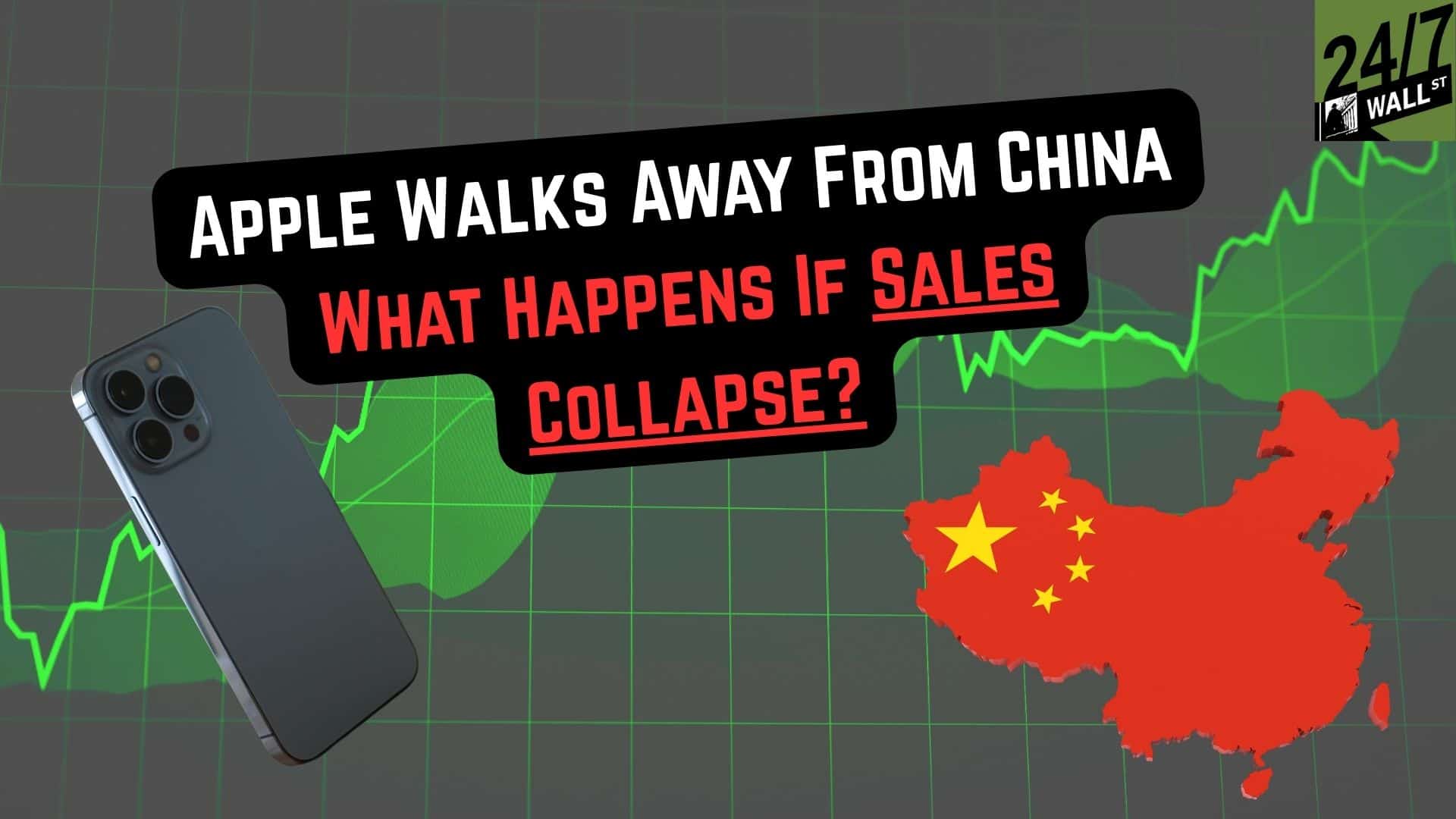
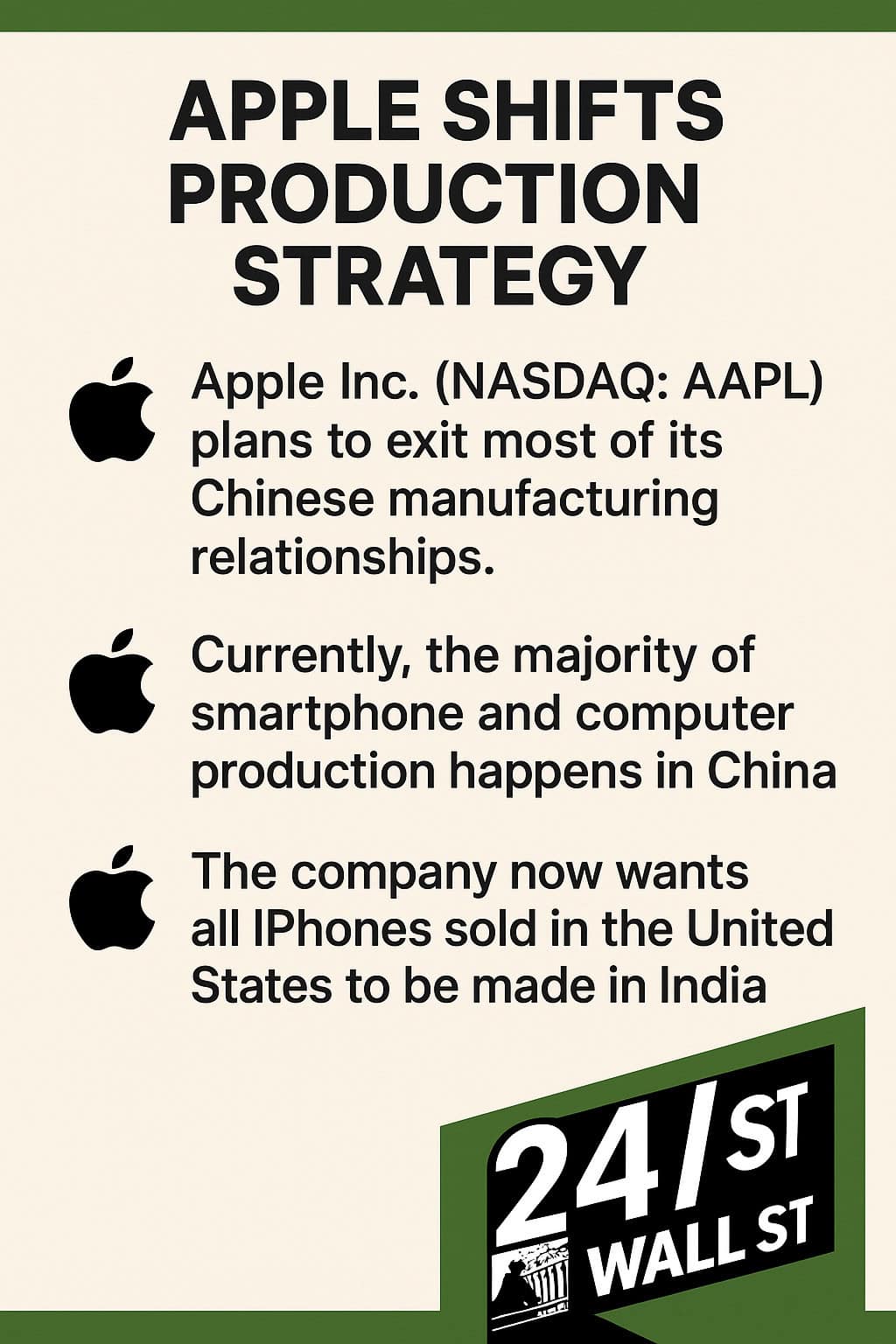
Tariffs and the concentration of the assembly of its iPhone in one country have triggered Apple Inc.’s (NASDAQ: AAPL | AAPL Price Prediction) plan to exit most of its Chinese manufacturing relationships. It plans to move most of these to India, which will take at least a year. This will end partnerships in China that go back well over a decade.
Have you seen personal loan rates lately? Today, it’s possible to get money for debt consolidation, paying off credit cards, home improvement, and more with rates as low as 6.40%! Getting a route takes less than two minutes, and doesn’t affect credit scores. Click here to see your options now
How Tariffs Could Impact iPhone Costs
Apple is extremely anxious about the impact of its reliance on Chinese manufacturers on its profits. Tariffs of as much as 125% on products made in China would push the price of an iPhone to $3,000, particularly if they are made in the United States, where labor costs are higher than in China. Apple would also have to make massive investments in building American-based factories.
Bloomberg reported that, by the end of 2026, Apple wants all iPhones sold in the United States to be made in India. The goal means the company would roughly double its annual iPhone output in India to more than 80 million units.
Apple wants to protect its gross margin, which is the envy of the industry. In the most recently reported quarter, this margin was 47%, as the company had revenue of $124 billion and a gross margin of $58 billion. Gross margins in the quarter were at an all-time record.
Other Problems for Apple
Manufacturing in China is part of several problems. Another is iPhone sales there, the world’s largest smartphone market with a billion users. That is approximately four times the U.S. figure. Local companies like Oppo and Vivo have robbed Apple of its market share.
Another hurdle for Apple is the weak launch of its AI product. An upgrade will not be available until 2026. In addition, China presents unique difficulties rolling out AI features, which has meant Apple is falling behind rivals in the market. The company is planning to partner with Alibaba to create a Chinese version of Apple Intelligence.
The good news is that its shares are up 24% in the past year, compared to an increase of only 8% in the S&P 500. And Apple continues to be the most valuable company in the world, with a market cap of $3.1 trillion. However, a quarter or two of weak earnings could take that crown away.
What Happens if Apple’s China Sales Collapse?
Despite Apple losing market share in China, it still gets significant sales from the country. The table below summarizes Apple’s China sales in recent years:
| Year | China Sales |
| 2021 | $68.4 Billion |
| 2022 | $74.2 Billion |
| 2023 | $72.6 Billion |
| 2024 | $66.9 Billion |
As you can see, while China is no longer a growth market, Apple does receive significant sales from the country. As of last year, China was about 2/3 the size of the entire European market, for example.
One concern could be further retaliation from the Chinese government against Apple if it moves significant amounts of its supply chain out of the country. For example, government officials and employees of certain state-owned agencies are already banned from using iPhones. Further restrictions could whittle down Apple’s sales in the country.
Other Companies Impacted By the Trade War with China
Apple is facing significant pressure from tariffs. The company reportedly booked several last-minute freighter air shipments capable of hauling 200,000 iPhones to ‘beat the clock’ on more punitive tariffs taking effect earlier this month.
However, its worth noting that Apple is far from the only company facing major pressures from the ongoing trade war with China. For example, NVIDIA (Nasdaq: NVDA) filed an update with the SEC on April 16th that export controls would force it to take a $5.5 billion inventory charge on its H20 chips that had been designed for China.
Like Apple, NVIDIA is looking to shift its supply chain. The company recently announced a commitment of up to $500 billion to move its supercomputer supply chain to America. That will mean chips made by Taiwan Semiconductor‘s (NYSE: TSM) Arizona plan,t while suppliers of its rack-level infrastructure will also move manufacturing to America.
Boeing (NYSE: BA), notably the United State’s largest exporter by total dollar value, has also been caught in the crosshairs. Shares fell earlier this week when it was announced that China has halted deliveries of all aircraft into the country from the US manufacturer. This blow further weakens an already struggling company, which has had a string of safety concerns and whose over budget Starliner program notably left two US astronauts in space who had to later be recovered by SpaceX.
The Stakes Couldn’t Be Higher
Apple’s iPhone sales have been relatively weak the last few years, with the services business driving much of the share performance and multiple expansion. The highly hyped Apple Intelligence launch is largely considered a flop, and the company is putting a lot of chips on the upcoming iPhone 17 release, expected to arrive later this year. If the company can turn around lagging enthusiasm for it’s smart phones, it will then face the welcome but additional challenge of having to manufacture many in India, with a far less proven supply chain.








 Top Gaining Stocks
 Top Losing Stocks