



Hardly anybody expects to end up in financial ruin. Yet, people often destroy their wealth-building potential and it’s typically due to certain mistakes that they make again and again.
Awareness of your major financial missteps is the first step on the path to addressing them; better yet, you may be able to prevent them if it’s not already too late. With that in mind, here are the five worst wealth-destroying blunders that people tend to repeat but can avoid.
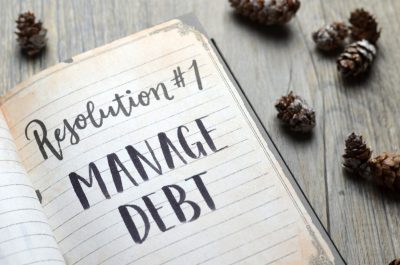
1. Disregarding Credit Card Debt
Ignoring credit card debt is truly a wealth killer in 2025. According to the Federal Reserve (via Forbes), the average credit card interest rate in May for accounts with balances was 22.25%.
Don’t count on cash-back rewards or frequent flyer miles making up for a 20%-or-greater interest rate on your credit card debt. Just as importantly, don’t assume that your investments will cover that interest rate, even if you’re a good investor.
At the very least, see if you can find a credit card with an introductory 0% interest rate. Then, transfer your current credit card debt to that new card so you’ll have some time to pay down your balance.
Beyond that, don’t treat your credit card like it’s free money or an ATM. Use cash and/or debit cards as much as possible, pay off your high-interest credit cards as soon as possible, and make this a priority over virtually every other financial goal.
2. Failing to Save
If you fail to save, you’re just inviting disaster. Having sufficient savings is a foundational principle of financial health, but many people ignore this principle throughout their lives.
A U.S. News & World Report article recommends stashing away 20% of your monthly income for emergency savings. The idea is to have three to six months’ worth of living expenses stored away in case you ever need it.
At the same time, you should also save for retirement. A report from T. Rowe Price estimates that “most people looking to retire around age 65 should” save up 7.5 to 13.5 times their pre-retirement annual gross income.
That’s a lot to save, so the time to get started is now. Repeatedly failing to build up your emergency retirement savings is a recipe for financial problems down the road, so don’t neglect this call to action.
3. Trying to Speed-Run Your Investing Journey
It’s true that taking on more risk can bring greater potential rewards. However, high-risk investing shouldn’t become a habit as it often ends badly.
Just think about the investing journey that Berkshire Hathaway (NYSE:BRK-B | BRK-B Price Prediction) CEO Warren Buffett has taken. He didn’t become one of the world’s wealthiest people by trying to speed-run his way to fabulous riches.
Instead, Buffett bought and held blue-chip stocks for years or even decades. As the old saying goes, Buffett’s favorite holding time for stocks is forever.
Think high-quality and long-term when it comes to your investments, and you’ll increase your portfolio’s staying power. After all, fast profits can easily devolve into fast losses, so take the slow lane and avoid get-rich-quick schemes.
4. Always Choosing the Safest Investments
This isn’t quite as bad as repeatedly seeking high-risk investments, but being too safe can also be quite destructive. Holding too much of your wealth in U.S. dollars, for instance, only ensures that your purchasing power will deteriorate over time.
A baseline objective should be to outpace the inflation rate with your stored wealth. The most direct way to achieve this is to buy and hold a carefully considered combination of blue-chip stocks, government bonds, real estate, and/or precious metals.
Currently, it’s possible to beat inflation by holding U.S. Treasury bonds. However, the interest rates on those bonds won’t likely exceed 5% per year, and you can probably do better than that.
This circles back to the previous concept of preparing early and often for your eventual retirement from work. Being too safe with your investments will make it more difficult to grow a sufficient nest egg that you can rely on in your golden years.
5. Being Under- or Over-insured
Alarmingly, the Commonwealth Fund 2024 Biennial Health Insurance Survey found that 9% of adults reported being uninsured and 23% reported being under-insured (i.e., they had insufficient healthcare coverage). It’s a national crisis as every uninsured or under-insured individual is a ticking time bomb, financially speaking.
Depending on your situation, it’s essential to carry sufficient coverage for the potential costs of healthcare as well as home and automobile coverage. Dropping crucial coverage might feel like a good way to save money in the short term, but when disaster strikes, you’ll wish you had been properly covered.
That said, it’s also an issue when people repeatedly sign up for more insurance coverage than you need. For example, when was the last time you read your homeowners’ insurance policy?
You might be surprised to discover that the insurance salesperson added some sneaky coverage clauses for highly unlikely scenarios (earthquakes, acts of terrorism, etc.). Consequently, you can avoid the blunder of over-insurance by knowing what coverage you actually need and refusing to pay for more than that.










 Top Gaining Stocks
 Top Losing Stocks