



Navigating a Fierce Wireless Arena
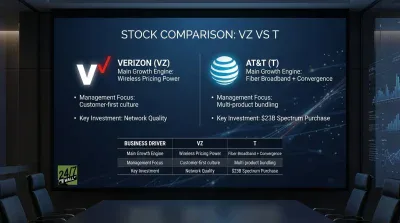
The U.S. wireless market is a fiercely competitive battleground dominated by three giants: AT&T (NYSE:T | T Price Prediction), Verizon (NYSE:VZ), and T-Mobile (NASDAQ:TMUS).
T-Mobile leads with its extensive mid-band spectrum, acquired through its 2020 merger with Sprint, giving it an edge in 5G speed and coverage. Verizon boasts robust C-band holdings, excelling in urban capacity, while AT&T has lagged everywhere, relying on a patchwork of spectrum and its growing fiber network to stay competitive.
With mobile data demand surging and 5G adoption accelerating, spectrum scarcity intensifies the race for network superiority. AT&T’s bundled fiber and wireless offerings have gained traction, adding 401,000 wireless subscribers in its recent second quarter, but it trails T-Mobile’s subscriber growth and Verizon’s enterprise strength.
Yesterday, though, AT&T announced a massive $23 billion deal to acquire spectrum from EchoStar (NASDAQ:SATS), a move that could reshape its position in this cutthroat landscape.
A Transformative Spectrum Acquisition
AT&T’s agreement to purchase 50 MHz of low-band (20 MHz, 600 MHz) and mid-band (30 MHz, 3.45 GHz) spectrum from EchoStar for $23 billion is a strategic power play. The all-cash deal, expected to close by mid-2026 pending Federal Communications Commission and Justice Dept. antitrust approval, covers over 400 U.S. markets, bolstering AT&T’s 5G and fixed wireless broadband (Internet Air) capabilities.
The transaction also extends a wholesale agreement, making AT&T the primary network partner for EchoStar’s Boost Mobile, preserving competition while consolidating spectrum. EchoStar, which is facing FCC scrutiny over underused licenses and bankruptcy risks, gains financial relief, with its stock soaring 70% after the announcement, while AT&T’s closed slightly lower.
The deal’s scale — nearly three times EchoStar’s market cap — underscores its significance, positioning AT&T to enhance network reliability and capacity across urban and rural areas.
Why Low- and Mid-Band Spectrum Matters
Low-band spectrum, like the 600 MHz acquired, excels in long-range coverage and indoor penetration, making it ideal for rural markets and buildings. Mid-band spectrum (3.45 GHz) balances speed and coverage, critical for high-capacity 5G in urban and suburban areas.
Together, these airwaves reduce AT&T’s need for costly cell site construction, improving capital efficiency. Compared to T-Mobile’s 2.5 GHz dominance and Verizon’s C-band depth, AT&T’s new spectrum narrows the gap, enabling faster speeds, better reliability, and expanded fixed wireless offerings.
This acquisition aligns with AT&T’s convergence strategy, bundling 5G and fiber to attract high-value subscribers, a tactic that added 1 million net fiber customers in 2024. As data usage surges, this spectrum ensures AT&T can handle future demand, including 6G readiness, without over-relying on expensive infrastructure.
Key Takeaways
If approved, the deal positions AT&T for long-term growth. Enhanced 5G coverage and capacity will strengthen its competitive stance, particularly in enterprise and fixed wireless markets, where it competes with cable operators like Comcast (NASDAQ:CMCSA).
The spectrum’s immediate deployability — via leasing options before the closing — accelerates AT&T’s network upgrades, potentially boosting subscriber retention and margins. Financially, the $23 billion cost, funded by cash and borrowings, will push AT&T’s debt-to-EBITDA ratio to 3x, but the carrier aims to return to 2.5x within three years.
With $20 billion in planned share repurchases through 2027, AT&T signals it has confidence in its balance sheet. However, T stock’s muted reaction — shares are also down slightly in pre-market trading today — reflects investor caution over its debt load and regulatory risks.
Analysts, though, see AT&T as a value play, with a 5.8% dividend yield and 26% year-to-date gains. T stock has been the better stock to own compared to TMUS and VZ, not only in 2025 but over the past two years as well. Its shares have doubled since 2023 versus an 88% gain by TMUS and a 32% increase in Verizon stock.
The market’s muted reaction to the deal means investors can still buy a stock trading at just 13 times next year’s earnings estimates and 10x the free cash flow it produces. That’s a bargain for a company that just markedly improved its competitive position.






 Top Gaining Stocks
 Top Losing Stocks