



The Boom That Built Billion-Dollar Empires
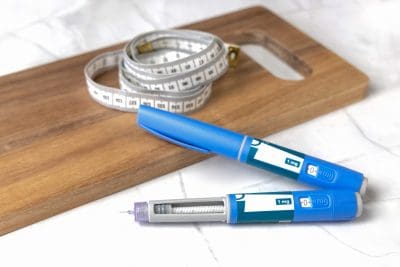
GLP-1 drugs have reshaped the pharmaceutical landscape, turning obesity and diabetes treatments into massive revenue streams for Novo Nordisk (NYSE:NVO | NVO Price Prediction) and Eli Lilly (NYSE:LLY). These medications, including NVO’s Ozempic and Wegovy, and LLY’s Mounjaro and Zepbound, mimic hormones to curb appetite and regulate blood sugar.
Their popularity exploded in recent years as social media influencers and celebrities touted dramatic weight loss results. Demand surged, with global sales topping $20 billion in 2024 alone, propelling both companies to record profits.
For NVO, GLP-1 products accounted for over 60% of revenue last year, boosting net income by 25% and driving its market cap past $500 billion. LLY saw even sharper gains, with Mounjaro sales jumping 70% quarter-over-quarter, contributing to a 40% stock rise in 2024. This cash cow funded expansions, like NVO’s $4.1 billion U.S. manufacturing plant and LLY’s $6.5 billion Houston facility.
Demand spiked prescriptions to 15 million weekly in the U.S. by mid-2025, despite shortages easing after Food & Drug Administration (FDA) delistings in early 2025. Localized stockouts persisted briefly, but supply stabilized. High list prices — around $1,000 monthly, though rebates lowered net costs — funded NVO’s $4.1 billion U.S. plant and LLY’s $6.5 billion facility, cementing their cash-cow status.
Price Promise Sparks Market Panic
Yesterday, though, President Trump ignited fear the cash cows were going to be led to slaughter. During a White House event on drug pricing and fertility treatments, he targeted GLP-1s directly: “I was referring to Ozempic, or the fat loss drug…They’ll be much lower.” Pressed on specifics, Trump affirmed prices could drop to $150 out-of-pocket monthly from current levels, adding they would “come down pretty fast.”
Centers for Medicare & Medicaid Services head Dr. Mehmet Oz clarified negotiations under the Most Favored Nation (MFN) policy — tying U.S. prices to international benchmarks — remain ongoing for GLP-1s like Ozempic, Wegovy, Mounjaro, and Zepbound. This builds on Trump’s May executive order aiming to slash disparities where Americans pay two to three times more than in Europe or Canada.
Markets reacted swiftly. NVO shares are down over 4% to $53.83 in morning trading today, while LLY is down 2.6% to $798.00, erasing over $20 billion in combined market value. Analysts at BMO Capital called the sell-off “overdone,” noting insured patients already pay as little as $25 monthly via rebates.
Still, Trump’s rhetoric amplified policy uncertainty, echoing his first-term threats that pressured pharma stocks.
How Low Prices Could Gut the Golden Goose
Dramatically lowering GLP-1 costs threatens the core economics fueling NVO and LLY’s dominance. These drugs carry 40% gross margins, far above industry averages, thanks to premium pricing that recoups $2 billion to $3 billion in research and development investments per product.
Ozempic’s list price yields $800 net per month after discounts; a $150 cap could halve revenues if volumes don’t quadruple — a tall order given ongoing supply constraints. NVO, with a 60% U.S. market share, derives 50% of earnings from semaglutide-based drugs. A 50% price cut might trim annual profits by $5 billion, according to JPMorgan estimates.
Eli Lilly, which is gaining ground with tirzepatide’s superior efficacy, faces similar hits: Zepbound sales could fall 30% to 40% short-term, delaying pipeline funding like its oral GLP-1 trials.
Both have preemptively cut prices — NVO slashed Wegovy’s price to $499 cash-pay earlier this year, while LLY followed suit for Mounjaro — to boost access and fend off copycats.
But forced reductions via MFN or negotiations risk eroding pricing power, especially as patents expire in 2031 to 2032, inviting generics.
Investors rightly worry this move could chill innovation: without fat margins, why chase costly clinical trials? LLY might not be close to having a pill form of its drug otherwise. Short-term, higher volumes might offset some losses, but long-term, it could cap growth at 10% to 15% annually versus 30% now.
Key Takeaway
Lowering GLP-1 prices to $150 monthly would deliver immediate wins for consumers, easing the $1,000+ burden on 15 million U.S. users and curbing obesity-related healthcare spends exceeding $200 billion yearly. More affordable access could accelerate adoption, reducing diabetes complications and boosting productivity.
Yet this comes at a steep cost to innovation. Drug development demands $2.6 billion and 10 to 15 years per approval, with FDA hurdles delaying market entry. Slimmer margins act as a disincentive, potentially stalling pipelines for next-gen therapies like multi-hormone agonists. Jawboning prices via public pressure is one tactic; mandating cuts through policy is coercive, shifting risk from payers to developers. Containing healthcare inflation is vital, but if the “cure” starves R&D, it worsens the underlying illness of stagnant medical progress.
Analysts are probably right, though, that the selloff in NVO and LLY are overdone. Threatening drastic action has become a hallmark of Trump’s second term, only to be followed by more nuanced negotiation. The long-term outlook, especially for LLY stock, remains positive.








 Top Gaining Stocks
 Top Losing Stocks