


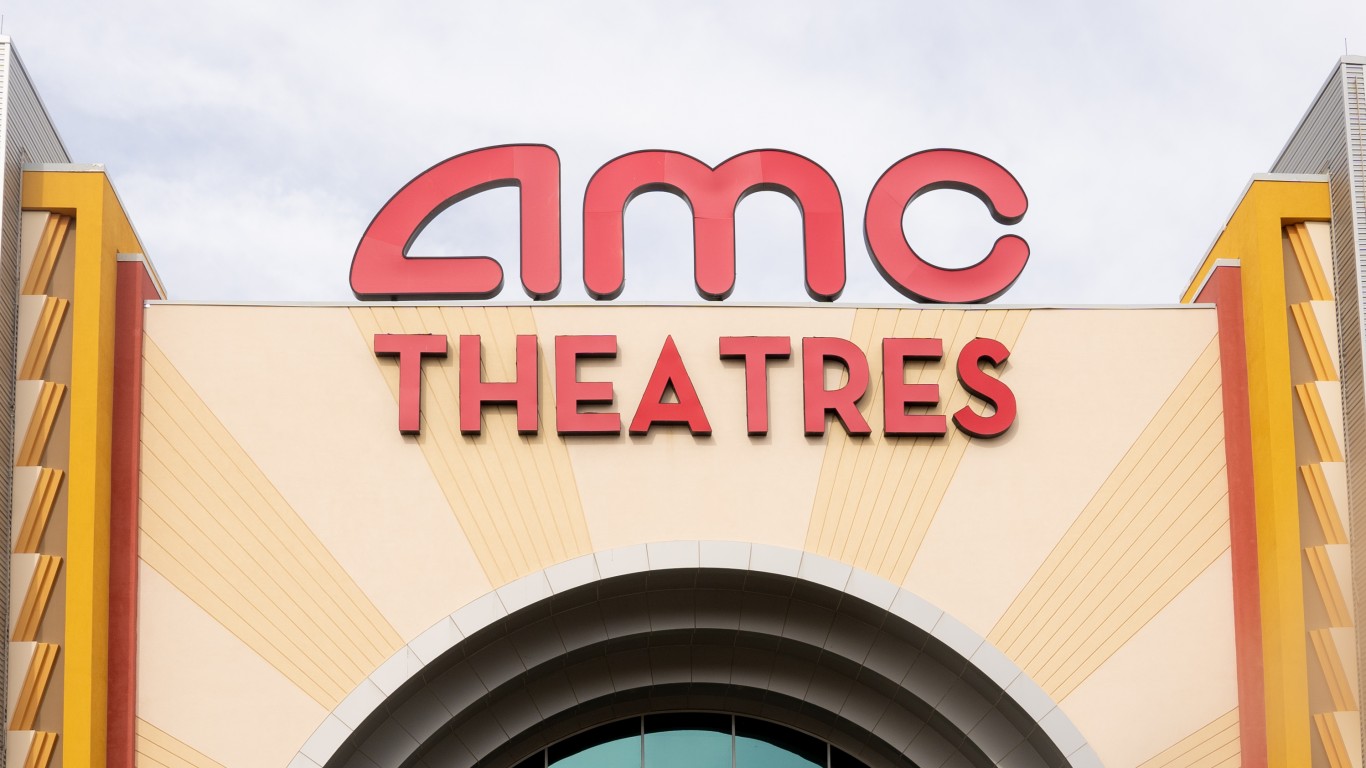
AMC Entertainment Holdings (NYSE: AMC) reported third-quarter results that beat revenue expectations but highlighted the tension between operational improvement and mounting losses. The largest movie exhibition company posted $1.30 billion in revenue, topping the $1.24 billion consensus estimate. Yet the earnings miss and a widened net loss pulled the stock down sharply in after-hours trading.
Record Per-Patron Spending Masks Underlying Weakness
AMC achieved an all-time record in admissions revenue per patron at $12.25, and food and beverage revenue per patron hit $7.74, the second-highest on record. These metrics reflect strong pricing power and customer engagement at the box office. The company also completed a significant refinancing in July that reduced debt obligations, a critical step for a company that has struggled with leverage.
I liked the per-patron metrics. They show AMC is extracting more value from each moviegoer, which matters when volume is uncertain. The refinancing completion also removes a near-term threat to the balance sheet.
The Loss Widened Despite Revenue Beat
Here’s where the story darkens. Net loss expanded to $298.2 million from $20.7 million in the prior-year quarter. The jump stems largely from non-cash refinancing charges tied to the July debt restructuring, not operational deterioration. Adjusted EBITDA, which strips out those charges, fell 24% year over year to $122.2 million. That decline signals softer underlying cash generation, even as revenue climbed.
Adjusted diluted loss per share came in at $0.21, missing the $0.20 estimate by a penny. The miss is narrow, but it underscores that cost pressures and lower EBITDA are offsetting the revenue beat.
Key Figures
Revenue: $1.30B (vs. $1.24B expected); up 35.6% year over year
Adjusted EPS: -$0.21 (vs. -$0.20 expected)
Net Loss: $298.2M (vs. $20.7M loss in Q3 2024)
Adjusted EBITDA: $122.2M; down 24% year over year
Admissions Revenue Per Patron: $12.25 (all-time record)
Food and Beverage Per Patron: $7.74 (second-highest ever)
Operating Cash Flow: $138.4M
Cash and Equivalents: $365.8 million
The revenue beat was real, but adjusted EBITDA decline is the number that matters most. It tells you whether the company can actually service debt and fund operations from core business performance.
Management Frames Q3 Softness as Temporary
CEO Adam Aron attributed the quarter’s softness to industry-wide timing of film releases rather than a demand problem. “Calendar year 2025 is turning out exactly as we have long predicted,” he said, pointing to a weak Q1, strong Q2, and softer Q3 driven by studio release schedules. He added that “the third quarter industrywide softness should not be a cause for alarm nor a harbinger of some negative trend.”
Aron struck an optimistic tone on Q4, saying the company expects its highest-grossing fourth quarter in six years. He also signaled confidence in 2026, citing a “significantly larger box office” versus 2025 with a robust film slate ahead.
The tone is measured but forward-looking. Management is betting that film slate timing, not fundamental demand weakness, explains Q3 softness. That’s a testable claim once Q4 results arrive.
What Investors Should Watch
AMC remains unprofitable on a net basis and faces a steep climb to sustained profitability. The company is trading near 52-week lows, and analyst sentiment remains cautious with mostly Hold ratings. Peer Cinemark, by contrast, is profitable and commands higher valuation multiples, signaling that the industry recovery is real but AMC’s execution lags.
Watch Q4 results to see whether the expected seasonal strength materializes and whether adjusted EBITDA stabilizes. If the company can prove that Q3 was a calendar anomaly and not a demand warning, the refinancing-cleared balance sheet could support a recovery narrative. If Q4 disappoints, the margin pressure and EBITDA decline become harder to dismiss as temporary.









 Top Gaining Stocks
 Top Losing Stocks