



Advanced Micro Devices (NASDAQ:AMD | AMD Price Prediction) has rapidly caught up in the artificial intelligence space after lagging behind for years. Once focused mainly on CPUs and consumer GPUs, the company shifted gears to challenge Nvidia (NASDAQ:NVDA) in data center AI chips.
AMD’s MI300 series accelerators gained traction with major hyperscalers, driving record revenue growth in its data center segment. This positioned AMD as a viable, fast-growing alternative to Nvidia’s dominance. Now, AMD is making a strategic pivot to reshape the competitive landscape in its favor. It aims to offer more comprehensive solutions that could attract broader adoption. But success depends on executing one critical element effectively.
Building a Complete AI Platform
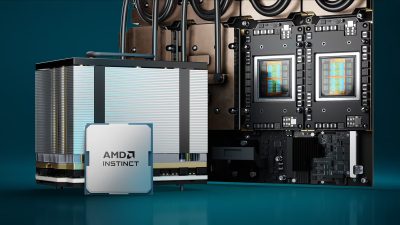
AMD’s latest strategy centers on creating an end-to-end AI infrastructure platform. This includes silicon such as chips and processors, high-speed interconnects for linking systems, software development tools, and even full rack-scale deployments that customers can easily scale. The goal is to provide hyperscalers and enterprises with turnkey solutions for AI workloads.
Unlike Nvidia’s tightly integrated vertical approach, AMD emphasizes an open ecosystem. This means collaborating with partners to ensure compatibility and flexibility, allowing customers to mix components without being locked into one vendor.
At its recent analyst day, AMD outlined ambitious targets for this pivot. The company projects its data center business to grow at a greater than 60% compound annual rate in annual revenue from the segment by 2030. That would expand the segment from about $16 billion today to nearly $100 billion over the next five years. To hit these numbers, AMD needs strong ramps for upcoming products like the MI450 GPU and the Helios rack-scale system. These offerings are designed for massive AI training and inference tasks.
CEO Lisa Su highlighted momentum with multiple large-scale opportunities, including hyperscalers and sovereign AI projects. If these targets are achieved, AMD’s gross margins could reach 57%, and earnings could rise above $20 per share by 2030.
The Make-or-Break Factor
While hardware advancements are key, AMD’s platform ambitions rely heavily on its software stack. The company must make its ROCm software as reliable and user-friendly as Nvidia’s CUDA platform. ROCm enables developers to program GPUs for AI tasks, but it has historically lagged behind in stability and ecosystem support. Closing this gap is essential for AMD to transition from being a secondary supplier to a primary platform provider.
AMD plans to release new GPUs annually, starting with the MI450, to keep pace with innovation. But without seamless software, adoption could stall. Encouraging signs include partnerships with Meta Platforms (NASDAQ:META), Oracle (NYSE:ORCL), and OpenAI. These collaborations signal growing ecosystem traction, as they involve real-world deployments and feedback to refine ROCm. If AMD delivers a stable, integrated experience, it could lure developers away from CUDA’s entrenched position.
Supporting this effort is AMD’s strength in CPUs. With a greater than 33% server CPU market share, the segment generates steady profits. As AI inference shifts toward CPUs, AMD could exceed a 50% share, providing the cash flow to fund GPU and software investments without eroding margins.
Key Takeaways
The divide between Nvidia and AMD remains substantial, thanks to Nvidia’s head start in AI. Yet AMD has closed ground quickly with products like the MI300. This platform pivot targets Nvidia’s lead by offering open, scalable alternatives. Flawless execution is required, especially on software, but AMD has shown capability in rapid innovation. Even partial success should yield significant gains for the company and its shareholders.












 Top Gaining Stocks
 Top Losing Stocks