



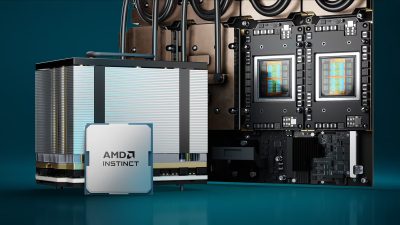
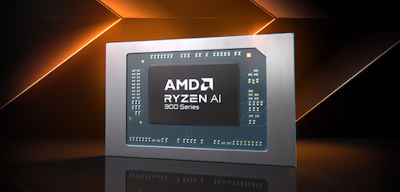
Advanced Micro Devices (NASDAQ:AMD | AMD Price Prediction) has been advancing its AI chip offerings, including the Instinct MI450 series accelerators set for deployment with OpenAI starting in the second half of 2026. The company introduced the Helios rack-scale system at CES 2026 — capable of handling up to 3 AI exaflops per rack, and unveiled the Ryzen AI 400 processors for enhanced PC multitasking and content creation.
These developments, along with improving ROCm software and partnerships like OpenAI’s, have led investors to view AMD as a growing challenger to Nvidia (NASDAQ:NVDA) in the AI market. Yesterday, however,, Nvidia announced an expanded partnership with Meta Platforms (NASDAQ:META) that prompted a 3% drop in AMD shares after hours, and the stock continues to fall in premarket trading today, raising questions about whether AMD’s challenge to Nvidia’s dominance has been undermined.
Meta’s Major AI Infrastructure Push
Nvidia announced a multiyear, multigenerational strategic partnership with Meta to support Meta’s AI infrastructure across on-premises, cloud, and data centers. The agreement includes the deployment of millions of Nvidia Blackwell and Rubin GPUs, alongside Grace CPUs and Spectrum-X networking technology. Meta plans to build hyperscale data centers optimized for AI training and inference, integrating these components to enhance performance and efficiency.
This marks the first large-scale use of Nvidia’s Grace-only CPUs in Meta’s production applications, promising significant improvements in performance per watt. The deal also incorporates Nvidia Confidential Computing for WhatsApp, enabling AI features while maintaining user data privacy.
The partnership underscores Nvidia’s entrenched position in AI hardware, as Meta commits to Nvidia’s full stack for scaling its platforms. Analysts estimate the deal’s value could reach tens of billions of dollars, given Meta’s status as one of Nvidia’s top customers, accounting for about 9% of its revenue. This expansion could intensify competition in the server CPU space, potentially challenging AMD and Intel (NASDAQ:INTC), as Nvidia’s standalone CPUs gain traction at Meta.
Why This Isn’t Game Over for AMD
Despite the initial market reaction, the Nvidia-Meta deal does not signal a complete defeat for AMD, as Meta maintains a diversified supplier strategy to manage costs and supply risks. Meta uses its own in-house MTIA chips for AI inference, relies on AMD GPUs, and has considered Google’s TPUs for some workloads. This multi-supplier approach helps keep pricing competitive, preventing over-reliance on Nvidia. Although AMD’s stock dipped on the announcement, it remains positioned for recovery, with the pullback potentially making it even more appealing to investors.
AMD continues to secure its own wins, including:
- A multi-year agreement with OpenAI to deploy 6 gigawatts of Instinct MI450 GPUs starting in the second half of the year.
- Expanding its customer base in hyperscale and enterprise segments.
- Its server CPUs are nearly sold out for 2026 due to surging data center and AI demand, with potential price increases of 10% to 15% under consideration.
- Analysts project AMD’s AI revenue to reach $14 billion to $15 billion in 2026, driven by shipments of 200,000 MI355 accelerators in the first half and 400,000 to 500,000 MI455 units in the second half.
- There is a major ramp-up in the MI455-powered Helios platform, with volume production starting in Q3 and rack shipments in Q4.
- The MI 500 is set to debut in 2027.
Moreover, AMD’s data center revenue grew 39% year-over-year in the fourth quarter, accelerating sequentially, and the company expects significant top-line and bottom-line growth in 2026. Overall, AMD anticipates revenue growth exceeding 35% compounded annually over the next three to five years, with data center revenue growing at a better than 60% CAGR.
Key Takeaway
AMD trades at approximately 19x next year’s earnings — below Nvidia’s 23x — reflecting its growth potential in AI and data centers. This valuation is at a fraction of its expected long-term earnings growth, with analysts forecasting a 46% CAGR for the next five years and over 60% in data centers through 2030.
The recent dip presents a buying opportunity for investors in a leading AI chipmaker, supported by sold-out server capacity and accelerating AI adoption.










 Top Gaining Stocks
 Top Losing Stocks