



While investors have been using investments in S&P 500 ETFs like Vanguard S&P 500 ETF (NYSE: VOO | VOO Price Prediction) for significant wealth building, it’s easy to overlook the fact that there are literally thousands of companies from emerging markets that are key to the success of top US S&P 500 stocks. For example, Taiwan Semiconductor (NYSE: TSM) is essential to the success of Nvidia (NASDAQ: NVDA) and Apple (NASDAQ: AAPL) since it is the sole chip foundry for all of those companies’ devices. Companies like Korean electronics powerhouse Samsung Electronics (OTC: SSNLF) don’t even have official US ADRs.
Nevertheless, emerging market companies like Samsung and Taiwan Semiconductor have made extraordinary gains that are not included in S&P 500 ETFs. However, one ETF that includes those and other emerging market investment gems is the SPDR MSCI Emerging Markets Strategic Factors ETF (NYSE: QEMM).
A +4-Point Lead Over VOO
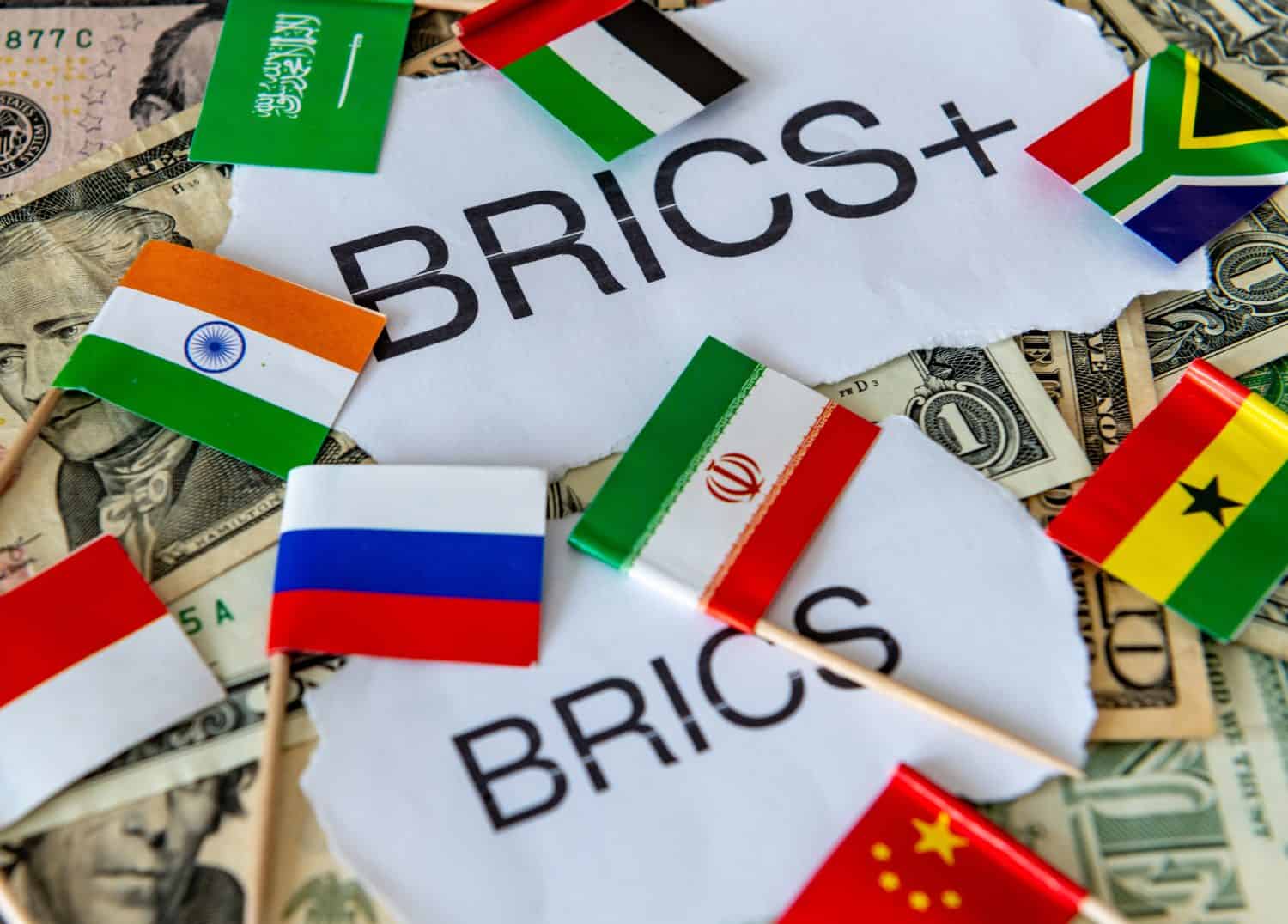
The BRICS economic coalition is led entirely by emerging market nations.
VOO is the largest ETF in the industry in terms of net assets, and its investors have been buoyed by a 15-16% year-to-date return. In contrast, although it may contain some less recognizable named companies, QEMM is notching a year-to-date return of 20.99% as of early November.
QEMM’s benchmark index is the MSCI Emerging Markets (EM) Factor Mix A-Series Index. It is intended to track large and mid-cap stocks in 24 different emerging market nations. The index is designed to deploy a mix of value, low volatility and quality in its selection assessments. It equally weighs these three (3) MSCI factor indices in one composite listing:
- The MSCI EM Value Weighted Index
- The MSCI EM Minimum Volatility Index
- The MSCI EM Quality Index
Managed by State Street Global Advisors, QEMM premiered on June 4, 2014 and holds 804 different stocks. An overview of the ETF is below:
| YTD Return | 20.99% | Beta | 0.82 |
| Net Assets | $41.51 million | Expense Ratio | 0.30% |
| NAV | $65.39 | 1-Year Return | 17.92% |
| Yield | 3.78% | 3-Year Return | 16.01% |
| Average Volume | 1,804 shares | 5-Year Return | 7.86% |
| Largest Mkt Wting | China: 26.01% | 10-year return | 6.35% |
Geopolitical Strategies At Work
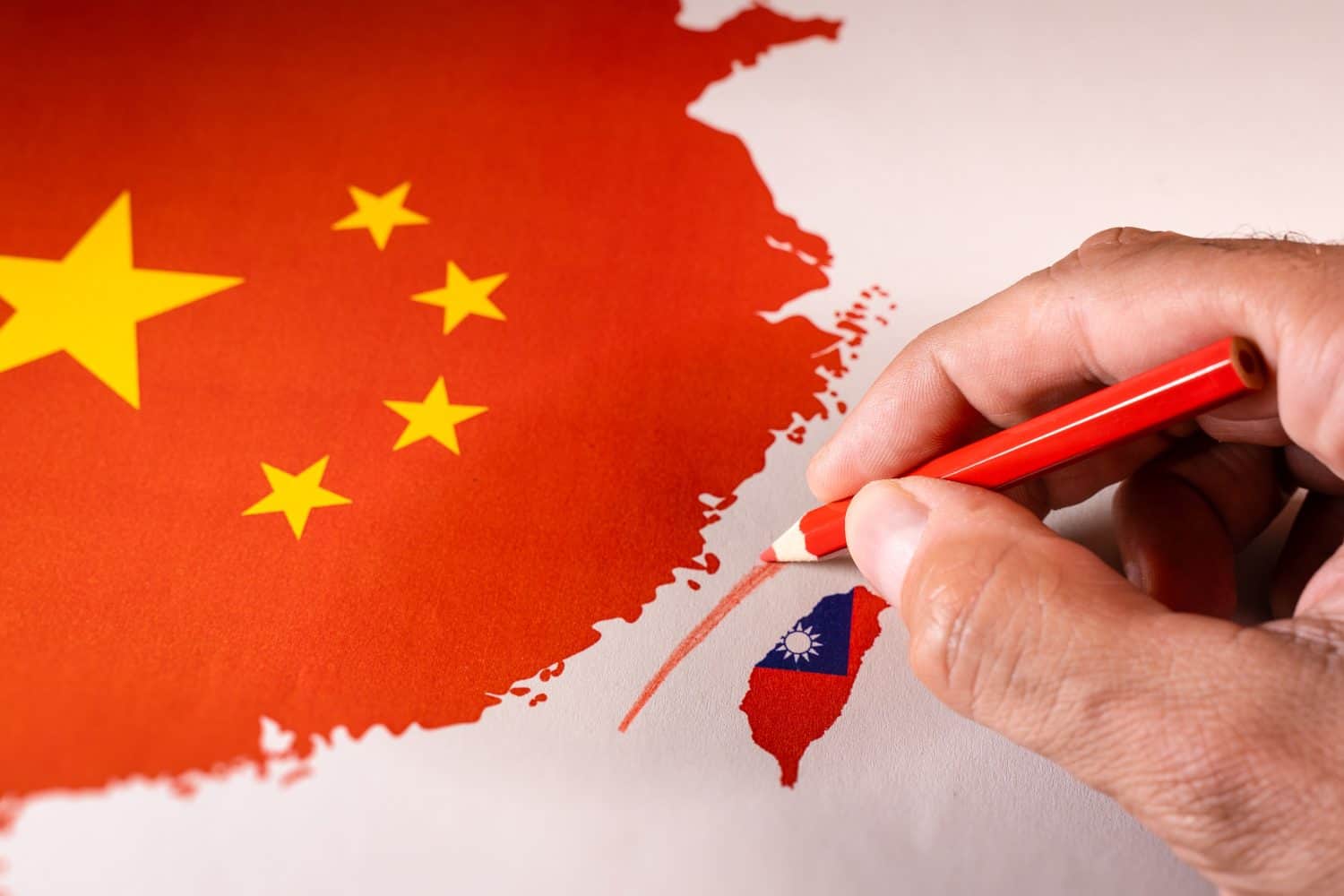
Stocks from China and Taiwan comprise 6 out of the top 10 largest holdings in QEMM.
Crucial to an emerging market ETFs success is a much deeper and comprehensive geopolitical perspective and understanding of how policies, conflicts, and other factors that never make the US news reports can impact stocks within the portfolio. Given that QEMM follows stocks from 24 different nations, events that don’t involve the US but may involve two or more of the 24 can significantly cause the index to shift position allocations abruptly, with QEMM following suit.
For example, the top 10 holdings of QEMM at the time of this writing are:
-
- Russian Ruble – 7.23%
- Taiwan Semiconductor (NYSE: TSM) – 5.57%
- US Govt. Money Market – 3.18%
- PDD Holdings (NASDAQ: PDD) – 1.82% (Chinese owner of Temu)
- Delta Electronics – (TPE: 2308) – Taiwanese computer devices
- China Construction Bank (OTC: CICHF) – 1.62%
- MediaTek, Inc. (TPE: 2454) – 1.51% (Taiwanese wireless device chip company)
- Samsung Electronics (OTC: SSNLF) – 1.48%
- Saudi Arabian Oil Co. (TADAWUL: 2222) – 1.23% (Saudi ARAMCO)
- Industry and Commerce Bank of China (OTC: IDCBY) – 1.18%
The large Russian Ruble allocation in the portfolio could signal several potential trends and projections of Eastern European geopolitical events. For example:
- A potential end to the Russia – Ukraine conflict.
- An expansion of the BRICS (Brazil, Russia, India, China, South Africa) economic bloc which would entail a wider range of nations for international trade using member currencies instead of a US dollar reserve currency.
- A higher potential for colder weather in Western Europe for the upcoming months may trigger a surge of Russian energy exports, as Russia is already the EU’s largest energy supply source.
Another very telling trend is that with the exception of ARAMCO and Samsung, all of the companies in the QEMM top 10 are Chinese or Taiwanese. Given their ubiquity in the fabric of US commerce, society, and culture, it seems incongruous that China, Taiwan and South Korea are in the “emerging market” category. However, with technology and financial companies the two largest sector exposures in the QEMM portfolio, the selection of holdings from those nations are all in those fields.
Investors concerned with a need for portfolio diversification and overweighting in the US market may wish to give QEMM due consideration. The world’s a big place and there are a lot of companies outside the US that can also deliver strong returns to savvy investors, so partaking of them is a prudent move.











 Top Gaining Stocks
 Top Losing Stocks