


The Avantis Emerging Markets Equity ETF (NYSEARCA:AVEM | AVEM Price Prediction) delivered a 35% return in 2025, outperforming Vanguard’s largest funds and signaling emerging markets might finally be having their moment. With $15.1 billion in assets and concentrated bets on Asian technology and financials, the fund beat both Vanguard S&P 500 ETF (NYSEARCA:VOO) and Vanguard Total Stock Market ETF (NYSEARCA:VTI) by roughly 17 percentage points. The question is whether 2026 brings more gains or if the rally has run its course.
The Big Picture: Dollar Weakness and China’s Stabilization
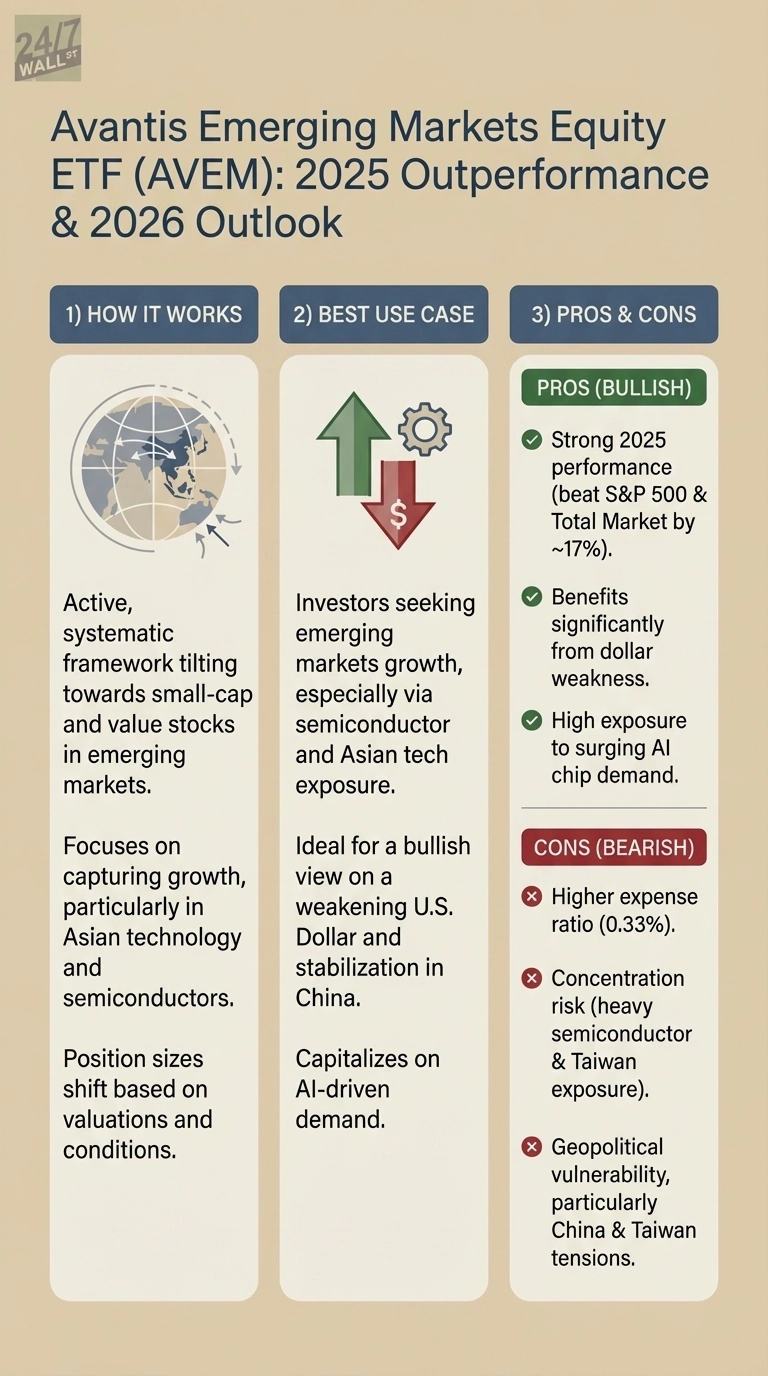
The most important macro factor for AVEM in 2026 is dollar strength. When the dollar weakens, as it did through much of 2025 with a 9% decline, emerging market assets become more attractive. Dollar-denominated debt gets cheaper to service, capital flows back into developing economies, and local currency returns improve for U.S. investors.
Watch the dollar index weekly. If it breaks above recent highs and stays there, AVEM’s momentum could stall regardless of individual company performance. Continued dollar weakness provides tailwinds. The Federal Reserve’s rate decisions matter, but so do trade policy shifts and global growth expectations. Monitor monthly Federal Reserve policy statements and quarterly GDP reports from major emerging economies, particularly China and India.
China’s economic trajectory is the second critical variable. With heavy exposure to Chinese tech giants like Tencent and Alibaba, plus significant positions in Chinese banks, AVEM rises and falls with Beijing’s policy decisions. The government’s recent pivot toward supporting the private sector and stimulus measures helped fuel 2025’s gains. If that support continues or accelerates in 2026, AVEM benefits. If Beijing tightens or geopolitical tensions escalate, the fund faces headwinds.
What’s Under the Hood: Semiconductors and the Taiwan Risk
AVEM’s largest holding is Taiwan Semiconductor (NYSE:TSM) at 6.35% of the portfolio. Add Samsung Electronics, SK Hynix, and MediaTek, and semiconductor exposure dominates returns. This concentration delivered spectacular results in 2025 as AI chip demand surged, but creates vulnerability. If the semiconductor cycle turns or supply chain disruptions emerge, AVEM will feel it immediately.
The more subtle risk is geographic. Taiwan represents a significant portion of holdings, creating geopolitical exposure that doesn’t exist in broad U.S. market funds. Watch for any escalation in cross-strait tensions or changes in U.S.-China tech policy that could impact semiconductor companies. TSM’s Arizona expansion reduces some risk over time, but the concentration remains meaningful.
Check the fund’s monthly holdings file on the Avantis website to track any shifts in semiconductor weighting. The fund employs active management within its systematic framework, so position sizes can change based on valuations and market conditions.
Consider IEMG for Simpler, Cheaper Exposure
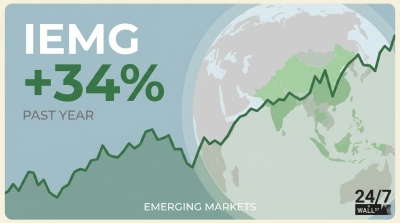
The iShares Core MSCI Emerging Markets ETF (NYSEARCA:IEMG) offers a straightforward alternative. With $117 billion in assets versus AVEM’s $15.1 billion, IEMG provides significantly deeper liquidity. Its 0.09% expense ratio undercuts AVEM’s 0.33% fee by a wide margin, and its pure index approach eliminates the active management overlay that Avantis employs.
AVEM tilts toward smaller companies and undervalued stocks, while IEMG tracks the broader market-cap weighted index. In 2025, AVEM’s approach paid off. Whether that continues depends on whether value and size factors keep working in emerging markets or if the largest companies reassert dominance.
For 2026, the key question is whether dollar weakness persists and whether AVEM’s semiconductor-heavy positioning continues to capture AI-driven growth or becomes a source of volatility.











 Top Gaining Stocks
 Top Losing Stocks