


Watch the Video
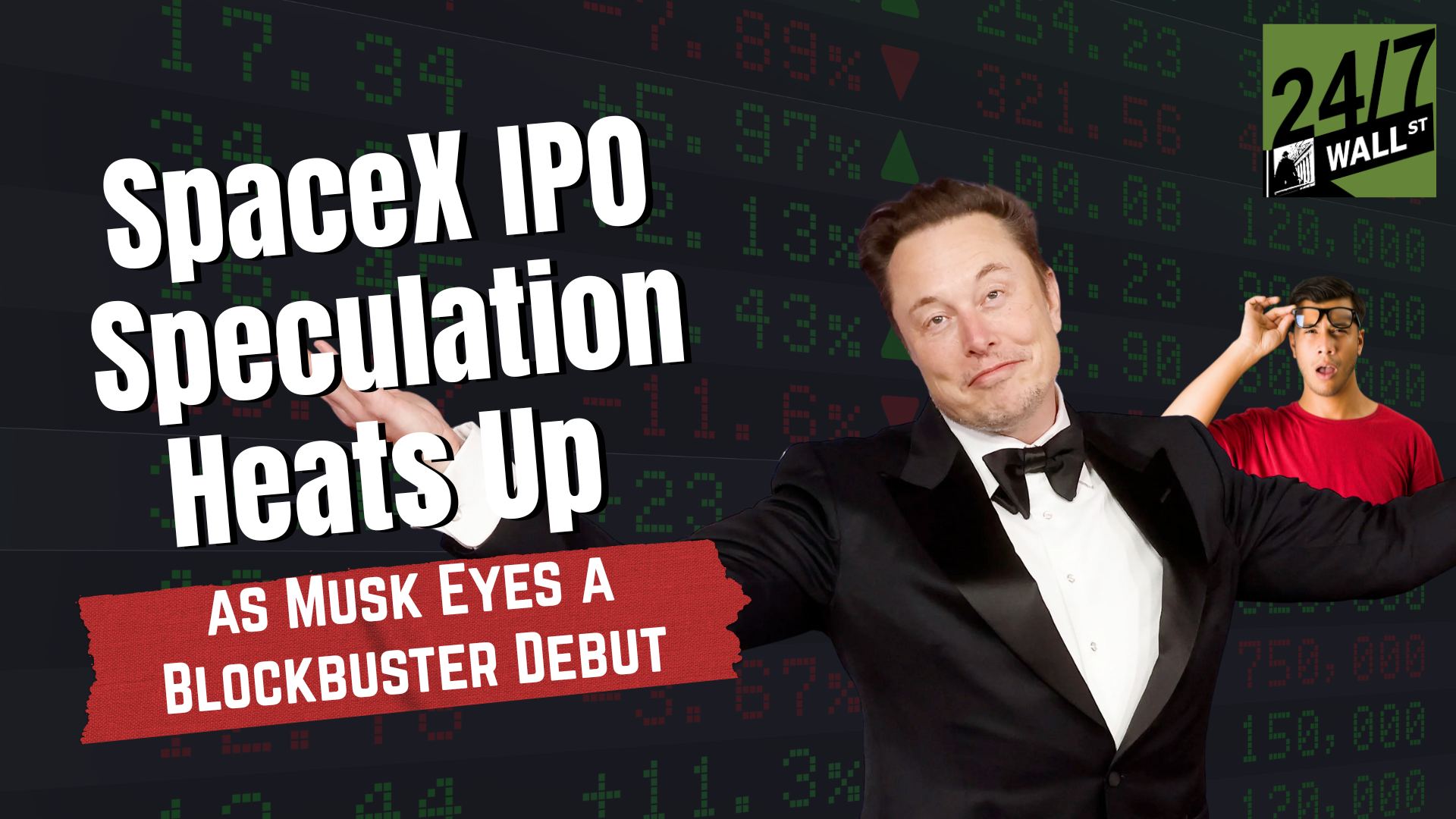
I opened the conversation by noting that Elon Musk, the richest man in the world, has most of his wealth split between public and private companies, and now appears ready to take one of his most valuable private assets public. Lee agreed and said Musk has been dropping increasingly clear hints that a SpaceX IPO is coming, likely sooner rather than later.
A potential deal of historic scale
Lee laid out the numbers, and they are staggering. A SpaceX IPO could imply a total company valuation of $1.5 trillion to $2 trillion, with the offering itself raising roughly $30 billion. For Wall Street, that would be transformative. Equity capital markets have been largely dormant for years, first shut down during COVID and only briefly reopening since. Lee said bluntly that a deal of this magnitude could open the floodgates for IPOs that have been stuck in the pipeline.
I added that from Musk’s perspective, this is yet another way to monetize value while retaining control. But I also raised concerns about execution risk. Rockets exploding may be part of development, but at some point reliability matters, especially when those rockets underpin the long-term valuation narrative.
Technology promise versus operational risk
Lee pointed out that SpaceX is far more than rockets. The satellite internet business alone is a powerful asset and a major part of the bull case. Still, I cautioned that the next-generation rockets Musk is promoting are also among the most expensive components of the story. Persistent failures could test investor patience once the company is public and subject to quarterly scrutiny.
Both of us agreed that if SpaceX does come public, the stock will almost certainly surge on day one. A 50% to 70% first-day move would not be surprising, assuming anyone outside institutions can even get shares.
Retail access and allocation reality
Lee noted that while retail allocation in IPOs is typically limited, Musk may pressure banks to broaden access rather than funneling the majority of shares to a handful of institutional accounts. Platforms like Robinhood (NASDAQ: HOOD) | HOOD Price Prediction could play a role in distributing shares to individual investors, especially given Musk’s retail following.
Even so, demand will be enormous, and most investors should not expect meaningful allocations. That reality led us to the more important discussion of timing.
Why patience often pays with IPOs
I offered a clear warning to IPO enthusiasts. The first day is usually a party, but the hangover often follows. Facebook was the example we both remembered vividly. After a massive debut, the stock was eventually cut in half within months before becoming one of the greatest long-term investments of the last decade.
Lee reinforced that point, noting that even many of today’s largest tech leaders traded flat or lower after their IPOs. Lockup expirations, early profit-taking by institutions, and the first earnings report often create selling pressure that offers better entry points.
What investors should watch
We wrapped up with practical advice. If you get a small allocation, take it. But for larger positions, it often makes sense to wait. Read the prospectus, study the lockup provisions, and understand who can sell and when. Buying without knowing those details is, as I put it, walking into a knife fight unprepared.
A SpaceX IPO would be one of the most important market events in years. The opportunity could be enormous, but so are the risks. For investors, discipline and patience will matter just as much as enthusiasm.
Transcript:
[00:00:04] Doug McIntyre: So our friend, the richest man in the world, Elon Musk, he has a lot of money in some stuff that’s public and a lot of money in private. He wants to take one of his private companies public. Tell me about it.
[00:00:19] Lee Jackson: Well, he’s always hinted at this and so it started, he started dropping little minor hints about it earlier this week and so.
[00:00:30] I’ll guarantee you there’s investment bankers that are literally just going, oh my God, I can make my year on this next year. And ’cause, I’ll lemme give you the data on this ’cause I just happen to have it handy. The SpaceX IpO. Could have a 1.5 to 2 trillion total value with the IPO being a stunning $30 billion.
[00:00:55] I mean, that will just be absolutely gigantic. And the interesting thing is I mean, the equity capital markets, for the last five years have been horrible. It got shut down during COVID, came back a little bit last year. I used to be a big player at this 20 years ago as a salesman, and it’s been horrible.
[00:01:16] But there’s some thought on Wall Street that the big SpaceX IPO could open the door for just an onslaught of deals because there’s been so much put into the pipeline that’s never come out.
[00:01:28] Doug McIntyre: Yeah, it’s very true. And look, it’s another way for Mr. Musk to get richer and richer. The question with that IPO is will his rockets keep exploding. There’s the promise of SpaceX isn’t just that, it’ll take people into space and you can give money to Musk and he’ll deliver a refrigerator into space for you, but the rockets does what they’re delivering. But okay, maybe.
[00:01:55] Well, and listen, he is got this great satellite, true. He’s got the great satellite internet, business, but you can’t have your rockets keep blowing up. There’s a point. There’s a point at which, that’s expensive. It’s expensive. It’s also the rockets that he says are the next generation of what makes SpaceX valuable.
[00:02:19] So I am leery about SpaceX. It’s a stock that goes public. It runs up 50%, 50, 60, 70% the opening day. If you can get it as hot stocks like this very often you can Well, yeah, and you can’t get, even get a share.
[00:02:37] Lee Jackson: The investment banks, listen, the retail allocation will not be huge, but I will guarantee you Musk will probably tell the banks, you will allocate some to retail rather than just given, it’s usually, well, 85% of the stock went to our top, 15 accounts.
[00:02:55] If I had 10 bucks for every time I heard that, I’d be, I don’t know, owning SpaceX myself. But I think you’re right. I think there’ll be a lot of demand and, it could be a little tough to get, but it’s gonna be so huge. I mean, it’s gonna be so big share wise, the share count’s gonna be gigantic that hopefully the retail people, where they feed it through Reddit and, other
[00:03:21] Doug McIntyre: Robinhood or whatever, Robinhood,
[00:03:24] Lee Jackson: Places like that.
[00:03:25] So, Yeah. But if that comes next year, boy, that’s gonna be the deal of the century so far.
[00:03:33] Doug McIntyre: One of the things I would caution people about who love IPOs, what I like to do is I like to watch the thing the first day. There is almost always a hangover. I remember this was Facebook when it went public, it, oh God, yeah.
[00:03:50] We booked on it. It was huge.
[00:03:51] Lee Jackson: It got cut in half from its IPO price.
[00:03:54] Doug McIntyre: So one of the things that people ought to look at, here’s some advice for you all, is consider waiting for the hangover. There’ll be a big booze party the day that SpaceX goes public, right? You could buy it when it’s up 40% at three o’clock in the afternoon, right?
[00:04:13] Or you could say, you know something? I bet you this goes down 20 or 30% in the next month, right? If you love the company, go take a look at some of these patterns, go Google some of the stocks that went public, people were very excited, but then there was a real back off. Quite often it’ll happen when their first earnings come out.
[00:04:36] Lee Jackson: Yeah. Almost all of the Magnificent Seven traded down initially. Yeah, initially and or flat. But again, you were right. I mean, Facebook, I think every price that, 40 bucks. 42 bucks. It was 17 within four months, five months, something like that. Yeah. And then, one of my friends bought a ton of it at 17, probably sold it too early, but made a lot of money.
[00:05:03] But I think your advice is good is that, I mean, if you put in for some stock and you get some great, you’re not gonna get a thousand shares. You’re not, no. You may get a hundred. So if you can get a hundred, take it. But I think Doug’s advice is good. Just see if it doesn’t trade back.
[00:05:20] See if some of the, the big guys that got a ton of stock, don’t try to thin out their herd a little bit, because trust me, they’re in the movement business, not the holding business.
[00:05:29] Doug McIntyre: And so, well in some of these stocks, good advice, right? In some of these stocks, there’s a lockup period.
[00:05:35] Lee Jackson: Yes. Well, and typically for insiders anywhere from six months to a year, but that may be a caveat put on the big banks as well. You never know,
[00:05:44] Doug McIntyre: Right? So another thing to watch for is, when you’re looking at an IPO, look at the prospectus and see what the lockups are. Right. See who’s locked up, how many shares they’ve got, because you’re walking into a knife fight if you buy something and don’t look at the lockup provisions.
[00:06:02] Lee Jackson: Yeah. ‘Cause it can be six months or a year, or sometimes it’s 18 months. But yeah, that’s super good advice. And listen, even if you just indicate for it, you can get a prospectus just by indicating, so, that’s a good way to get one. Just go to your broker, say, I want to indicate for SpaceX or whatever
[00:06:19] and, they’ll have to send you a link to the prospectus so then you can check it out for yourself. And they will, they will,










 Top Gaining Stocks
 Top Losing Stocks