


The First Trust RBA American Industrial Renaissance ETF (NYSEARCA:AIRR | AIRR Price Prediction) delivered a 30% return in 2025, nearly doubling the S&P 500’s 16% gain. The fund’s concentrated bet on small and mid-cap industrial companies positioned it perfectly for the post-election policy shift. With 91% of assets in industrials and just 52 holdings, AIRR offered pure exposure to the onshoring thesis.
Exceptional gains in top positions drove performance. Comfort Systems USA (NYSE:FIX), the second-largest holding at 3.9%, surged 123% on HVAC and building systems demand from new domestic manufacturing facilities. Top holding C.H. Robinson (NASDAQ:CHRW) gained 65% from logistics complexity of reshoring supply chains. Infrastructure builder MasTec climbed 60%. When your three largest holdings all deliver 60%+ returns, beating the market becomes straightforward.
What Tariff Policy Does Next Matters Most
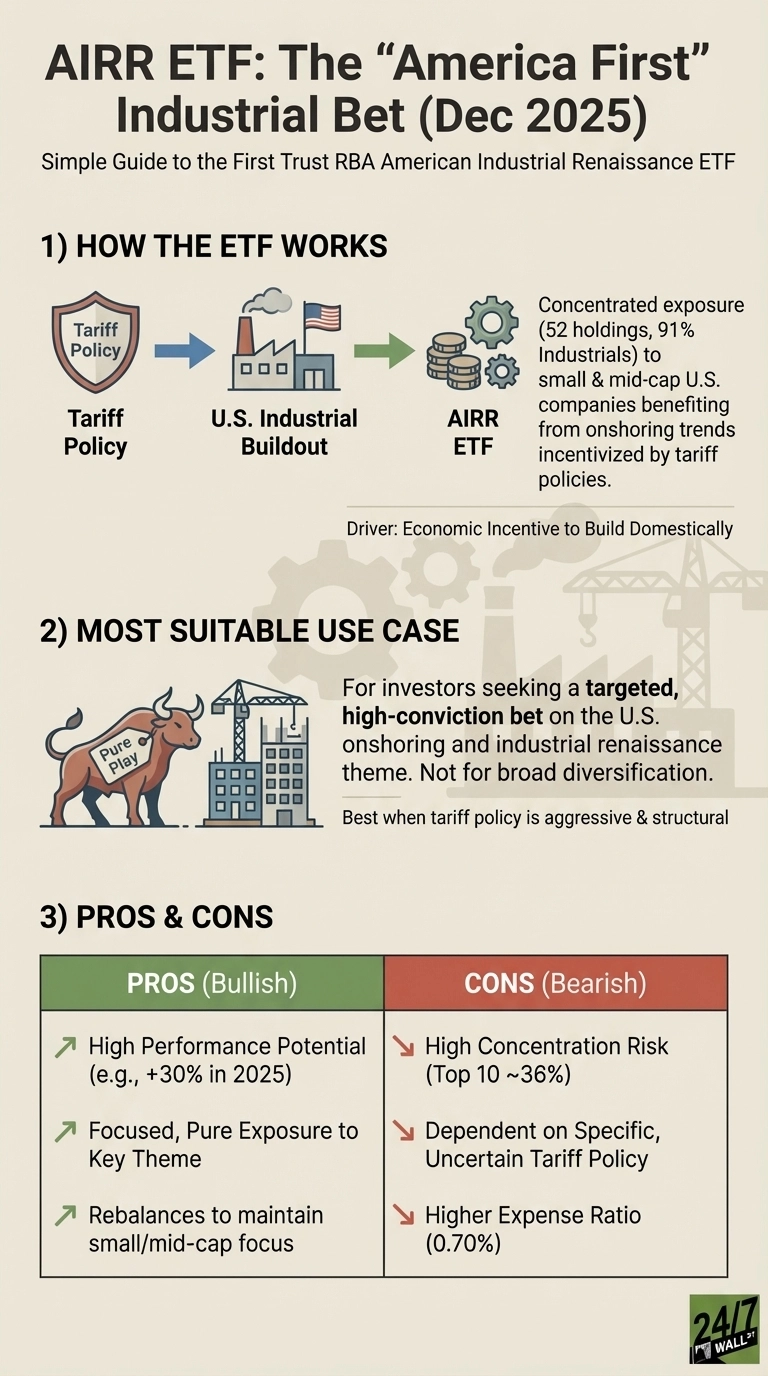
The biggest macro factor for AIRR in 2026 is the scope and persistence of Trump administration tariff policy. The fund’s thesis depends on companies finding it economically compelling to build factories, warehouses, and infrastructure in America rather than importing finished goods. Tariffs create that incentive by raising the cost of foreign production relative to domestic alternatives.
Monitor the Office of the United States Trade Representative’s tariff announcements and Section 301 investigation updates. Watch whether tariffs expand beyond China to other manufacturing hubs, and whether rates increase from current levels. Equally important is whether existing tariffs remain in place or get rolled back as part of trade negotiations. Any signal that tariffs are temporary rather than structural would undermine the long-term investment case for domestic industrial buildout.
Holdings Concentration and Rebalancing Mechanics
With just 52 holdings and 91% in industrials, AIRR’s micro risk is concentration. The top 10 positions represent roughly 36% of assets. The fund rebalances quarterly to maintain exposure to small and mid-cap companies with positive earnings estimates, meaning successful holdings that appreciate significantly may get trimmed. After Comfort Systems USA’s 123% surge, position sizing likely requires adjustment.
Check First Trust’s monthly fact sheet and quarterly holdings reports to track changes in top positions and sector drift. The fund’s 60% annual turnover reflects active rebalancing to maintain the small and mid-cap focus as companies grow. Winners get sold to maintain diversification, but new positions get added as fresh opportunities emerge.
PAVE Offers Broader Infrastructure Exposure
The Global X U.S. Infrastructure Development ETF (NYSEARCA:PAVE) offers a complementary approach with $9.8 billion in assets versus AIRR’s $6.1 billion, providing deeper liquidity. PAVE holds 104 companies compared to AIRR’s 52, reducing single-stock risk while maintaining 74% industrials exposure. The expense ratio is lower at 0.47% versus AIRR’s 0.70%, and PAVE includes more large-cap infrastructure plays like Howmet Aerospace and Quanta Services alongside smaller builders.
The key difference: PAVE captures infrastructure spending regardless of whether it’s driven by onshoring or general economic growth, while AIRR is a concentrated bet specifically on the American industrial renaissance theme. For 2026, watch whether tariff policy remains aggressive enough to justify AIRR’s concentration, or whether broader infrastructure exposure makes more sense as the trade war narrative evolves.










 Top Gaining Stocks
 Top Losing Stocks