


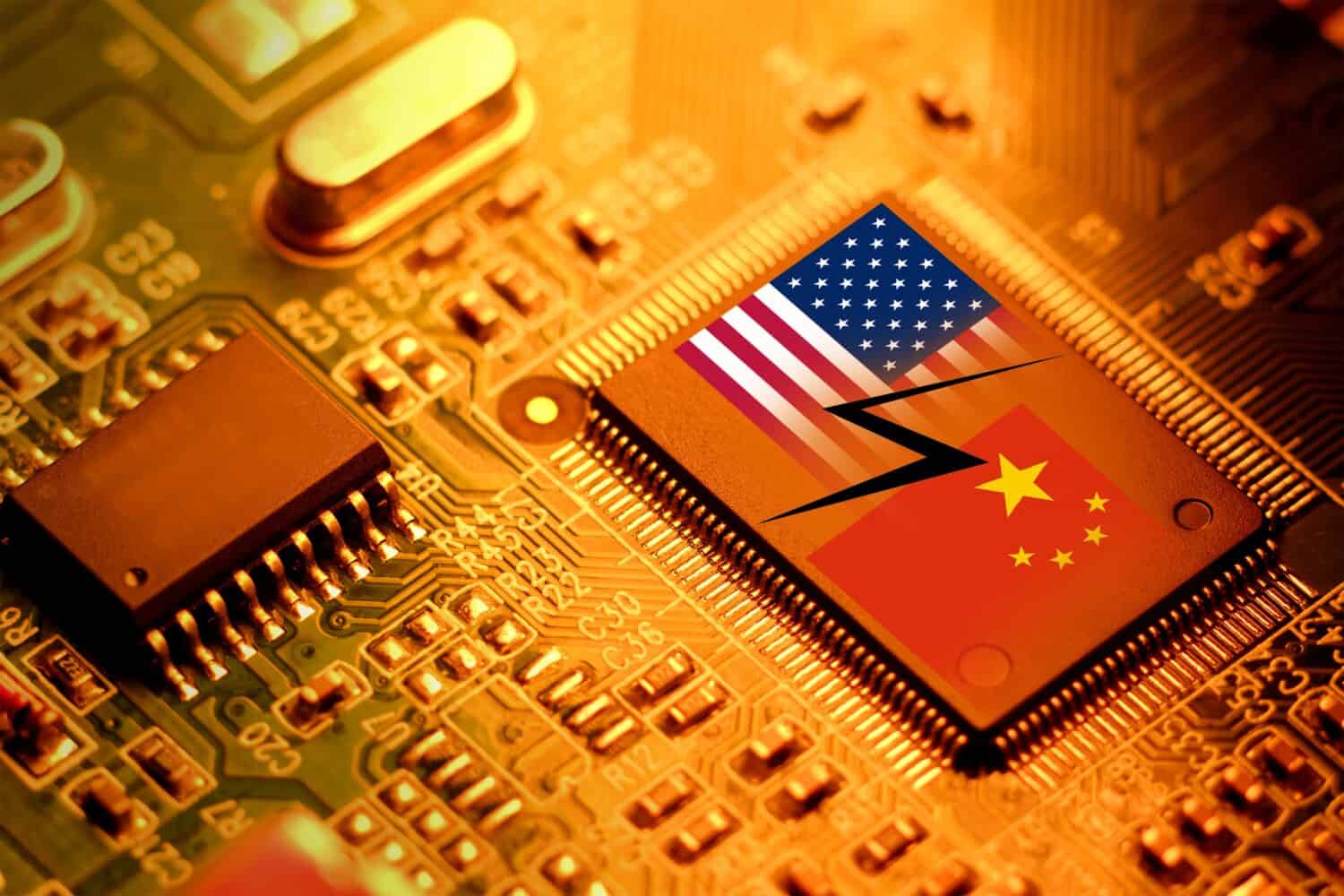
The Global X Autonomous & Electric Vehicles ETF (NYSEARCA:DRIV) captures the EV revolution without betting on a single winner. With the fund up 33% over the past year (more than double the return Chinese EV leader BYD shares), and now the question is whether US technology’s lead can hold.
Tesla and US chipmakers like NVIDIA (NASDAQ:NVDA | NVDA Price Prediction) and Qualcomm (NASDAQ:QCOM) lead in autonomous driving and semiconductor innovation. But BYD’s competitive pressure continues to mount against Tesla (NASDAQ:TSLA), with the Chinese manufacturer expanding its global market share rapidly.
The Trade Policy Wild Card
The biggest macro factor for DRIV isn’t consumer demand or battery costs. It’s trade policy: tariffs and industrial incentives that determine where EVs get built and sold. DRIV holds $340 million in assets split between US tech giants and global automakers. When tariff threats emerge or federal EV tax credits shift, the fund’s diverse holdings react differently.
Watch for announcements from the Office of the US Trade Representative on Chinese EV and battery component tariffs. These typically surface quarterly or around major trade negotiations. The federal EV tax credit structure also matters. Changes favor domestic manufacturers like Tesla and General Motors (NYSE:GM), both top-10 DRIV holdings, while penalizing funds with Chinese exposure.
When tariffs on Chinese solar panels took effect in 2018, US-focused solar ETFs outperformed by double digits. A similar dynamic could play out if stricter EV trade barriers emerge in 2026.
It’s a Chip Fund in Disguise
DRIV’s structure reveals something counterintuitive: information technology represents 29% of holdings, the largest sector allocation. Consumer discretionary, where automakers live, is only 24%. Alphabet (NASDAQ:GOOGL) leads at 4.1% for Waymo’s autonomous tech. NVIDIA and Qualcomm combine for 5% exposure to automotive AI chips.
If the US maintains its EV edge, it won’t be through cheaper cars. It’ll be through superior semiconductors, software, and autonomous systems. DRIV is positioned accordingly. Chinese EV makers like BYD, NIO, and XPeng combine for under 5% of the portfolio.
Check Global X’s monthly fact sheet to track sector drift. If information technology allocation rises above 30%, the fund is doubling down on the US technology advantage thesis. If it falls, managers may be hedging against a scenario where Chinese manufacturers close the gap through volume rather than innovation.
Consider IDRV for Lower Costs
The iShares Self-Driving EV and Tech ETF (NYSEARCA:IDRV) offers similar exposure with a 0.47% expense ratio versus DRIV’s 0.68%. That 21 basis point difference compounds over time. IDRV holds $168 million in assets with Tesla as its second-largest position at 4.7%, slightly higher than DRIV’s 3.4%. The trade-off: IDRV has higher Chinese EV exposure with BYD, NIO, and XPeng combining for roughly 11% of the portfolio.
The Bottom Line
Over the next 12 months, watch trade policy announcements from Washington for the macro signal and DRIV’s information technology sector allocation for the micro one. If both trend favorably, the fund’s 33% gain could extend considerably.












 Top Gaining Stocks
 Top Losing Stocks