iShares ACWX ETF Throws Out US Companies And Somehow Still Doubled The S&P 500 Returns

Photo of Michael Williams
By Michael Williams Published

Quick Read

  • ACWX gained in 2025 as US dollar weakness amplified returns from international stocks for dollar-based investors.

  • The fund holds $7.3B across 2,000 non-US stocks with a 0.32% expense ratio and just 12% in top 10 holdings.

  • IXUS offers nearly identical exposure at 0.07% compared to ACWX’s 0.32% fee.

This post may contain links from our sponsors and affiliates, and Flywheel Publishing may receive compensation for actions taken through them.
iShares ACWX ETF Throws Out US Companies And Somehow Still Doubled The S&P 500 Returns

© Dilok Klaisataporn / Shutterstock.com

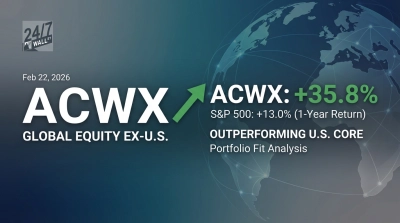
The iShares MSCI ACWI ex U.S. ETF (NASDAQ:ACWX | ACWX Price Prediction) has had an incredible 2025, despite excluding all US companies from its portfolio. After years of trailing domestic equities, international stocks have shown renewed strength in 2025 and ACWX is at the front of the pack. 

The fund tracks the MSCI ACWI ex USA Index, providing exposure to roughly 2,000 stocks across developed and emerging markets outside the United States. Think Tencent in China, SAP in Germany, ASML in the Netherlands, Samsung in South Korea. No Apple, no Nvidia, no Microsoft. The portfolio splits roughly evenly between Europe and Asia, with smaller positions in Canada, Australia, and Latin America.

The Dollar Made the Difference

A key macro force behind international equity performance has been US dollar movement. When the dollar weakens, international stocks get a tailwind for US-based investors. Returns earned in euros, yen, or pounds translate into more dollars when converted back.
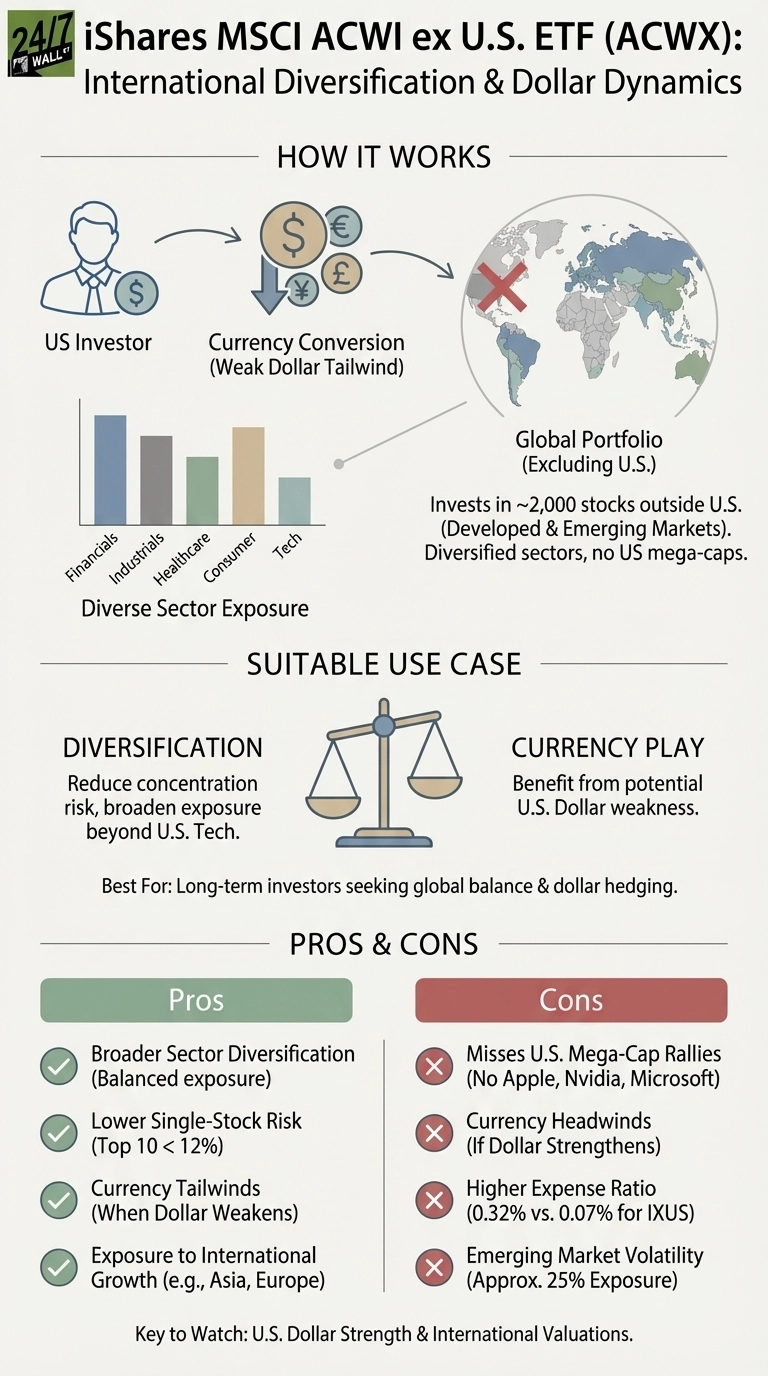
An infographic titled 'iShares MSCI ACWI ex U.S. ETF (ACWX): International Diversification & Dollar Dynamics'. The infographic is divided into three main sections: 'How It Works', 'Suitable Use Case', and 'Pros & Cons'. The 'How It Works' section shows an icon of a US investor sending money for currency conversion (represented by dollar, euro, yen, pound symbols with a downward arrow indicating a weak dollar tailwind) to a global portfolio excluding the U.S. (world map with a red 'X' over the US). Text states it 'Invests in ~2,000 stocks outside U.S. (Developed & Emerging Markets). Diversified sectors, no US mega-caps.' Below this is a bar chart showing 'Diverse Sector Exposure' with bars labeled Financials, Industrials, Healthcare, Consumer, and Tech. The 'Suitable Use Case' section highlights 'Diversification' (reduce concentration risk, broaden exposure beyond U.S. Tech) and 'Currency Play' (benefit from potential U.S. Dollar weakness), with a balanced scale icon in the center. Text below reads 'Best For: Long-term investors seeking global balance & dollar hedging.' The 'Pros & Cons' section is presented in two columns. The 'Pros' column, with green checkmarks, lists: 'Broader Sector Diversification (Balanced exposure)', 'Lower Single-Stock Risk (Top 10 < 12%)', 'Currency Tailwinds (When Dollar Weakens)', and 'Exposure to International Growth (e.g., Asia, Europe)'. The 'Cons' column, with red 'X' marks, lists: 'Misses U.S. Mega-Cap Rallies (No Apple, Nvidia, Microsoft)', 'Currency Headwinds (If Dollar Strengthens)', 'Higher Expense Ratio (0.32% vs. 0.07% for IXUS)', and 'Emerging Market Volatility (Approx. 25% Exposure)'. At the bottom, 'Key to Watch:' states 'U.S. Dollar Strength & International Valuations'.
24/7 Wall St.
This infographic illustrates how the iShares MSCI ACWI ex U.S. ETF (ACWX) provides international diversification and currency exposure, outlining its benefits and drawbacks for investors.

Beyond currency, ACWX benefits from more balanced sector exposure. While the S&P 500 carries a 34% weight in technology stocks, ACWX spreads risk more evenly across financials, industrials, healthcare, and consumer sectors. That diversification provides different return characteristics than US-focused funds.

Looking ahead, watch the dollar. If it stabilizes or strengthens in 2026, that currency boost fades. The DXY index and Federal Reserve policy commentary are key signposts. A resurgent dollar could compress international equity returns for US investors, even if foreign stocks perform well in local currency terms.

What to Monitor Inside the Fund

ACWX holds $7.3 billion in assets with a 0.32% expense ratio and 2% dividend yield. The top 10 holdings represent just 12% of the portfolio, far lower than the S&P 500’s 39% concentration in its top 10. That’s a structural advantage in volatile markets, but it also means ACWX won’t capture mega-cap rallies the way a US-focused fund might.

The fund’s quarterly rebalancing can shift country and sector weights as index constituents change. Check the iShares website for updated holdings and geographic breakdowns, typically refreshed monthly. Pay attention to emerging market exposure, which sits around 25% of the portfolio. If growth in China, India, or Southeast Asia accelerates or stumbles, that will move the needle.

A Lower-Cost Alternative

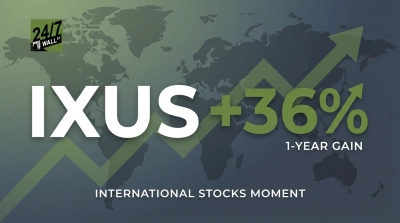
Investors seeking similar exposure with tighter expenses should consider the iShares Core MSCI Total International Stock ETF (NASDAQ:IXUS). It tracks a nearly identical index with a 0.07% expense ratio, less than a quarter of ACWX’s fee. IXUS also holds over $50 billion in assets, offering deeper liquidity and tighter bid-ask spreads. The performance difference is minimal, but over decades, that cost gap compounds.

The key question for 2026: whether the dollar stays weak and international valuations stay attractive enough to sustain the recent momentum in non-US equities.


Photo of Michael Williams
About the Author Michael Williams →

I am a long time investor and student of business, and believe finding good companies that can become great investments is the best game on earth. After 20 years of writing and researching the public markets it is clear that individuals have never had more tools and information to take control of their financial lives. From ETFs and $0 commissions to cryptos and prediction markets there has never been a greater democratization of access to investing. 

I write to help people understand the investments available to them so they can make the best choice for their portfolio, whether they're starting out or looking for income in retirement. 

Featured Reads

Our top personal finance-related articles today. Your wallet will thank you later.

Continue Reading

Top Gaining Stocks

CBOE Vol: 1,568,143
PSKY Vol: 12,285,993
STX Vol: 7,378,346
ORCL Vol: 26,317,675
DDOG Vol: 6,247,779

Top Losing Stocks

LKQ
LKQ Vol: 4,367,433
CLX Vol: 13,260,523
SYK Vol: 4,519,455
MHK Vol: 1,859,865
AMGN Vol: 3,818,618