


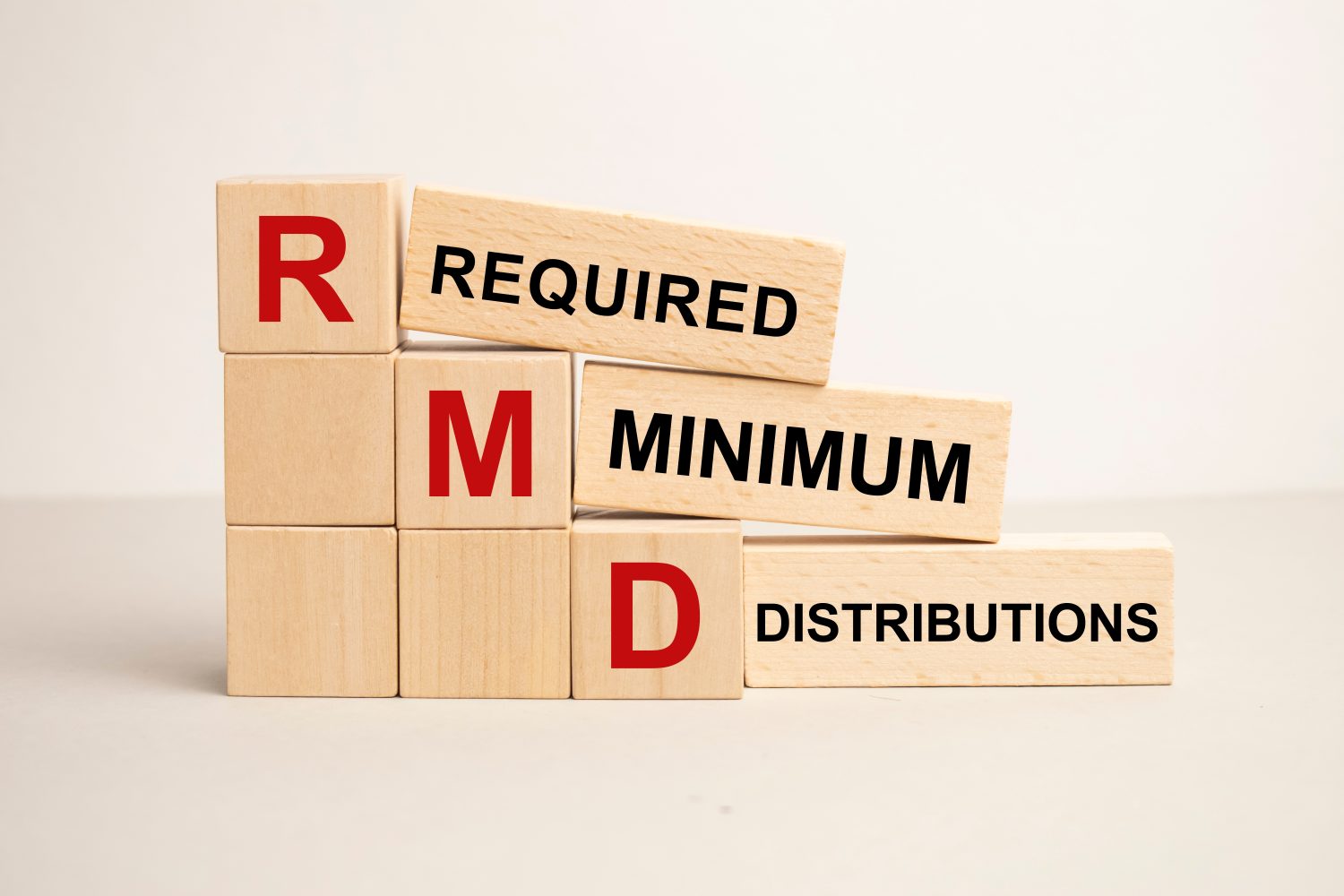
The SECURE Act of 2019 and the SECURE Act 2.0 of 2022 all but fundamentally changed retirement account rules in ways that continue to catch both retirees and their beneficiaries by surprise. The changes weren’t minor either, as they altered the required minimum distribution timeline, eliminating the stretch IRA strategies for most beneficiaries, and created new compliance deadlines that now carry some pretty severe penalties.
It goes without saying that understanding these rules is critical, as the penalties from the IRS can be steep if you are not compliant. This said, as interest rates start to shift and market volatility continues to be a question, how you are managing your Required Minimum Distributions can, unsurprisingly, have a big impact on your overall wealth.
The big takeaway here is that if you are taking the right proactive steps now, and not six months or a year from now, you can try to avoid any kind of unnecessary taxation, or even worse, the excise fee the IRS won’t hesitate to levy against you.
Rule Change 1: Key RMD Updates for Current Retirees
The most visible changes for people are going to start under the RMDs. Under the original SECURE Act, retirees who turned 72 in 2020 or later had to start their RMDs at 72 instead of 70.5. SECURE 2.0 has now raised the age to 73 for anyone who is turning 72 in 2023 or later. And starting in 2033, the RMD age is going to increase to 75.
This delay provides an additional year for assets to grow tax-deferred, which can be a valuable opportunity to fine-tune the combination of Social Security benefits and retirement withdrawals.
In addition, the SECURE 2.0 Act has eliminated the RMD requirement for Roth 401(k) accounts during the lifetime of the account owner, starting in 2024. This brings employer-sponsored Roth plans in line with Roth IRAs, which have never been subject to lifetime RMDs. By removing these mandatory distributions, retirees are now able to gain more flexibility with income planning, allowing them to preserve these tax-free assets for as long as they can before using them.
Lastly, the penalty for failing to take an RMD has been significantly reduced. Previously, the amount was set at an eye-popping 50%, but the excise tax has now been lowered to 25% for missed distributions. If the error is corrected in a timely manner, likely within around two years, the penalty can be reduced even more to 10%. These lower rates do offer some kind of relief, but you still have to consider that a missed distribution on a large account can still represent a substantial loss, making end-of-year compliance a top priority for every retiree.
Rule Change 2: The Critical Rule for Inherited IRAs (The 5-Year Impact)
The inherited IRA rule change is where much of any confusion is going to take place, and where 2025 compliance was most critical for beneficiaries who inherited accounts in recent years. Under the SECURE Act’s 10-year rule, most non-spouse beneficiaries who inherited an IRA after December 31, 2019, now only have 10 years to empty the account starting on the date of the original owner’s death.
Unfortunately, there was some misguidance that you could take nothing out for 9 years and then take it all out on the 10th year, but this was interpreted incorrectly, forcing the IRS to clarify the requirement in 2022 and against in 2024. Now, it’s crystal clear, or at least it should be, that the account must be empty by year 10. This change was put in place with the intent of accelerating the collection of tax revenue by preventing heirs from deferring taxes over teh course of decades. After years of waiving penalties for missed distributions, the IRS is bringing down the hammer and signaled earlier in 2025 that enforcement is starting. This now makes it crucial for heirs to start their required withdrawals before the end of 2025.
The impact of this rule is going to be felt particularly hard for those who are currently in the middle of their 10-year window. If you inherited an IRA in 2021 and missed distributions between 2022 and 2024, you won’t face any penalties for those years, but you won’t have the same flexibility anymore. More importantly, failing to comply means that you could trigger the 25% excise tax on the amount you were supposed to be withdrawing, potentially wiping out a large portion of the inheritance.
Avoid Penalties: Reducing Distributions and Maximizing the $23,760 Bonus
The most urgent action item that can be taken before December 31, 2025, is verifying that you have met all RMD requirements. For current retirees subject to RMDs, this means confirming your custodian is calculating and distributing the correct amount. For inherited IRA beneficiaries in years 1-10 of the distribution period whose original account owner had begun RMDs, this means taking the required annual distribution.
If you discover you have missed an RMD, take immediate action and don’t try to put it off. File Form 5329 with your tax return and report the shortfall and calculate the penalty amount so there are no surprises. The IRS may grant a reasonable cause exception if you can demonstrate that the mistake was truly accidental and that you took quick action to correct the mistake as soon as you recognized the error. Better yet, even if you pay the penalty, correcting it quickly reduces the amount from 25% to 10%, which is a substantial difference.
You could also avoid a penalty while minimizing your tax bill by considering a strategic withdrawal method such as the Qualified Charitable Distribution or QCD. If you are 70.5 and older, a QCD allows you to transfer up to $105,000 annually straight from an IRA to a qualified charity, and the amount counts toward your RMD but is not included in any adjusted gross income number, which gives you the benefit of not being squeezed into the next tax bracket.
Another opportunity that you can take advantage of, and this one is often overlooked, is maximizing the $23,760 Social Security bonus. By delaying your Social Security withdrawal until 70, you can increase your annual benefit by as much as 8% per year. If you are a high earner, this delay can mean a pay “raise” of approximately $23,760 compared to taking benefits earlier. In 2025, with the average monthly benefit running somewhere around $1,976, those who wait until they are 70 can see their checks exceed $5,100 monthly, which is nothing to ignore and can lead to a more comfortable retirement lifestyle overall.














 Top Gaining Stocks
 Top Losing Stocks