



Taking Required Minimum Distributions (RMDs) from your IRA is an integral part of planning for retirement, and the rules are seemingly always changing! With the constantly shifting life expectancy tables and potential tax penalties, staying informed is important.
In this to-the-point guide, we’ll quickly go over some of the essential information you need to know about RMDs.
Key Points From 24/7 Wall St.
- Once you turn 73, the government requires you to withdraw some money each year from your retirement accounts (except for one type called Roth IRAs). In 2024, the age limits for withdrawal changed.
- You’ll need to pay taxes on the money you withdraw, however, there are ways to reduce your tax bill, like spreading out your withdrawals over the year or giving some money directly to charity.
- If you forget to take out the required amount or take out too little, you’ll face a hefty penalty – 25% of whatever you should have withdrawn but didn’t.
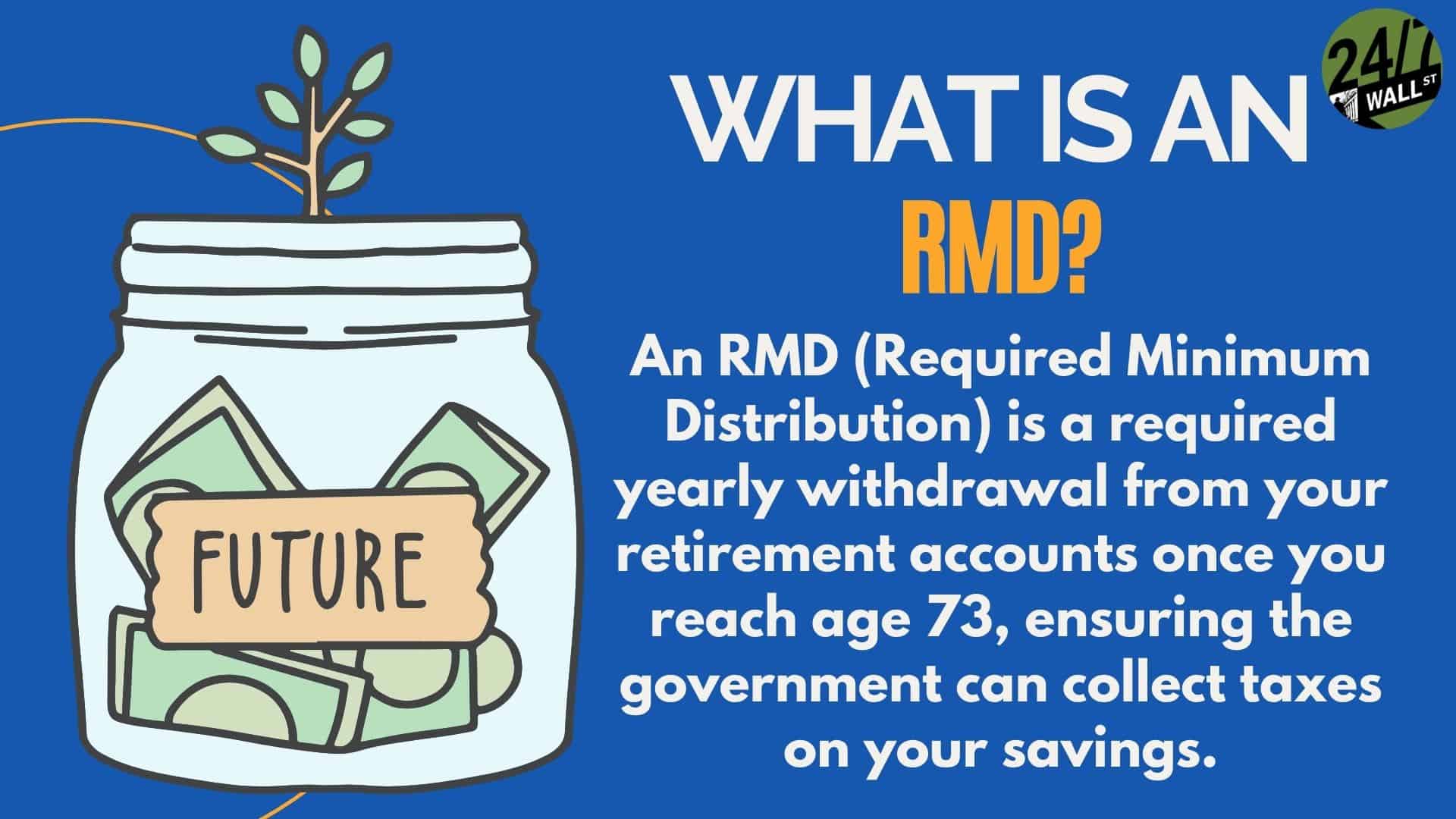
1. What Are RMDs and Who Must Take Them?
RMDs are required withdrawals that some retirement account holders must start taking once they reach a certain age. In 2024, that “certain age” is 73. So, once you reach 73, you must begin pulling a certain amount of money out of your retirement accounts. This applies to all retirement accounts, including 401(k)plans. However, it does not impact Roth IRAs (at least, not during the account holder’s lifetime).
2. New Rules for 2024
RMDs have changed significantly in 2024. First, the IRS has released a new life expectancy table. You’ll need the numbers on this table to determine exactly how much you’re required to pull out of your account. These updated tables will typically result in lower RMDs than the previous table, allowing retirees to keep their money invested for longer.
However, the penalties for not taking RMDs have also changed, generally becoming less strict.
3. How RMDs Are Calculated
Calculating your RMD is relatively straightforward. Simply divide your account balance as of December 31 of the previous year by the life expectancy factor found on the IRS tables. This formula is relatively simple, and there are several online calculators you can use, too.
(Things can get a bit more complicated if you have a spouse who is significantly younger than you, and there are several other exceptions, too.)
4. Tax Implications of RMDs
RMDs are taxed as regular income, just like other retirement withdrawals. Therefore, you’ll need to plan to pay taxes on this income and potentially find yourself in a higher tax bracket. To mitigate this tax impact, consider strategies like converting portions of your Traditional IRA to a Roth IRA before reaching the RMD age, allowing for tax-free withdrawals later.
RMDs can also affect other income sources, like Social Security benefits.
5. Penalties for Missing or Incorrect RMDs
There are potential penalties for not taking your RMD or taking less than you’re required to. Currently, the IRS imposes a penalty of 25% of the amount you didn’t take. For 2024, the penalties have been revised, but you still need to make sure you’re completing those withdrawals. For this reason, we highly recommend keeping track of minimum distribution deadlines and meeting them.
If you miss an RMD, promptly withdrawing the missed amount may help mitigate the penalties.
6. RMD Strategies for Minimizing Taxes
The main reason retirees do not like RMDs is because of the taxes. Luckily, you can minimize your tax burden somewhat by being smart with your RMDs. For instance, spreading your withdrawals out over the year can help avoid spikes in income that may affect your tax bracket.
Furthermore, if you’re charitable, you can make Qualified Charitable Distributions directly from your IRA, and these count towards your RMD (and are not included in your taxable income).
7. Impact of RMDs on Estate Planning
RMDs can also have a big impact on estate planning. If you leave a Traditional IRA to your heirs, they’ll likely be subject to RMDs as well. It’s important to get all of this figured out before the RMDs sneak up on your heirs. Consider it a part of your estate planning.
We recommend working with a financial advisor to develop strategies that minimize tax liabilities. A professional can help ensure that your beneficiaries receive the maximum benefit from your retirement savings.











 Top Gaining Stocks
 Top Losing Stocks