


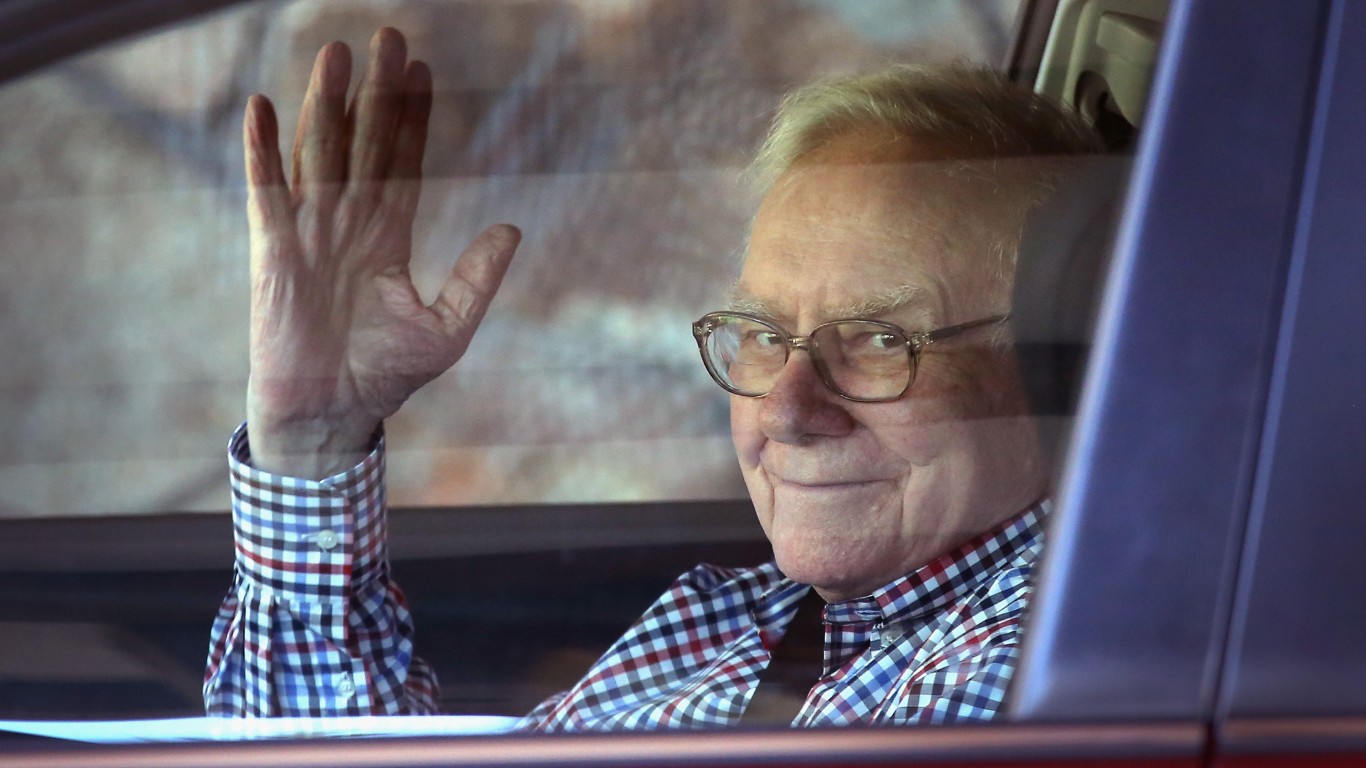
Warren Buffett’s extraordinary six-decade tenure as CEO of Berkshire Hathaway (NYSE:BRK-A | BRK-A Price Prediction)(NYSE:BRK-B) comes to a close on Wednesday. The 95-year-old legendary investor announced his retirement earlier this year, marking the end of an era for one of the world’s most successful conglomerates.
Over that time period, Buffett delivered better than 5 million percent returns, about 20% annually, or twice those of the S&P 500. There is a reason Buffett was known as the Oracle of Omaha and tens of thousands of investors flocked to Berkshire’s annual shareholder meetings.
On Jan. 1, Greg Abel, the longtime vice chairman overseeing non-insurance operations, will step into the CEO role. Investors are understandably asking if Berkshire Hathaway remains an attractive investment without Buffett at the helm?
The Buffett Mystique
Buffett’s investing style — rooted in value principles — has defined Berkshire’s success. He transformed a failing textile company into a trillion-dollar powerhouse by focusing on buying high-quality businesses at reasonable prices and holding them indefinitely. His approach emphasized intrinsic value over short-term market fluctuations, economic “moats” that protect competitive advantages, and disciplined capital allocation.
Iconic holdings like Coca-Cola (NYSE:KO), American Express (NYSE:AXP), and long-term stakes in insurance giants demonstrate this patience. But his legacy extends beyond numbers. Buffett popularized patient, principled investing through annual shareholder letters that read like masterclasses in business and ethics. He built a decentralized culture where subsidiary managers operate with autonomy, fostered trust through transparency, and amassed a massive insurance “float” to fund investments. Even in recent years, moves like building a stake in Alphabet (NASDAQ:GOOG)(NASDAQ:GOOGL) showed his willingness to evolve while staying true to core tenets.
A Change From Within
The key question is continuity under Abel. A 63-year-old Canadian with deep roots in Berkshire since 2000 (via the acquisition of MidAmerican Energy, now Berkshire Hathaway Energy), Abel has proven operational expertise. He grew the energy unit into a major player in utilities, renewables, and pipelines. Buffett has repeatedly praised Abel’s alignment with Berkshire’s culture, long-term mindset, and capital discipline. Analysts widely expect Abel to adhere to a similar value-oriented strategy: acquiring undervalued assets, prioritizing strong cash flows, and avoiding overpriced markets.
Berkshire’s structure supports this transition seamlessly. The company boasts a fortress-like balance sheet, with over $380 billion in cash and equivalents — the largest ever — providing ammunition for acquisitions or buybacks. Diversified operations in insurance, railroads (BNSF), energy, and consumer goods generate reliable earnings. Recent portfolio adjustments, including significantly trimming Apple (NASDAQ:AAPL) and adding tech exposure, reflect ongoing caution in a potentially overextended market.
A Loss of the “Buffett Premium?”
That said, challenges exist. Berkshire’s stock has lagged the S&P 500 in 2025, partly due to transition uncertainty and a massive cash hoard yielding modest returns in a high-valuation market. Some worry the “Buffett premium” — the market’s extra valuation for his genius — may erode, leading to potential multiple compression. No buybacks in recent quarters and net stock sales signal caution in an environment of elevated prices.
Yet these concerns appear priced in. Berkshire trades at a reasonable price-to-book ratio around 1.5 to 1.6, not far from historical norms, with strong underlying businesses. Abel’s untested capital allocation on a Buffett scale introduces risk, but his track record and Buffett’s endorsement (including remaining as chairman) help offset it. Buffett himself has expressed confidence that prospects “will be better under Greg’s management.”
Key Takeaway
For long-term investors, Berkshire Hathaway remains compelling. Its defensive qualities — diversification, low debt, and perpetual cash generation — shine in uncertain times. Without Buffett’s daily involvement, it may not replicate past outperformance, but the core strategy endures. Patient buyers could find an opportunity in any pullback after the transition.
In Buffett’s own words from past letters, great businesses compound over decades. Berkshire Hathaway, with Abel at the wheel continuing the value playbook, looks poised to do just that. For investors with a long horizon, the Oracle’s stock is still a buy.





 Top Gaining Stocks
 Top Losing Stocks