


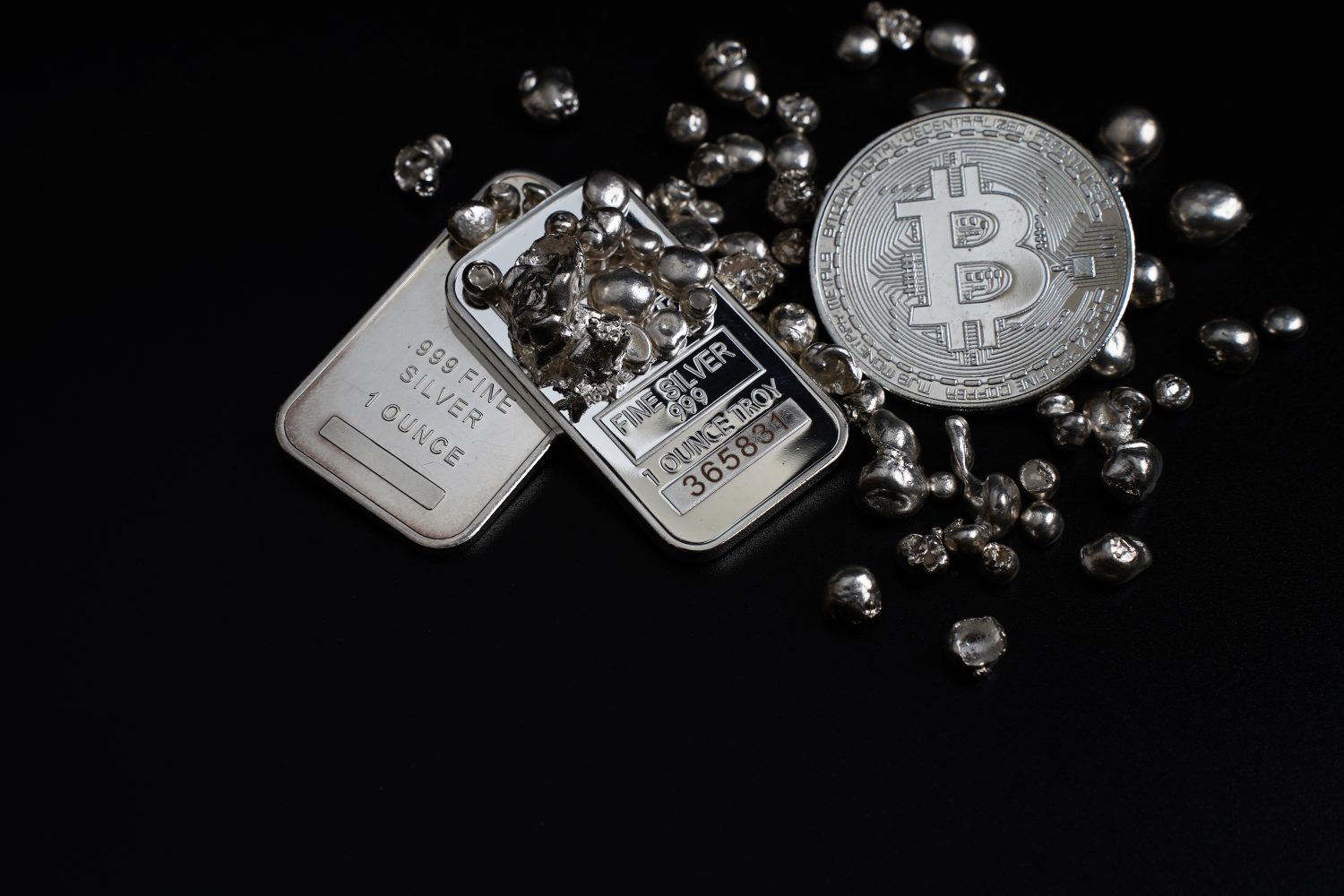
In December 2025, silver emerged as the more volatile asset over Bitcoin (CRYPTO: BTC) , marking a sharp reversal of long-held assumptions about where macroeconomic risk manifests. While Bitcoin remained stuck near $87,000 in a tight range through late last year, silver surged to $84 per ounce, with gold pushing above $4,550 to all-time highs.
The difference was in both prices and investor behavior. As inflation fears and geopolitical risks rose, investors moved into precious metals. Bitcoin, often positioned as a high-risk macro trade, traded sideways instead, showing markets weren’t pricing risk through crypto. Silver’s 30-day realized volatility surged into the mid-50% range while Bitcoin’s compressed into the mid-40s—marking a historic reversal.
The volatility gap mirrored year-end performance. Silver finished 2025 up 151%, while Bitcoin was down 7%, stuck in a holding pattern rather than a breakout phase. The question as 2026 begins isn’t whether Bitcoin can retrace—it’s whether it can reclaim its reputation as a true risk-responsive asset.
The Shocking Reversal: When Silver Became More Volatile Than Bitcoin

December delivered an outcome few expected. Silver became more volatile than Bitcoin despite Bitcoin historically running three to five times more volatile than the metal. As 2025 ended, traders actively repriced silver while Bitcoin remained largely static.
Bitcoin’s 30-day realized volatility compressed into the mid-40% range, slipping below its longer-term average. This reflected a market stuck in a narrow range lacking conviction. For an asset long treated as a fast-moving macro trade, Bitcoin’s subdued behavior stood out amid heightened global uncertainty. Silver’s realized volatility surged into the mid-50% range, driven by a strong rally and mounting stress in physical bullion markets.
The volatility gap matched performance trends. Silver finished 2025 up 151%, while Bitcoin ended down 7%. Structural factors supported silver’s surge: industrial demand for solar energy, electric vehicles, and electronics rose while supply struggled to keep pace. China’s January 2026 export licensing restrictions tightened physical availability expectations, pushing spot prices in major hubs above futures benchmarks. Backwardation in London’s forward curve signaled immediate scarcity.
The momentum has carried into early 2026, with silver advancing toward $74 per ounce and gold extending its historic rally. Bitcoin remains locked between $86,000 and $90,000, with volatility declining across key measures. Markets made a clear choice—capital flowed into assets tied to physical scarcity and geopolitical hedging, leaving crypto largely sidelined.
Why Capital Chose Metals Over Crypto: Three Macro Drivers

As global risks intensified into late 2025, investors favored assets with established crisis credentials over digital alternatives.
Geopolitical Chaos Favored Traditional Safe Havens
Escalating tensions prompted investors toward familiar havens. Energy infrastructure attacks linked to the Russia-Ukraine conflict, renewed Middle East instability, and ongoing Yemen disruptions reinforced demand for assets with a long crisis-performance history. President Trump’s warnings about potential strikes on Iran’s nuclear program amplified regional risk. Gold and silver benefited from established safe-haven status, while Bitcoin struggled to attract comparable defensive flows.
Inflation and Debt Fears Strengthened the Metals Hedge
U.S. national debt surged past $38 trillion by late 2025, accelerating rapidly after exceeding $36 trillion the previous year. Widening deficits and persistent government spending reinforced currency debasement fears. For many investors, gold and silver offered more intuitive inflation hedges than digital alternatives. The contrast underscored why, during Bitcoin’s volatility compression, the metals narrative resonated more strongly than “digital gold.”
Physical Supply Tightness Drove Real-World Pressure
Tangible supply constraints boosted silver’s appeal. Rising industrial demand from solar panels, EVs, and electronics collided with limited mine supply, creating genuine physical tightness that translated directly into price pressure. Bitcoin remained a digital abstraction with no equivalent supply stress, reinforcing the behavioral gap between assets.
Is Bitcoin Still a “Risk Asset” or Evolving to “Digital Gold”?

Markets typically draw clear lines between risk assets and safe havens. Risk assets like stocks and crypto rise when confidence is strong and fall when fear dominates. Safe havens like gold and government bonds attract capital during stress. Bitcoin has long been characterized as a risk asset with upside leverage and, more recently, as potential digital gold.
In 2025, that framework broke down. Bitcoin behaved like a classic risk asset during the early rally phase, then stopped responding altogether. Stocks pushed higher, safe havens like gold rallied, yet Bitcoin remained stuck in a narrow range. This unusual pattern raised questions about how markets truly view the asset.
The “digital gold” narrative also struggled. If Bitcoin were functioning as a reliable gold substitute, its performance should have mirrored gold’s strength. Instead, gold reached new all-time highs in Q4 2025 while Bitcoin traded roughly 30% below its prior peak. The divergence weakened claims that Bitcoin already serves as a mature store of value during macro stress.
Institutions still treat Bitcoin primarily as a risk asset. When fear rises, exposure is reduced rather than increased. Correlation with technology stocks remains elevated, reinforcing Bitcoin’s sensitivity to risk sentiment rather than inflation or geopolitical hedging demand. The transition from speculative asset to trusted reserve would require many more years of consistent behavior across cycles.
Bitcoin now sits in an uncomfortable middle ground. It no longer rallies reliably with equities, yet fails to attract safe-haven flows when uncertainty spikes. This identity crisis will shape Bitcoin’s 2026 volatility and determine whether the asset reclaims its risk-driven character or continues drifting between narratives.
Can Bitcoin Reclaim Volatility Crown in 2026? Three Scenarios

The debate over Bitcoin’s volatility centers on liquidity, institutional behavior, and macroeconomic risk. Three scenarios map to price expectations circulating among major financial institutions.
Bullish Case: $150,000-$170,000
Aggressive Fed rate cuts could trigger liquidity surge, prompting investors back to risk assets. If that happens, Bitcoin could break decisively above $100,000, triggering renewed retail FOMO and leveraged positioning. Volatility expands sharply in both directions as price discovery resumes at higher levels.
This validates upside forecasts including Standard Chartered’s $150,000 target, JPMorgan’s $170,000 estimate, and more optimistic projections assuming explosive momentum. Under this scenario, Bitcoin reclaims volatility crown through rapid rallies, sharp pullbacks, and widening trading ranges.
Base Case: $143,000 With Contained Volatility
Citi’s $143,000 base case assumes Bitcoin appreciates while volatility remains contained. Institutional dominance persists, and sophisticated option strategies limit extreme price swings. Bitcoin trends higher, supported by ETF inflows and macroeconomic easing, but behaves more like maturing macro asset than speculative rocket. Volatility doesn’t disappear—it’s smoother, more structured, and less explosive than past bull cycles.
Bearish Case: Crash Reinforces Risk Asset Identity
If a global recession or severe risk-off shock hits markets, Bitcoin could crash alongside equities, reinforcing its identity as a risk asset rather than haven. Volatility returns aggressively on the downside with sharp sell-offs, forced liquidations, and failed rallies. Here, the BTC price would struggle to sustain levels near Citi’s prediction and fall well below bullish targets. This outcome would challenge the “digital gold” narrative and demonstrates Bitcoin’s volatility hasn’t vanished—it simply re-emerged under stress.
Is Silver’s Surge a Warning or a Setup for 2026?
Bitcoin’s volatility in 2025 ended with an unusual twist with silver overtaking BTC. But the evidence strongly favors this being temporary rather than structural.
The late-2025 compression in Bitcoin price action reflects year-end market mechanics—thin liquidity, completed institutional positioning, and risk-off flows driven by geopolitical uncertainty. Capital flowed into physical metals, intensifying the volatility contrast. This doesn’t mean Bitcoin lost relevance—it highlights a pause in speculative activity as Bitcoin trades increasingly like a maturing macro asset.
Bitcoin’s 2026 volatility is likely to reawaken as these suppressive forces fade. Once tax-season selling clears in January, Q1 capital deploys, and the Fed provides clearer policy guidance, Bitcoin’s consolidation should resolve. If Bitcoin breaks above $100,000, volatility returns on the upside through momentum and FOMO. If BTC tests the $80,000 support, volatility re-emerges on the downside, reinforcing Bitcoin’s identity as a risk asset.
Silver outperforming Bitcoin on volatility at year-end 2025 is a temporary anomaly, not new normal. Bitcoin’s volatility is paused, not gone, and will return with the next macro trigger.












 Top Gaining Stocks
 Top Losing Stocks