


General Motors (NYSE:GM | GM Price Prediction) announced yesterday it was taking a $6 billion charge related to scaling back several electric vehicle (EV) initiatives, including contract cancellations with suppliers and reduced production plans. This follows Ford (NYSE:F) taking a much larger $19.5 billion charge in December, as it canceled EV programs and shifted focus as the EV market changed for the worse.
GM has outperformed Ford over the past year, with its stock rising 52% compared to a 32% gain for Ford. However, the latter is the better investment going forward, given its broader powertrain options that align more closely with consumer preferences for hybrids over pure EVs and the overriding choice of gas-powered cars.
GM’s Overambitious EV Timeline Exposed
GM had planned to completely phase out gas-powered light-duty vehicle sales by 2035, a goal announced in 2021 and reaffirmed in 2023 by CEO Mary Barra. This target was aggressive even at the time, set against federal policies like the $7,500 EV tax credit that aimed to boost adoption. The plan required massive investments in battery production and EV models, but demand has not materialized as expected.
Following the elimination of the tax credit on Sept. 30, GM’s EV sales tumbled 43% in the fourth quarter, prompting the company to halt production at two joint-venture battery plants for six months, reduce shifts at its Detroit EV factory, and repurpose a Michigan plant originally slated for EVs to build gas-powered Cadillac Escalades and full-size pickups instead.
Ford’s More Pragmatic Edge
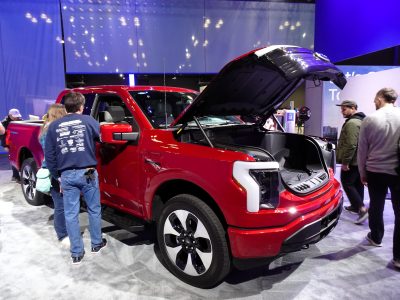
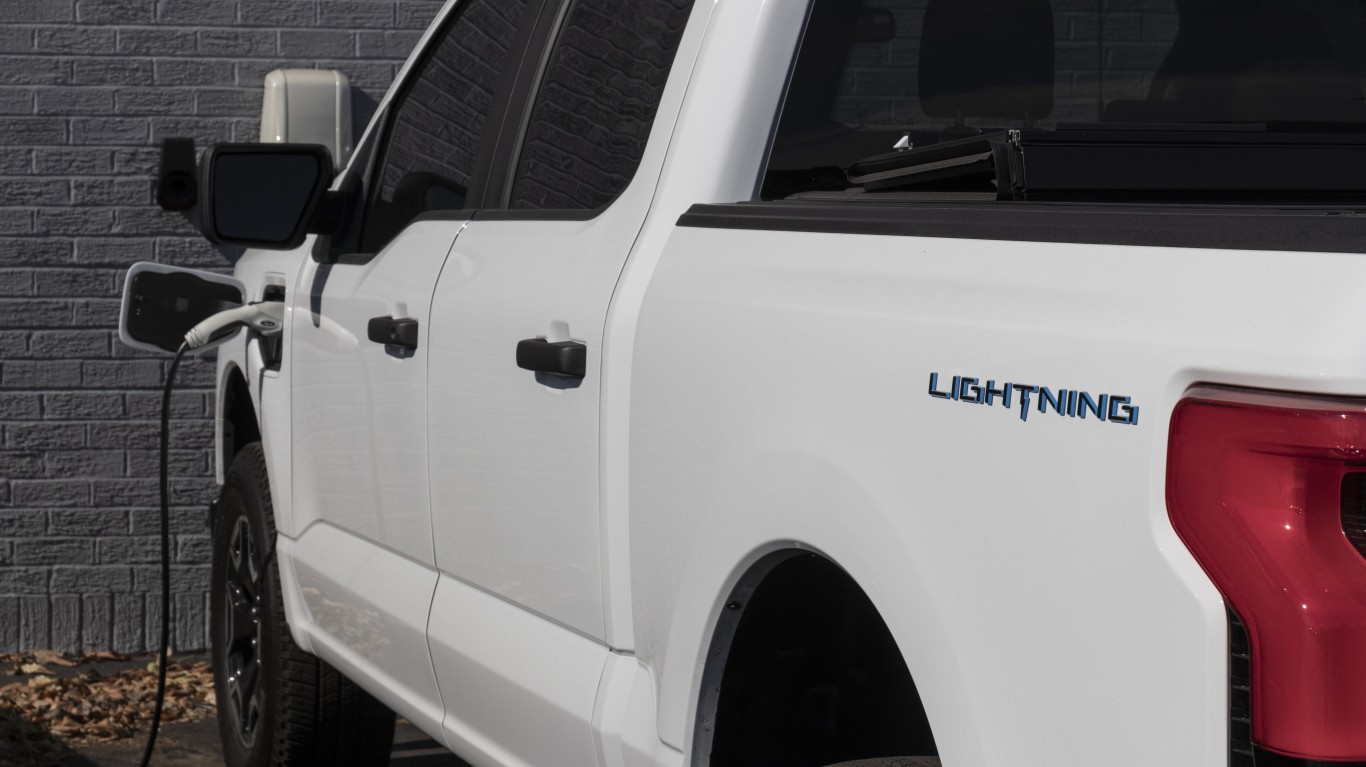
Other manufacturers set more tempered goals. Ford, for example, targeted half of its global vehicle volume to be hybrids, extended-range EVs, or full battery EVs by 2030, up from 17% in 2025 — a mix that proved less disastrous than GM’s all-EV push. Ford’s $19.5 billion charge covered pivoting factories, like converting a Tennessee plant from EV pickup production to gasoline models, and redirecting battery capacity to energy storage.
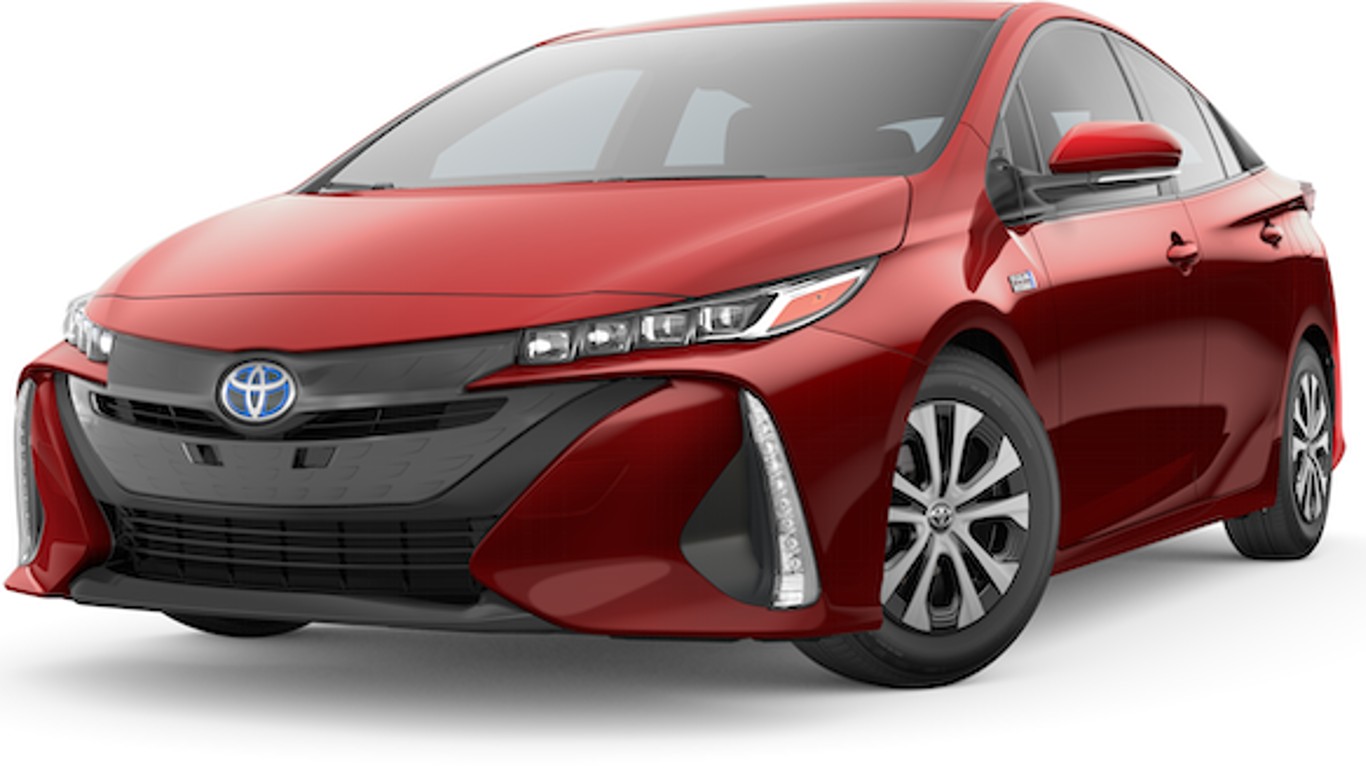
Toyota (NYSE:TM) adopted arguably the most realistic approach with an all-of-the-above strategy, emphasizing hybrids that address consumer concerns like range anxiety and charging infrastructure gaps. Toyota’s hybrid focus has paid off, as hybrids now outsell pure EVs in popularity. U.S. EV sales growth slowed to 1.2% in 2025 and is projected at just 6% market share in 2026, down from 7.4% last year.
GM’s ambitions appear worse than Ford’s because GM went all-in on battery EVs, largely bypassing hybrids. This left GM vulnerable when EV demand collapsed after policy shifts, including the tax credit repeal under the One Big Beautiful Bill signed in July.
Ford, by contrast, offers a wide range of hybrids, such as the 2026 Escape Hybrid and Plug-In Hybrid, plus the F-150 PowerBoost V6 hybrid. These options provide flexibility, helping Ford maintain profitability in a market where hybrids are surging.
Worse for GM, analysts note it has limited hybrid exposure, which could erode its recent market share gains, while Ford’s diversified lineup positions it to meet buyer demands more effectively.
Key Takeaway
GM made numerous mistakes in its EV journey, pursuing aggressive electrification without widespread proven demand for pure EVs. The company’s 2035 gas phase-out ignored market realities, leading to overinvestment in batteries and suppliers now resulting in multibillion-dollar charges. It also warned that the $6 billion charge won’t be the last it takes. The EV fever dream GM suffered under will continue to be felt for some time to come.
With federal policies significantly changed — including the end of consumer EV incentives — GM stands to lose market share as it refocuses on giving buyers what they actually want, like gas and hybrid options, instead of what policies were once pushed. It makes Ford’s balanced approach the stronger long-term bet in the challenging auto market.






 Top Gaining Stocks
 Top Losing Stocks