


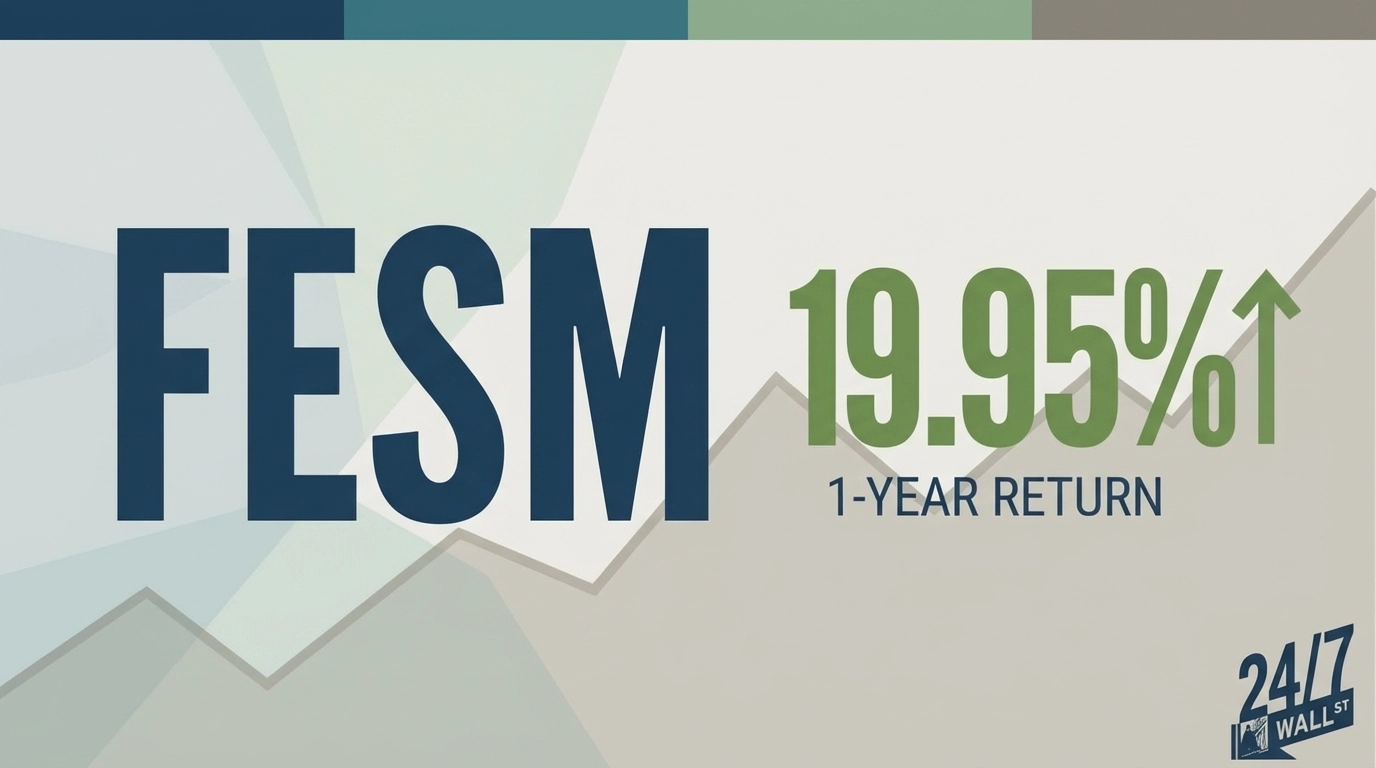
Small-cap stocks are finally having their moment. After years of mega-cap tech dominance, the Russell 2000 is surging in the first week of 2026, outpacing both the S&P 500 and Nasdaq-100. Fidelity Enhanced Small Cap ETF (NYSEARCA:FESM) has delivered a 19.95% return over the past year while generating zero Reddit posts, zero news articles, and minimal media attention. That combination of strong performance and complete obscurity makes it worth examining for investors positioning for what many strategists believe could be a multi-year rotation into smaller companies.
FESM is an actively managed fund investing at least 80% of assets in Russell 2000 Index constituents, using quantitative analysis to select and weight roughly 588 holdings. Launched in November 2023, it lacks a long-term track record but its 0.28% expense ratio sits below the small-cap category average. The “enhanced” approach aims to outperform the benchmark through stock selection rather than index replication.
Why the Small-Cap Rotation Could Have Legs
The macro story is straightforward: small-cap earnings are accelerating while valuations remain reasonable versus large-caps. Analysts forecast Russell 2000 earnings to grow 35% annually over the next two years, according to FactSet, versus 14% for the S&P 500. The earnings growth gap has flipped dramatically in favor of smaller companies.
The S&P 500’s forward price-to-earnings ratio of 22x compares to the S&P SmallCap 600’s 15x, creating a valuation spread that’s hard to ignore. Over the past decade, the Nasdaq-100 returned 448% while the Russell 2000 gained just 126%, a performance gap of 322 percentage points. When small-caps have this much room to catch up combined with superior earnings growth forecasts, the setup becomes compelling.
What to watch: Monthly earnings reports from Russell 2000 companies, particularly in industrials, financials, and healthcare sectors. The ISM Manufacturing Index also matters since small-caps are more sensitive to domestic economic activity than multinational large-caps. If manufacturing data improves alongside rate cuts, that’s rocket fuel for smaller companies with higher debt loads and domestic revenue exposure.
FESM’s Active Edge in a Passive World
Unlike passive Russell 2000 ETFs that mechanically hold every index constituent, FESM’s portfolio managers use computer-aided analysis to overweight stocks they believe will outperform. With 588 holdings compared to the Russell 2000’s full 2,000 constituents, the fund makes concentrated bets while maintaining broad diversification.
Active management matters more in small-caps because information inefficiencies are greater. Fewer analysts cover small companies, creating opportunities for quantitative models to identify mispriced stocks. The risk is that active strategies can underperform during broad market rallies when passive indexing works best. Check FESM’s quarterly fact sheets on Fidelity’s website to monitor performance relative to the Russell 2000 benchmark.
Consider Schwab’s Lower-Cost Alternative
For investors who prefer pure passive exposure, Schwab U.S. Small-Cap ETF (NYSEARCA:SCHA | SCHA Price Prediction) offers a compelling alternative. SCHA tracks the Dow Jones U.S. Small-Cap Total Stock Market Index with a 0.04% expense ratio, seven times cheaper than FESM’s 0.28%. SCHA holds over 1,700 stocks with $19.3 billion in assets, providing deeper liquidity and a 16-year track record since 2009. If the small-cap rotation thesis plays out broadly, SCHA captures the full market move without betting on active management to add value.
The Bottom Line
The most important macro factor for FESM over the next 12 months is whether small-cap earnings growth materializes at the 35% rate analysts forecast, which would justify higher valuations and drive the rotation trade. The key micro signal is how FESM’s active stock selection performs, which you can track by comparing its returns to the Russell 2000 benchmark each quarter.











 Top Gaining Stocks
 Top Losing Stocks