


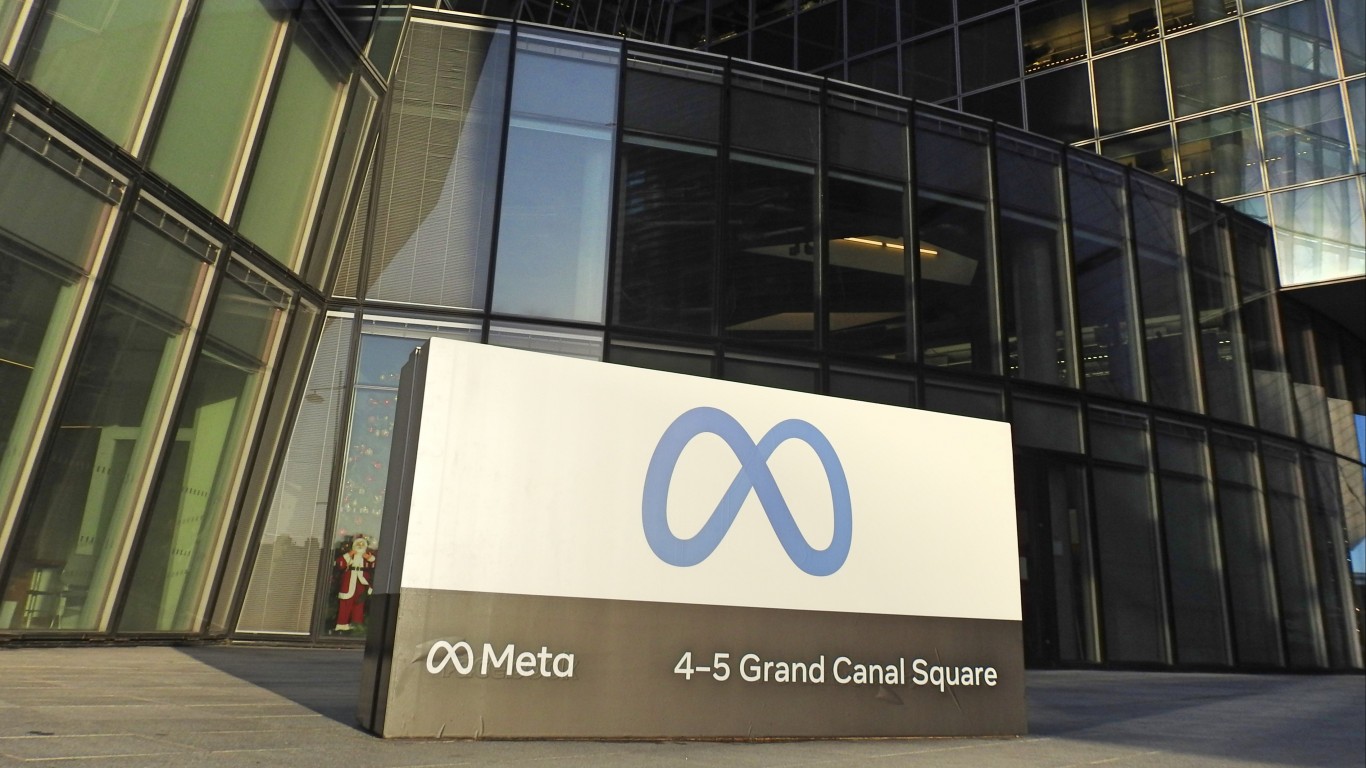
Perhaps going down the open-source route wasn’t the way to go. With Meta Platforms (NASDAQ:META | META Price Prediction) now going down the proprietary AI model route after its LLaMa model fell short of expectations, questions linger as to whether the social-media and metaverse titan can really make up ground in the AI scene, one that’s been dominated by OpenAI, Google (whose parent company is Alphabet (NASDAQ:GOOG)), and Anthropic.
While OpenAI and ChatGPT are still on top, Gemini is gaining very quickly. And given the incredible strides made by Gemini 3.0, it feels like Google’s offering is already better than OpenAI’s latest and greatest (GPT-5.2). Of course, it will be interesting to see how the AI race unfolds at the frontier through 2026. With Anthropic and its Claude making noise in coding, as the firm potentially gears up for an IPO this year, things could get really interesting.
Either way, the battle for investment dollars could get fiercer for the biggest and boldest AI firms, especially if OpenAI also goes public this year. The big question for investors is whether an Anthropic and OpenAI IPO will take some of the wind out of the back of the Mag Seven AI plays.
Meta AI is playing from behind, but it might not be that far behind
At this juncture, Meta Platforms seems to be behind, but with a change of strategy (open-source to closed-source) and one of the most interesting acquisition announcements in the fourth quarter of 2025 in Manus, perhaps it’s time to give Meta Platforms shares a second look now that they’re in correction territory.
For value investors seeking more AI growth, I’d argue that Meta Platforms stock now seems to be the best bargain of the Mag Seven. And if Meta Platforms can gain significant ground in AI this year, a case could be made that the social-media juggernaut might be next in line to enjoy an Alphabet-like parabolic ascent as investors come to fully appreciate the company’s AI capabilities.
Now, heavy spending in AI projects does not guarantee that a firm will have a seat at the very front of the AI pack. However, in the case of Meta Platforms, I do think its new proprietary models are going to be set for success. The new model, codenamed Avocado (a cool name, if you ask me), might be able to shine where LLaMA fell short.
Ever since Meta Platforms went down the open-source route, I questioned whether it was the right move, especially since OpenAI, which has “open” in its very name, decided to shift gears to closed-source. Indeed, closed-source seems to be the key to higher margins and a wider economic moat. And, of course, there’s the safety factor to consider. All considered, I think Meta Platforms deserves the benefit of the doubt now that it’s had a chance to course correct.
Avocado might be an AI winner that few saw coming
Additionally, it will be very interesting to see the creative solutions that Meta Platforms might implement as it trains Avocado and Mango (for image and video generation). Of course, the company is spending a ton to advance the models, but that isn’t what I think will make Meta AI more competitive.
Meta’s scaling up quickly, but scaling alone likely won’t give a model an edge in advancement. With a world-class superintelligence team, a sought-after agentic AI asset in Manus, and a unique training strategy incorporating intriguing techniques (distillation learning and world models), perhaps we’ll have a Meta-made model that stacks up against the likes of ChatGPT and Gemini. And with Avocado reportedly using Alibaba‘s (NASDAQ:BABA) Qwen model for part of its training, it feels like Meta is going down a unique pathway en route to catching up with the likes of OpenAI.
Either way, I think Meta’s new strategy is a winning one that could enable it to deliver a surprising AI breakthrough that ripples through markets. That potential alone makes Meta and its Superintelligence team worth keeping tabs on through 2026.












 Top Gaining Stocks
 Top Losing Stocks