


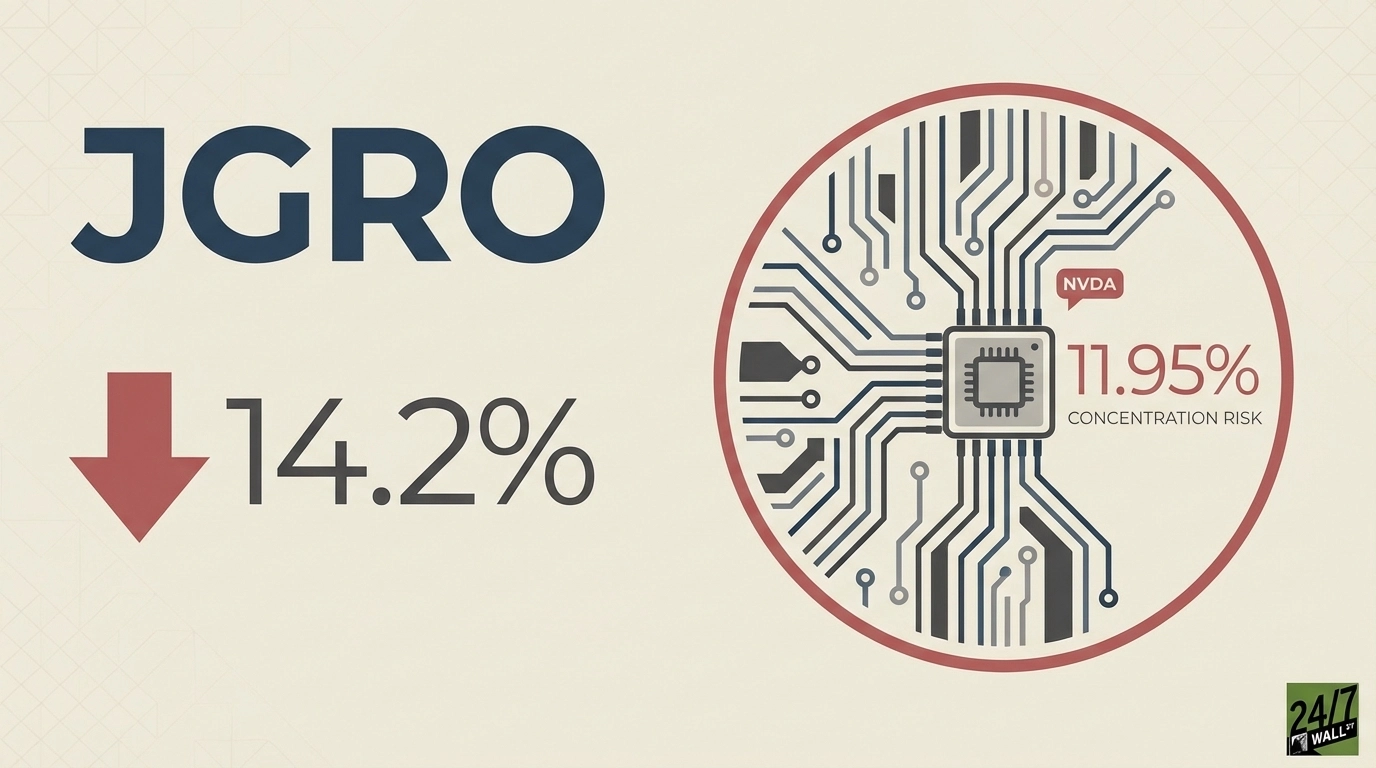
The JPMorgan Active Growth ETF (NYSEARCA:JGRO | JGRO Price Prediction) delivered a 14.2% return over the past year, trailing the S&P 500’s 17.9% gain by nearly 4 percentage points. For investors paying a 0.44% expense ratio for active management, underperformance raises a key question: what should you watch to understand whether this fund can close the gap?
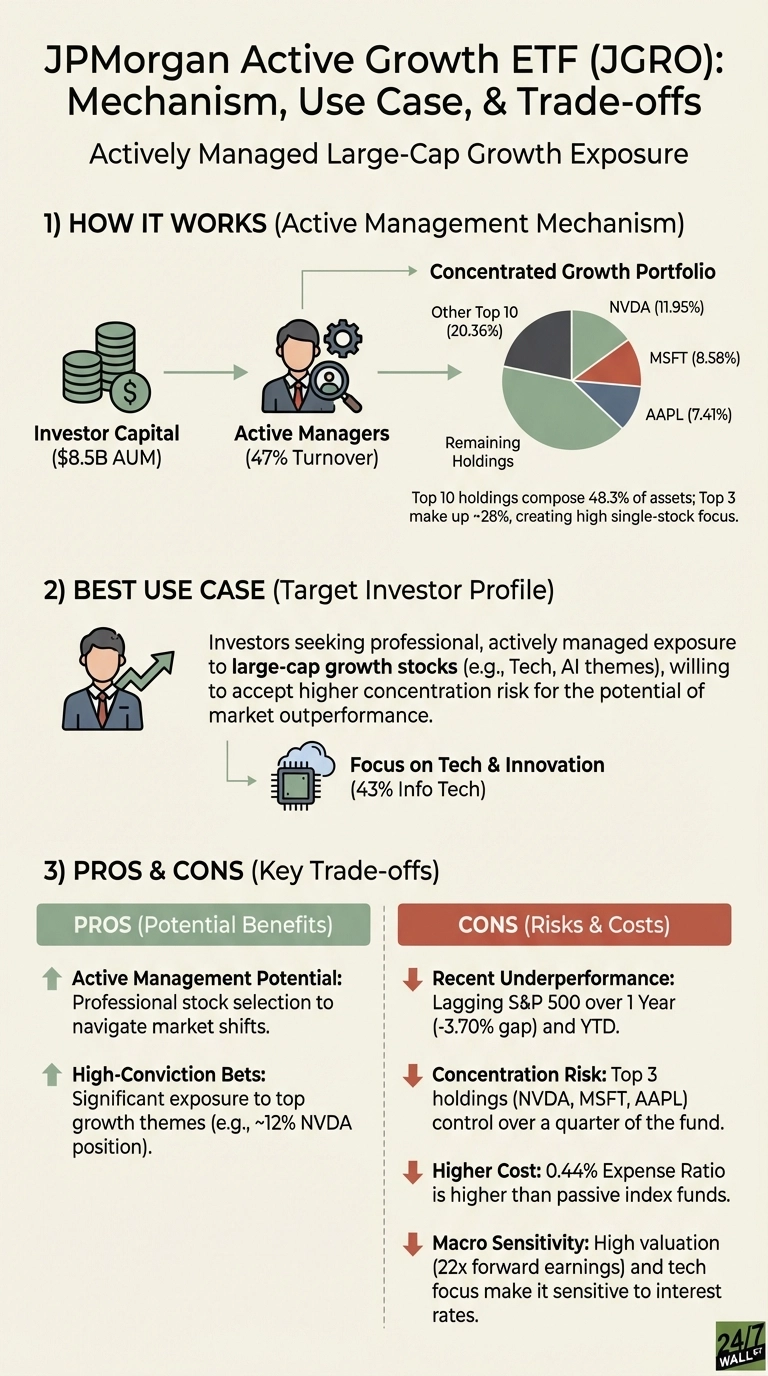
JGRO’s $8.5 billion portfolio reveals a critical vulnerability through its concentration strategy. The fund’s top three positions control over a quarter of assets, creating exposure to mega-cap technology headwinds. When Apple (NASDAQ:AAPL) declined 4% year-to-date, it exemplified how this concentrated approach amplifies individual stock movements. Microsoft (NASDAQ:MSFT) ranks among these top holdings, demonstrating how the fund’s returns depend heavily on a handful of mega-cap technology names.
The Fed’s Rate Path Will Define Growth Stock Valuations
The biggest macro factor for JGRO investors to monitor is Federal Reserve policy. After cutting rates three times in 2025, the Fed now faces conflicting signals. Wall Street banks are sharply divided on what comes next. Goldman Sachs (NYSE:GS) and Barclays (NYSE:BCS) pushed rate cut expectations from March to September or December, while JPMorgan Chase (NYSE:JPM) forecasts no cuts in 2026 and predicts the next move will be a rate hike in 2027.
Information technology represents 43% of JGRO’s portfolio, making the fund highly sensitive to how the market values growth stocks. When rates stay elevated, these premium valuations face pressure as future cash flows get discounted more heavily.
The fund’s valuation tells a cautionary story. Trading at 22 times forward earnings, JGRO approaches multiples last seen at major market peaks. This elevated valuation leaves little room for multiple expansion if economic conditions deteriorate, creating downside risk for investors who entered at current levels.
Watch monthly jobs reports and quarterly Fed meetings closely. If unemployment ticks higher while wage growth moderates, rate cuts become more likely and growth stocks catch a tailwind. But if the labor market stays tight and inflation remains sticky above 2%, JGRO’s high-multiple holdings face continued pressure.
Nvidia’s 12% Weight Creates Outsized Single-Stock Risk
The micro factor that matters most is JGRO’s 11.95% allocation to Nvidia (NASDAQ:NVDA). No other position comes close. This concentration creates a specific risk that passive index funds don’t face to the same degree. If Nvidia stumbles on earnings, product delays, or competitive threats, JGRO absorbs the full impact immediately.
JPMorgan’s active management approach centers on this Nvidia bet, reflecting confidence in AI chip dominance. With 47% annual portfolio turnover, the team actively adjusts positions based on market conditions. The fund’s top 10 positions control 48% of assets, making monthly fact sheet reviews essential for tracking whether managers are taking profits or increasing concentration. JPMorgan publishes these updates on their investor relations site, providing transparency into position changes that drive returns.
The Bottom Line
For the next 12 months, JGRO investors should focus on two factors: Federal Reserve policy decisions that will determine whether elevated growth stock valuations can hold, and Nvidia’s performance and position sizing within the portfolio, which creates concentrated single-stock risk that defines much of the fund’s return profile.









 Top Gaining Stocks
 Top Losing Stocks