


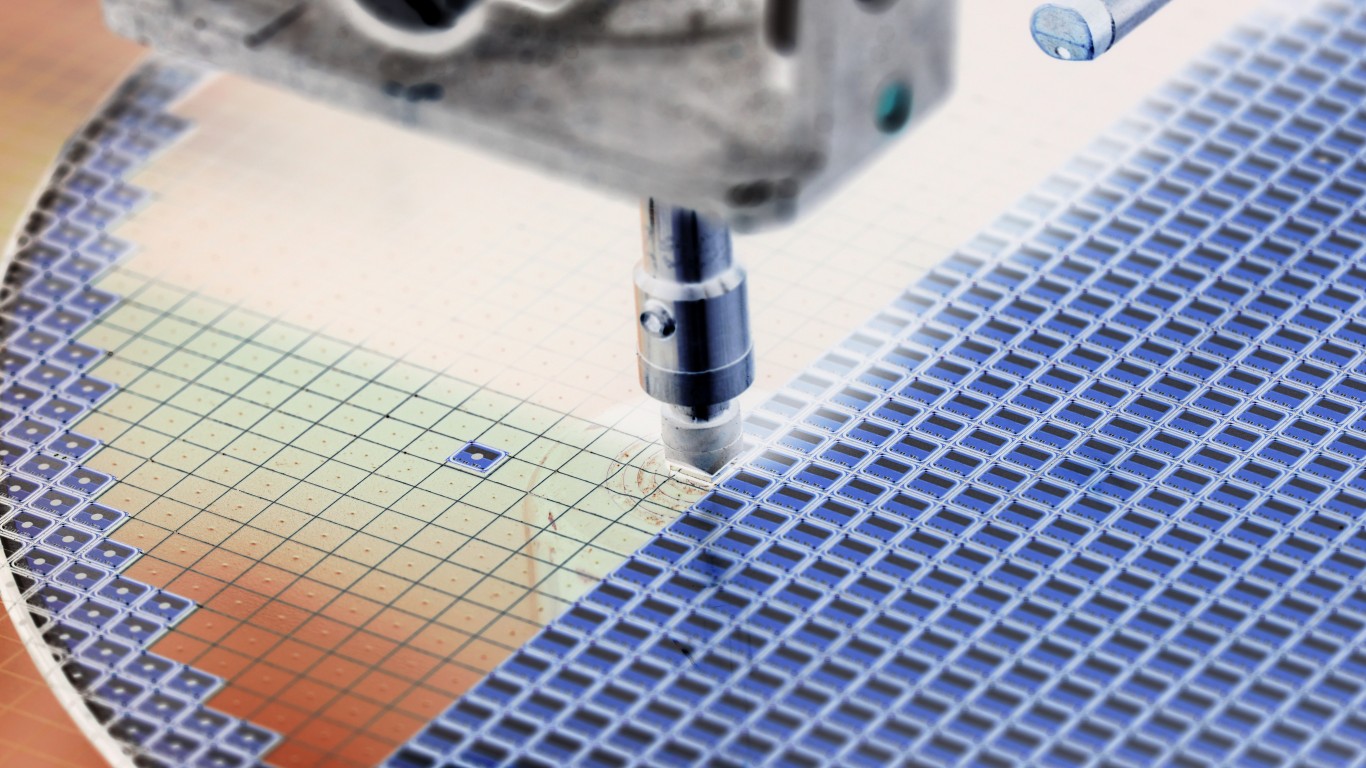
Although doubts about the ongoing strength of artificial intelligence (AI) have been mounting among investors, Taiwan Semiconductor Manufacturing (NYSE:TSM | TSM Price Prediction) reported fourth-quarter 2025 results this morning that appear to dispel those concerns.
The company achieved revenue of $33.7 billion, marking a 20.5% year-over-year increase and a 5.7% sequential rise. Net income reached $16.31 billion, up 35% from the prior year, exceeding analyst expectations. These figures were fueled by strong demand for AI-related chips, with advanced process technologies like 3 nanometer (nm) and 5nm contributing significantly to the performance. Gross margins expanded to 62.3%, reflecting higher capacity utilization and cost efficiencies tied to AI production.
Rather than teetering under its own weight, the AI revolution looks to be alive and well.
Robust Results Spotlight AI’s Role
Taiwan Semiconductor’s fourth-quarter revenue surge was driven largely by high-performance computing, which accounted for 55% of total revenue and is heavily linked to AI applications. AI accelerators represented a high-teens percentage of 2025 revenue, underscoring the segment’s importance.
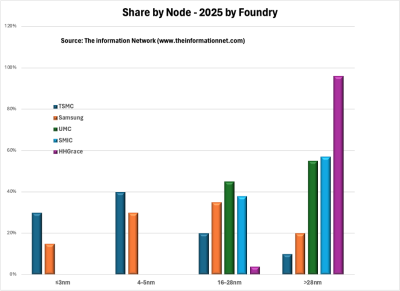
The company noted that demand for leading-edge silicon remains strong, supporting growth in computation needs essential for AI development. Advanced technologies — 7nm and below — made up 77% of wafer revenue in the quarter, highlighting the shift toward more efficient chips critical for AI workloads.
Management Affirms AI’s Enduring Demand
Executives highlighted strong customer interest across multiple areas. Demand is robust in consumer, enterprise, and sovereign AI segments, driving the need for more computational power. CEO C.C. Wei stated during the earnings call, “All in all, I believe in my point of view, the AI is real. Not only real, it is starting to grow into our daily life. We believe that is kind of. We call it AI Megatrend.”
Wei emphasized that the company validated this demand directly with hyperscalers and end customers, viewing AI as a multi-year structural driver rather than a fleeting cycle. He also noted that recent AI market developments remain very positive, with explosive growth in token volume indicating increasing adoption and the need for more leading-edge silicon.
Wei added that he spent significant time confirming demand with cloud providers, who provided evidence of AI contributing to their business growth and financial returns.
Taiwan Semi’s Capex Surge Signals AI’s Next Phase
To meet this demand, Taiwan Semiconductor is ramping up capital expenditures from $40.9 billion in 2025 to between $52 billion and $56 billion in 2026, with 70% to 80% allocated to advanced technologies. This increase reflects AI’s evolution from primarily training models — building the “brains” of the system — to ongoing inference, where models are deployed in daily operations requiring continuous computation.
The company indicated that capital spending will rise significantly in 2028 and 2029, projecting the next three years’ outlays will exceed the last three years combined, which totaled around $100 billion.
Management stressed disciplined planning, working closely with customers and their end users to align capacity with long-term needs, while acknowledging the risks of such large investments. CFO Wendell Huang noted that the company expects continued strong demand for leading-edge technologies into 2026, with Q1 revenue guided between $34.6 billion and $35.8 billion.
Key Takeaway
AI’s doubters just got a reality check. Notable investors expressed skepticism about the AI boom’s sustainability in 2025. Michael Burry, known for predicting the 2008 housing market crisis, placed bets against stocks like Nvidia (NASDAQ:NVDA) and Palantir Technologies (NYSE:PLTR), citing overvaluation. Goldman Sachs‘ Jim Covello questioned whether AI investments would yield sufficient returns, given high costs without proportional benefits. Ray Dalio described the market as in the early stages of a bubble.
While much of this criticism focused on inflated valuations rather than AI’s underlying potential, Taiwan Semiconductor’s results and forward guidance highlight the weakness in these arguments. They demonstrate there is tangible demand and growth happening, indicating the AI megatrend appears robust and positioned to run strong well into the future.








 Top Gaining Stocks
 Top Losing Stocks