



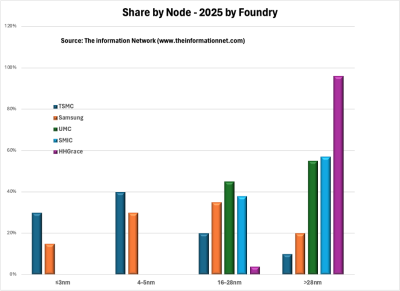
Just three weeks after Taiwan Semiconductor Manufacturing (NYSE:TSM | TSM Price Prediction) delivered fourth-quarter results that beat estimates and reaffirmed the durability of AI demand, the world’s leading contract chip manufacturer reported January revenue of NT$401.3 billion ($12.7 billion), representing a 37% year-over-year increase that handily exceeded analyst expectations. Coming on the heels of a record Q4 and full-year 2025, the January print removes any lingering doubt: the AI-driven chip boom is not slowing down. Demand for advanced nodes — especially 3 nanometer (nm) and 5 nm used in high-performance AI accelerators — remains insatiable, and the tsunami of orders shows no sign of cresting.
What The Numbers Really Mean
The $12.7 billion figure is the highest January revenue in Taiwan Semiconductor’s history and continues a streak of monthly records that began in mid-2024. High-performance computing — almost entirely AI-related — accounted for roughly 60% of revenue in Q4, and management has guided for that mix to rise further in 2026.
The pure play foundry reiterated its full-year 2026 outlook for roughly 30% U.S.-dollar revenue growth and lifted its capital expenditure guidance to $52 billion to $56 billion — an increase of at least 25% from 2025 and well above the $46 billion consensus estimate just a month ago. The extra spending will fund additional 2 nm and 1.6 nm capacity, new facilities in Arizona, Japan, and Germany, and the build-out of chip-on-wafer-on-substrate (CoWoS) advanced packaging, which has been sold out for the past two years.
In plain terms: Taiwan Semiconductor is spending aggressively because its largest customers have already committed to buying every advanced chip it can produce.
Big Tech’s $600 Billion AI Infrastructure Sprint
The customers driving that capex are the same hyperscalers that have turned AI into a capital-expenditure arms race. Analysts at Wedbush estimate Amazon (NASDAQ:AMZN), Meta Platforms (NASDAQ:META), Alphabet (NASDAQ:GOOG)(NASDAQ:GOOGL), and Microsoft (NASDAQ:MSFT) will collectively spend $550 billion to $600 billion on data centers and related infrastructure in 2026, up from roughly $380 billion in 2025.
Amazon has guided to approximately $200 billion, Alphabet to $175 billion to $185 billion, Microsoft continues to raise its run rate, and Meta is pushing to $135 billion to $135 billion. The overwhelming majority of that spending flows downstream to GPUs, accelerators, and the advanced nodes only Taiwan Semi and a handful of others can manufacture.
ROI Concerns Are Real, but Starting to Fade
Investors have worried aloud that this scale of spending may outrun near-term monetization, squeezing free cash flow and delaying returns. Those concerns are legitimate; data-center capex does not generate revenue the day the concrete is poured.
Yet early evidence shows at least two of the four hyperscalers are already extracting tangible returns:
- Meta Platforms has repeatedly highlighted that AI-driven ad tools and Reels recommendation engines delivered measurable lifts in engagement and pricing. Advertisers using its Advantage+ suite now see average returns above 4x, and daily active users across the family of apps reached 3.58 billion with continued acceleration.
- Alphabet’s Google Cloud grew 48% in Q4, driven by AI workloads, while YouTube and Search are beginning to layer in AI Overviews and Gemini-powered experiences that keep users on the platform longer.
Both companies have guided for higher operating income in 2026 despite the capex surge, suggesting the flywheel is starting to spin.
Key Takeaway
The profitability questions have not disappeared, and they can still trigger violent sell-offs if growth narratives stumble. Market sentiment can turn on a dime, and stock prices can drop as suddenly as a tsunami smashing through inadequate seawalls. But the January sales print, the upwardly revised capex, and the hyperscalers’ own guidance all point in the same direction: AI infrastructure demand is still in the early innings.
Taiwan Semiconductor Manufacturing sits at the center of that build-out with technology leadership, sold-out capacity, and pricing power that few competitors can match. For now, the tsunami is still rising — and the foundry remains the primary beneficiary.










 Top Gaining Stocks
 Top Losing Stocks