


Summary:
To ring in 2026, our 24/7 Wall St. Analysts Eric Bleeker and Austin Smith are counting down 12 trends for AI investors to watch in 2026.
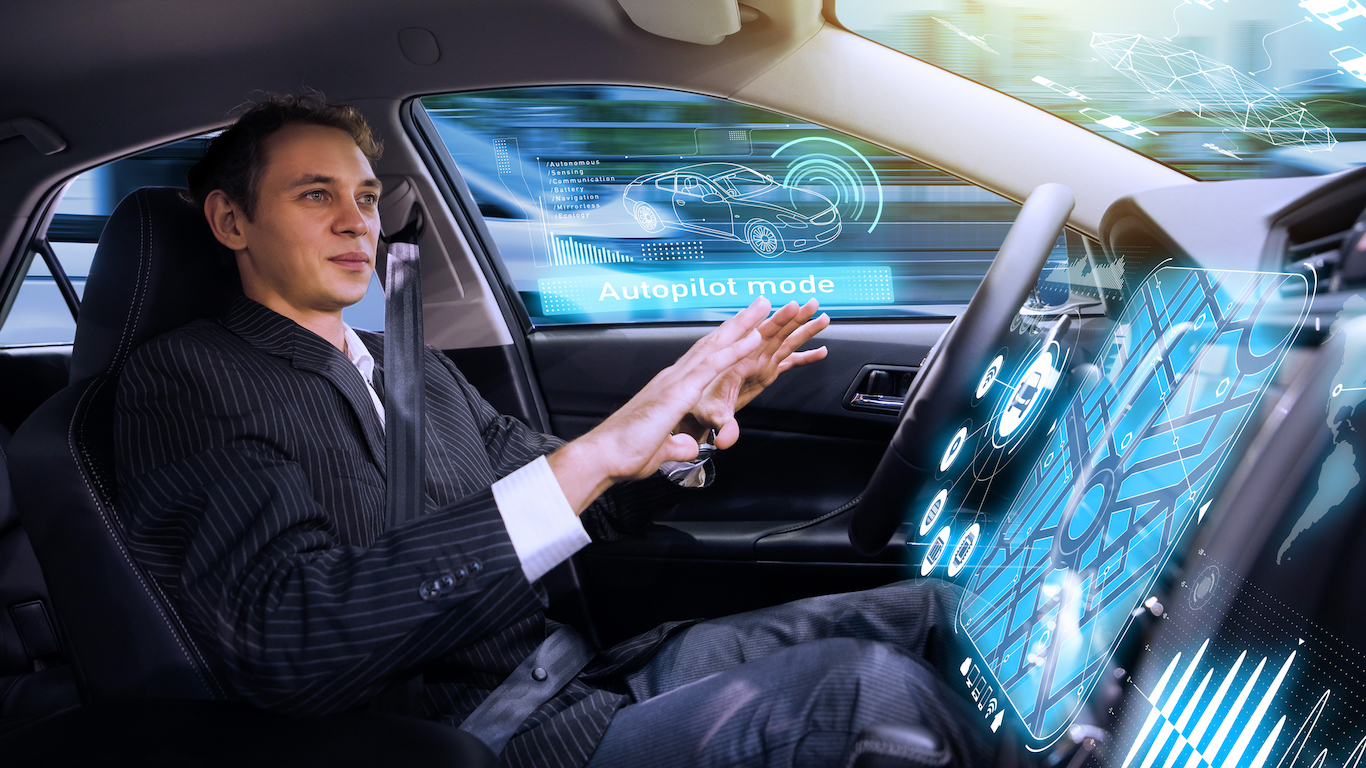
The third trend the two recently discussed centered around self-driving cars.
“Elon Musk has been calling this every year for a decade, but it’s undeniable how impressive the technology has become,” Smith explains.
Advances in AI and GPU-enabled computing have dramatically improved autonomous driving systems, making real-world deployments increasingly viable. Validation from major platform providers has reduced uncertainty around which technological approaches can scale. A key shift is the move toward vision-only systems, which lower costs and complexity compared to sensor-heavy alternatives. This makes it easier for automakers to deploy self-driving features across a wider range of vehicles.
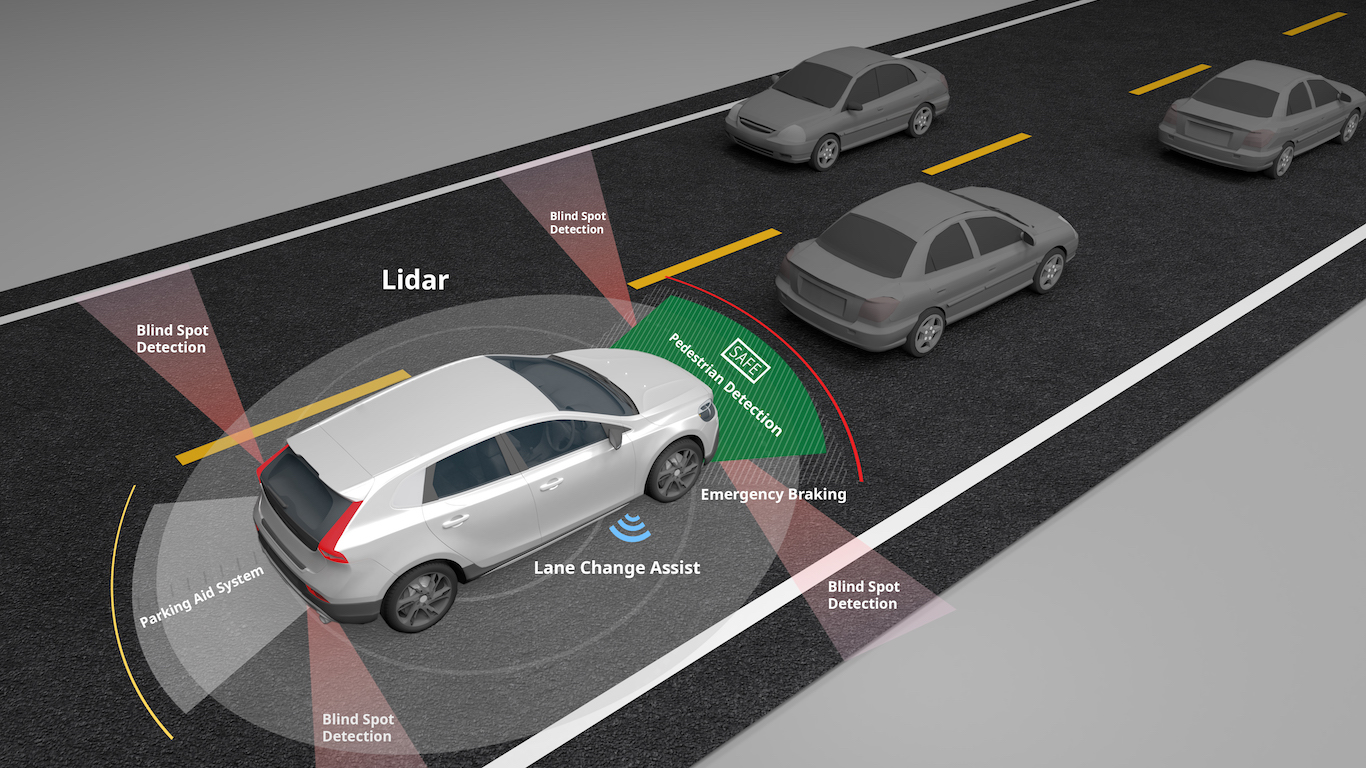
“The incentive for vision-only systems is scale,” Bleeker says. “When companies like Google use sensor fusion, it introduces complexity and cost because you need an exact suite of sensors. Cost is the main showdown we’re entering now.”
As Smith explained during a recent episode of The AI Investor Podcacst, Bleeker’s observation implies that NVIDIA could emerge as a benefactor thanks to a 2026 that could witness a huge expansion in self-driving cars.
“The signals suggest massive future demand for self-driving. The lidar-versus-vision debate may continue, but what you’re arguing is that the underlying AI platform matters more than the sensor choice – and NVIDIA is positioning itself to serve every approach.”
If the video embed above isn’t working, you can watch the original video at: https://www.youtube.com/watch?v=3nSpdhqFDWE
Transcript:
Austin: Okay, let’s move on to another GPU-enabled technology, which is self-driving. You’ve been covering self-driving for a long time and famously put a lot of money into NVIDIA (NASDAQ: NVDA) | NVDA Price Prediction on the thesis of both self-driving and artificial intelligence. You were six or seven years early on that call, but now you’re saying self-driving cars are finally going mainstream.
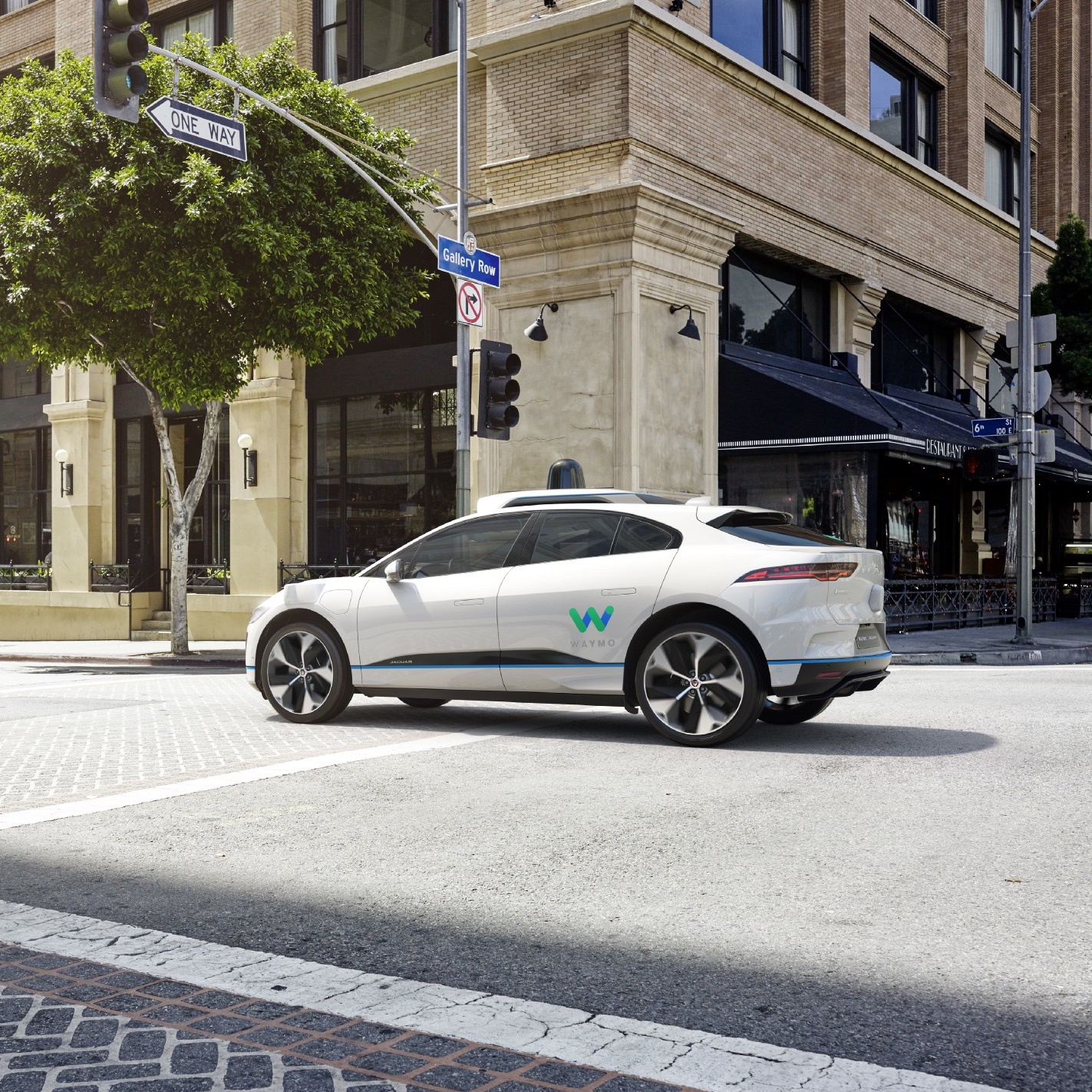
Elon Musk has been calling this every year for a decade, but it’s undeniable how impressive the technology has become. You recently rode in a Waymo in Phoenix, and Waymo is expanding to more cities, including Miami and Austin. That seems like a great call option for Alphabet (NASDAQ: GOOGL).
What are you seeing that makes you believe this is the year self-driving goes mainstream? And does the vision-versus-lidar debate even matter anymore? These vehicles are AI-enabled, so does the data-gathering mechanism matter as much as the layer beneath it?
Eric Bleeker: It’s interesting because you’re talking about vision versus sensor fusion. Another company just joined the fray at CES – again, NVIDIA, which seems to be driving every discussion right now. They announced a new self-driving system called Alpaca. What’s important is that it’s vision-only.
The incentive for vision-only systems is scale. When companies like Google use sensor fusion, it introduces complexity and cost because you need an exact suite of sensors. Cost is the main showdown we’re entering now. NVIDIA is providing validation to the market by offering a system that makes it easier for OEMs to add self-driving features across vehicle lineups.
That creates a catalyst where automakers can offer a base model or a self-driving version for an added cost. You also have companies like Uber Technologies (NYSE: UBER), which already has distribution and could deploy a network of autonomous vehicles. You have Tesla (NASDAQ: TSLA) continuing to push its robotaxi vision, and you have Waymo making a serious move.
Waymo is aiming to reach 20 cities this year and one million rides per week by the end of 2026. That sounds impressive, but it’s still small compared to Uber’s scale. The key thing is further validation from NVIDIA, which will likely push adoption across OEMs.
Tesla continues to advance, and Waymo is trying to validate its system by gaining real traction. This ties into the next topic we’ll cover: automotive semiconductors. That segment has been one of the worst performers during the AI boom because the auto market stayed depressed.
Last week, Microchip Technology (NASDAQ: MCHP) issued strong guidance, and the sector started to move. This matters because we saw something similar in optics – companies priced like cyclical telecom businesses suddenly got repriced when AI became a new demand driver.
Automotive suppliers may now have a new demand driver in robotics. Much of the automotive supply chain overlaps with robotics, so cyclically depressed companies could see extreme repricing if robotics demand accelerates. That didn’t play out in 2025, but with NVIDIA pushing the ecosystem forward and breakthroughs in robotics, the probability is rising that this is the year.
Self-driving used to be a compelling theme with limited investment options. That could change dramatically, with investment opportunities expanding ten or twenty-fold.
Austin: That’s similar to what we saw with Caterpillar (NYSE: CAT). It’s one of the most cyclical companies out there, and it has doubled since April 2025 on infrastructure buildout alone. A company considered boring and hard to time performed extremely well because investors bought at the bottom and recognized the trend.
On OEMs, Ford Motor Company (NYSE: F) just announced Level 3, eyes-off self-driving coming in 2028, starting with a midsize pickup. There’s also Rivian Automotive (NASDAQ: RIVN), which uses a hybrid of vision and lidar in its upcoming R2.
The signals suggest massive future demand for self-driving. The lidar-versus-vision debate may continue, but what you’re arguing is that the underlying AI platform matters more than the sensor choice – and NVIDIA is positioning itself to serve every approach.
Eric Bleeker: Exactly. You’ll have more semiconductor content in fully autonomous vehicles, but even partial self-driving significantly increases chip demand. When an industry is at a cyclical bottom, it only takes a small push to drive a major re-rating, and I think that push is coming this year.






 Top Gaining Stocks
 Top Losing Stocks