


The Top Self-Driving Car Stock to Own
The autonomous vehicle (AV) market is poised for explosive growth, with projections estimating a $4.45 trillion market by 2034, driven by a 36% compound annual growth rate (CAGR).
From robotaxis to advanced driver-assistance systems (ADAS), companies are racing to perfect self-driving technology. Tesla’s (NASDAQ:TSLA | TSLA Price Prediction) recent pilot in Austin, Texas, launched last month, deploys 10 to 20 Model Y robotaxis using camera-based AI, aiming to scale rapidly despite lagging behind competitors by years.
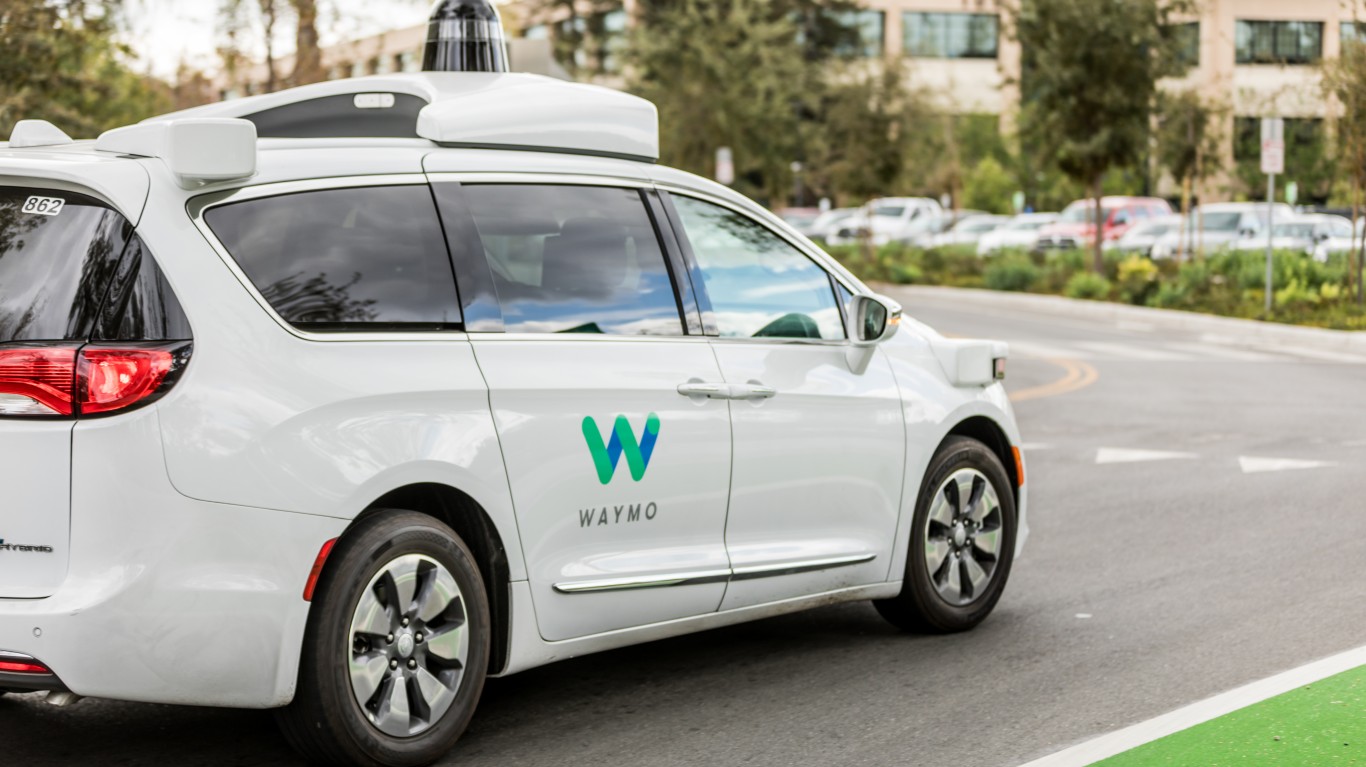
Alphabet’s (NASDAQ:GOOG)(NASDAQ:GOOGL) Waymo leads the U.S., operating over 1,500 driverless vehicles in cities like San Francisco, Phoenix, Los Angeles, and Austin, and completing 250,000 paid rides weekly with its multimodal sensor suite.
In China, WeRide (NASDAQ:WRD) is gaining traction, expanding its robotaxi and robobus services in urban centers like Abu Dhabi, backed by an investment from Nvidia. Yet, none of these companies — Tesla, Waymo, or WeRide — are the best self-driving car stocks to own. Instead, one stock stands out above all others as the top investment in this transformative industry, and it’s not even close.
Rising Dominance in Autonomous Driving
Nvidia (NASDAQ:NVDA) is in the pole position to lead the self-driving car market. It stems from its end-to-end AI-powered platform, DRIVE, which is integral to the AV ecosystem. Unlike Tesla or Waymo, which focus on vehicle production or services, Nvidia provides the critical infrastructure — chips, software, and cloud computing — that powers autonomy across the industry.
The artificial intelligence (AI) chipmaker trades at around $153 per share, with a 72% year-over-year automotive revenue growth in the first quarter, signaling its growing influence despite this segment being little more than 1% of total revenue.
The DRIVE platform, including DRIVE Hyperion for in-vehicle computing and DRIVE DGX for AI training, is adopted by major automakers like Toyota, General Motors (NYSE:GM), Mercedes-Benz (OTC:MBGYY), and Volvo (OTC:VLVLY), as well as Chinese EV giants like BYD (OTC:BYDDY) and Nio (NYSE:NIO). These partnerships underscore Nvidia’s universal appeal, as its technology supports both Level 2+ ADAS and Level 4 robotaxis, making it a linchpin in the AV supply chain.
Why Nvidia Outshines Pure-Play AV Stocks
Nvidia’s strength lies in its diversified revenue streams and profitability, unlike pure-play AV companies that are burning cash on R&D. Waymo, despite its 250,000 weekly rides, reported a $1.2 billion operating loss in the first quarter under Alphabet’s “Other Bets,” while Tesla’s Full Self-Driving (FSD) remains unprofitable and faces safety concerns. WeRide, though growing, is years from profitability, with analysts projecting breakeven by 2027.
Nvidia, however, is already capitalizing on the AV boom, with automotive revenue surging as many major automaker relies on its DRIVE platform for AI training and inferencing. CEO Jensen Huang’s vision positions AVs as Nvidia’s next big growth driver, with the company’s $3.7 trillion market cap and robust cash flow enabling billions in R&D investment without financial strain.
Nvidia’s Scalability and Competitive Moat
Nvidia’s CUDA software stack creates a powerful moat, locking in many partners across the industry, though Tesla now uses its own custom hardware for FSD training. This proprietary ecosystem, combined with Nvidia’s DRIVE Thor chip (set to power 2025 models), ensures long-term dominance.
Unlike Tesla’s camera-only approach or Waymo’s costly LiDAR-based systems, Nvidia’s platform is hardware-agnostic, supporting diverse sensor suites and reducing costs for automakers.
Nvidia’s strategic advantage, including its ability to sell massive compute to AV developers, reinforces its role as the backbone of autonomy.
Inspired by the 2012 AlexNet AI model, which demonstrated GPUs’ potential for deep learning, CEO Jensen Huang pivoted Nvidia toward self-driving technology, culminating in the DRIVE platform’s debut at CES 2015.
A $10,000 investment in NVDA in January 2015, when its AV ambitions became clear, would be worth approximately $3.3 million today, reflecting a 36.5% annualized return. This broad industry adoption, spanning automakers like Toyota and BYD, reduces Nvidia’s reliance on any single AV player, ensuring stability and growth.
NVDA is Low Risk, High Reward AV Stock
Investing in Nvidia mitigates the risks of pure-play AV stocks. Tesla faces regulatory hurdles and lofty expectations, with Goldman Sachs estimating only 2,500 robotaxis by 2027, far below Musk’s targets. Waymo’s high operating costs ($100,000+ per vehicle) and WeRide’s regional focus limit their scalability.
Nvidia, however, benefits from broad industry adoption without the operational burdens of fleet management. Its 36% projected AV market growth aligns with Nvidia’s ability to capture value across the ecosystem, from robotaxis to freight trucks.
For investors, NVDA offers exposure to the AV revolution with lower volatility and proven profitability, making it the best self-driving car stock to own today.









 Top Gaining Stocks
 Top Losing Stocks