



Dave Ramsey, the personal finance author and radio host, has built a following around his 7 Baby Steps framework. Baby Step 3 is clear: save three to six months of expenses in a fully funded emergency fund before investing a dollar. This advice runs counter to the instinct many have to start investing immediately, especially when markets are performing well.
Why This Advice Resonates
Ramsey recommends building three to six months of expenses in cash before investing beyond employer retirement matches. For a typical household spending $5,000 monthly, this creates a clear target that removes decision paralysis. The behavioral benefit is that you avoid the temptation to tap investments during a crisis, which protects both your portfolio and your financial psychology.
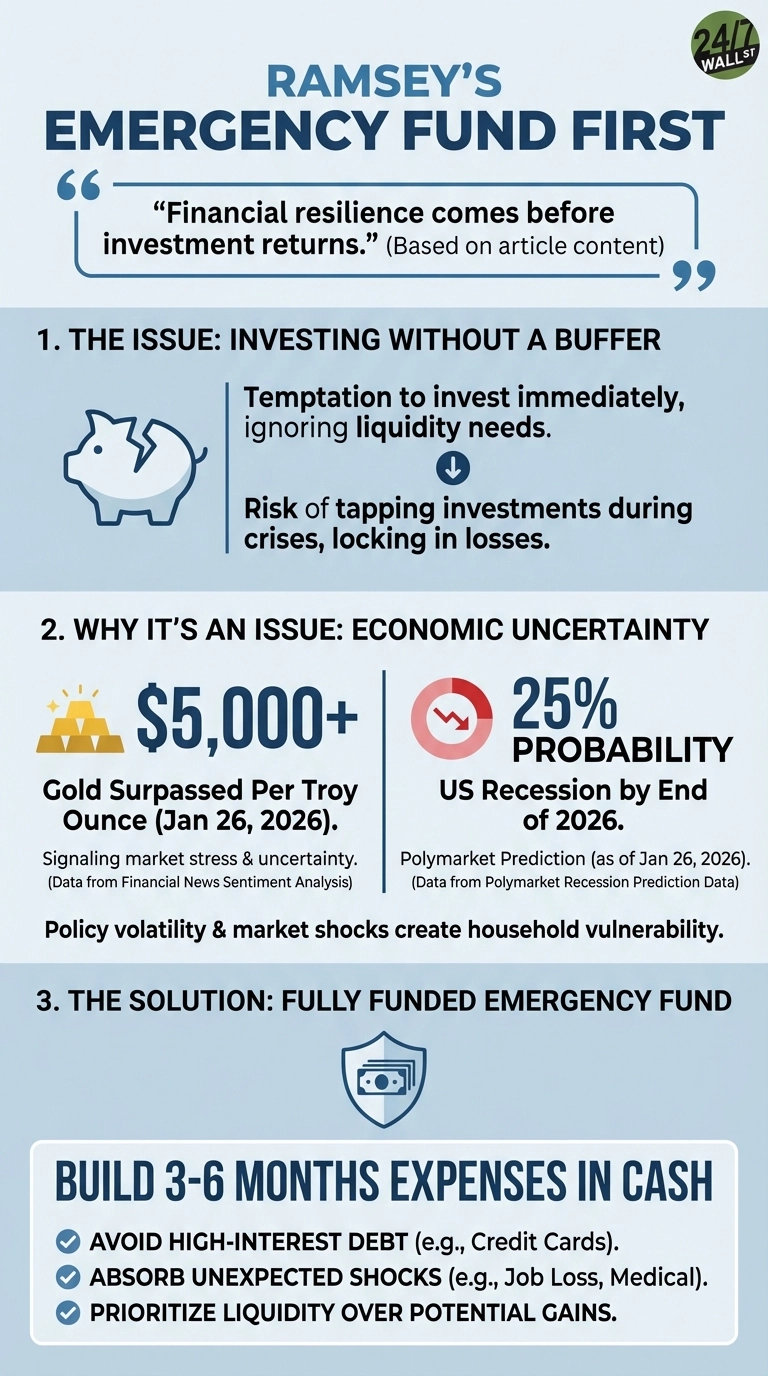
This structure addresses a real vulnerability. If your car breaks down or you lose your job, liquid cash means you avoid credit card debt at 20% interest or early retirement account withdrawals that trigger taxes and penalties.
Where the Advice Holds Up
Current economic conditions validate Ramsey’s caution. Gold’s recent surge past $5,000 per troy ounce signals that investors are seeking safety amid uncertainty. When prediction markets price in meaningful recession risk, households without financial cushions face real vulnerability—making liquidity a priority over potential market gains.
For households living paycheck to paycheck, Ramsey’s sequence is sound. When an unexpected medical bill forces you onto a credit card charging 20% annual interest, any market gains become irrelevant. The cost of emergency debt quickly erases what you might have earned by investing earlier.
Where It Misses
The framework’s rigidity creates trade-offs that Ramsey doesn’t emphasize. Consider a household with stable dual incomes: parking $30,000 in savings earning 4% provides absolute safety, but sacrifices the higher long-term returns available from diversified investments. This creates a real cost—the difference between safety and growth—that varies based on your employment stability and risk tolerance.
The advice also doesn’t distinguish between types of emergencies. A household might keep three months liquid and invest the rest in a taxable brokerage account with broad index funds, accepting some volatility in exchange for growth potential.
How to Think About Ramsey’s Guidance
Ramsey’s emergency fund priority works best for households with variable income, high fixed expenses, or weak safety nets. If you’re self-employed, have dependents, or lack robust insurance, prioritize liquidity. If you have stable employment, low expenses, and strong benefits, consider a smaller cash cushion and earlier investing.
The core principle stands: financial resilience comes before investment returns. The specific threshold depends on your risk tolerance and circumstances.














 Top Gaining Stocks
 Top Losing Stocks