


When individual semiconductor stocks can swing from losses to profits within two years, or when analyst estimates miss by over 1,000%, individual semiconductor stocks can experience extreme volatility. The Invesco Semiconductors ETF (NYSEARCA:PSI) offers a diversified alternative with a momentum-driven approach that captures sector growth through 30 holdings.
Diversified Sector Exposure Through 30 Holdings
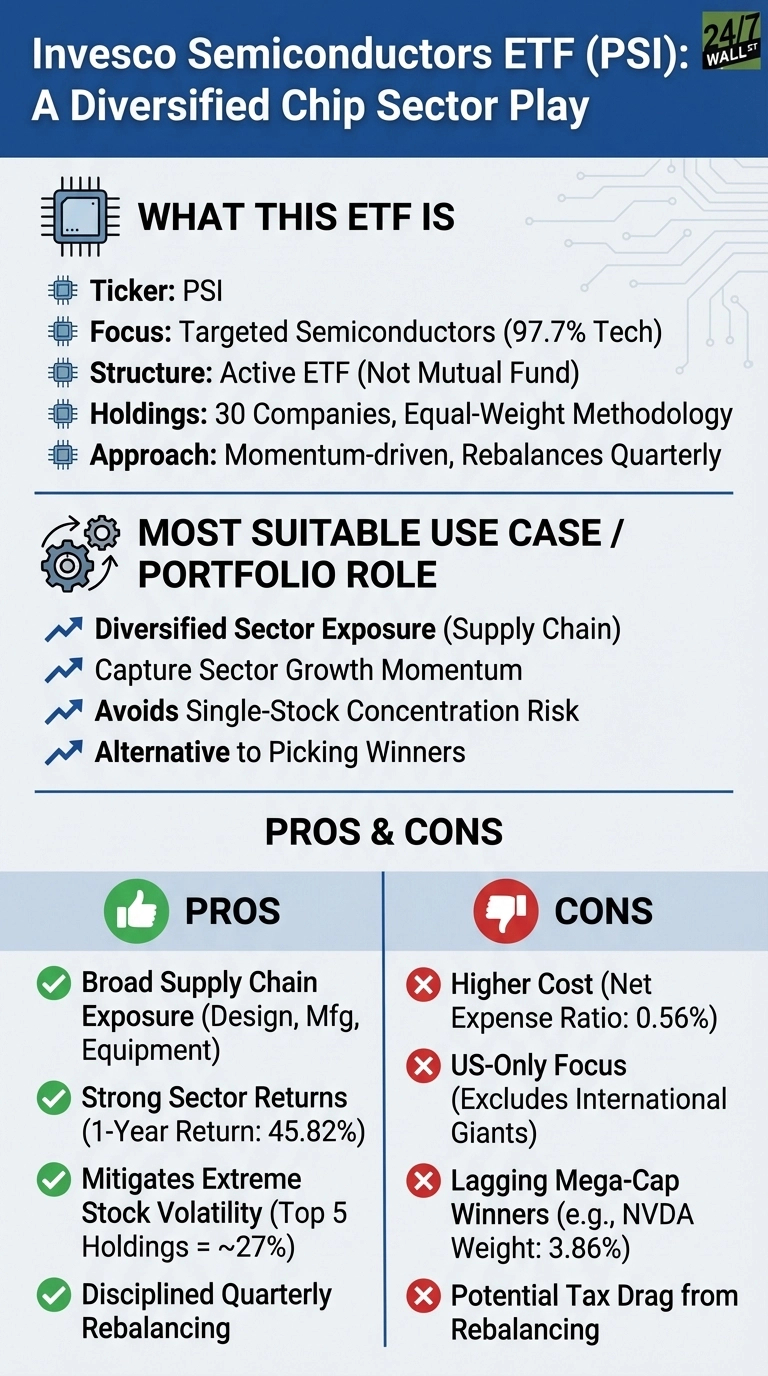
PSI tracks the Dynamic Semiconductor Intellidex Index, which uses a quantitative model evaluating momentum, quality, value, and management factors to select and weight 30 semiconductor companies. Unlike market-cap weighted alternatives, PSI rebalances quarterly and spreads risk more evenly across the chip supply chain.
This matters because semiconductor earnings follow brutal boom-bust cycles that punish even the industry’s giants. Major chipmakers have swung from multi-billion dollar profits to losses within just two years, making entry timing critical. When even established players can’t maintain consistent profitability through industry cycles, individual investors face an impossible prediction game.
PSI spreads risk across the chip supply chain rather than betting heavily on a few names. With the top five holdings representing just 27% of assets, the fund avoids the concentration trap that plagues some competitors where three-quarters of the portfolio rides on a handful of stocks. This structure means semiconductor exposure survives even when individual companies stumble.
Strong Returns With Less Guesswork
Semiconductor demand has surged over the past year, driven by AI infrastructure buildout and data center expansion. PSI captured this momentum with 46% returns compared to the broader market’s 14% gain. The fund’s success stems from sector exposure rather than betting on individual winners, allowing investors to ride the chip industry’s wave without predicting which specific companies will dominate.
PSI’s diversified approach reduces the need to predict which chipmaker will dominate next quarter. While it trails the market-cap weighted iShares Semiconductor ETF (NASDAQ:SOXX | SOXX Price Prediction) over longer periods, the fund’s equal-weight methodology protects against concentration risk when mega-cap stocks stumble.
The Tradeoffs You Accept
PSI’s diversification comes with compromises. The fund holds only 3.86% in NVIDIA (NASDAQ:NVDA) despite the company’s AI dominance, meaning investors sacrifice some upside when mega-cap leaders surge. This equal-weight approach protects during downturns but caps gains during rallies led by the sector’s largest names.
The fund’s active rebalancing strategy and equal-weight methodology come at a cost. At 0.56% annually, PSI charges more than passive alternatives that simply track market-cap indices. Quarterly rebalancing also creates potential tax drag in taxable accounts as the fund sells winners and buys laggards to maintain equal weights. More importantly, PSI excludes international giants like Taiwan Semiconductor Manufacturing Company (NYSE:TSM) and ASML Holding (NASDAQ:ASML), limiting exposure to critical parts of the global chip supply chain.
This US-only focus creates geographic concentration risk if American chipmakers underperform their overseas competitors. Investors seeking complete semiconductor exposure need to supplement PSI with international holdings or accept missing the world’s largest contract manufacturer and the monopoly supplier of advanced lithography equipment.












 Top Gaining Stocks
 Top Losing Stocks