


Gold looked unstoppable heading into late January, with the SPDR Gold Trust (NYSEARCA:GLD | GLD Price Prediction) climbing 74% over the prior year as retail investors piled in. The momentum seemed relentless until everything changed on January 30.
That day marked a violent reversal as GLD plunged from an intraday high near $470 to close at $445. The selling wasn’t isolated to gold—silver crashed even harder with the iShares Silver Trust (NYSEARCA:SLV) experiencing a 25% intraday drop that signaled broad-based precious metals liquidation. The pressure continued through the following week as GLD shed another 5.2%, transforming what looked like a breakout into what some investors started calling “the mousetrap.”
The Dollar Matters More Than You Think
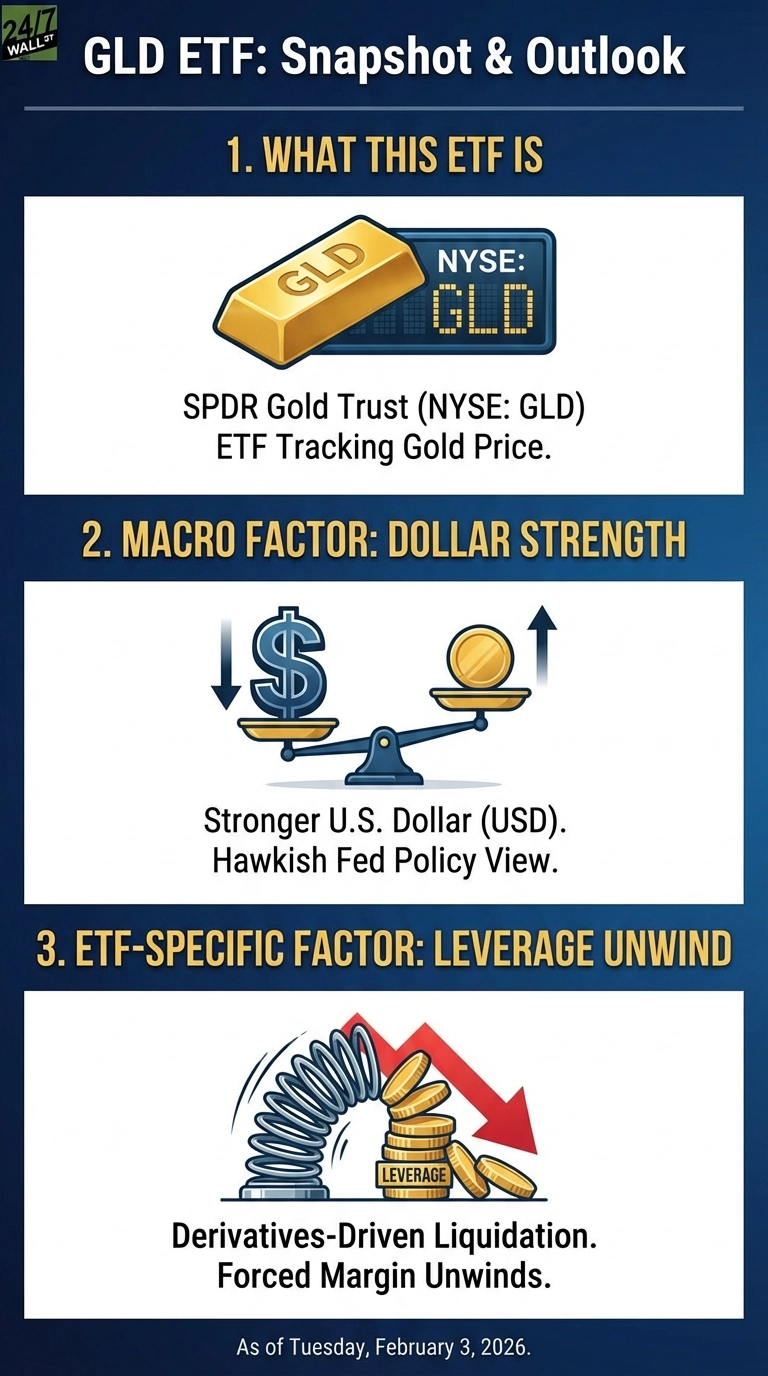
Gold’s biggest macro headwind is dollar strength. When President Trump nominated Kevin Warsh as Fed chair on January 30, markets interpreted it as hawkish. Warsh prioritizes inflation control over accommodation, which supports the dollar. A stronger dollar makes gold more expensive for foreign buyers and reduces its appeal as a currency hedge. Watch the U.S. Dollar Index weekly. If it breaks above recent highs near 110, gold faces continued pressure. If it weakens toward 105, that removes a major constraint on the upside. The Federal Reserve’s monthly policy statements and quarterly economic projections also matter, as any shift toward tighter policy or higher rate expectations will reinforce dollar strength.
Leverage Unwind, Not Fundamentals
The selloff wasn’t driven by collapsing demand for physical gold. It was a derivatives-driven liquidation. The CME responded by hiking margin requirements on gold and silver futures after the crash, forcing leveraged traders to exit positions and creating a cascade effect unrelated to gold’s underlying value. The key signal to watch is GLD’s daily trading volume and its price relationship to net asset value. When volume normalizes to lower levels and the ETF trades close to its NAV, the forced selling will be over and fundamentals can reassert themselves. You can find NAV data on State Street’s GLD fact sheet, updated daily. If volume remains elevated and the ETF trades at a discount to NAV, it signals continued liquidation pressure.
The key takeaway: dollar strength will determine whether GLD stabilizes or falls further, while the pace of leveraged position unwinding will dictate near-term volatility and whether the current price represents a floor or another leg down.











 Top Gaining Stocks
 Top Losing Stocks