


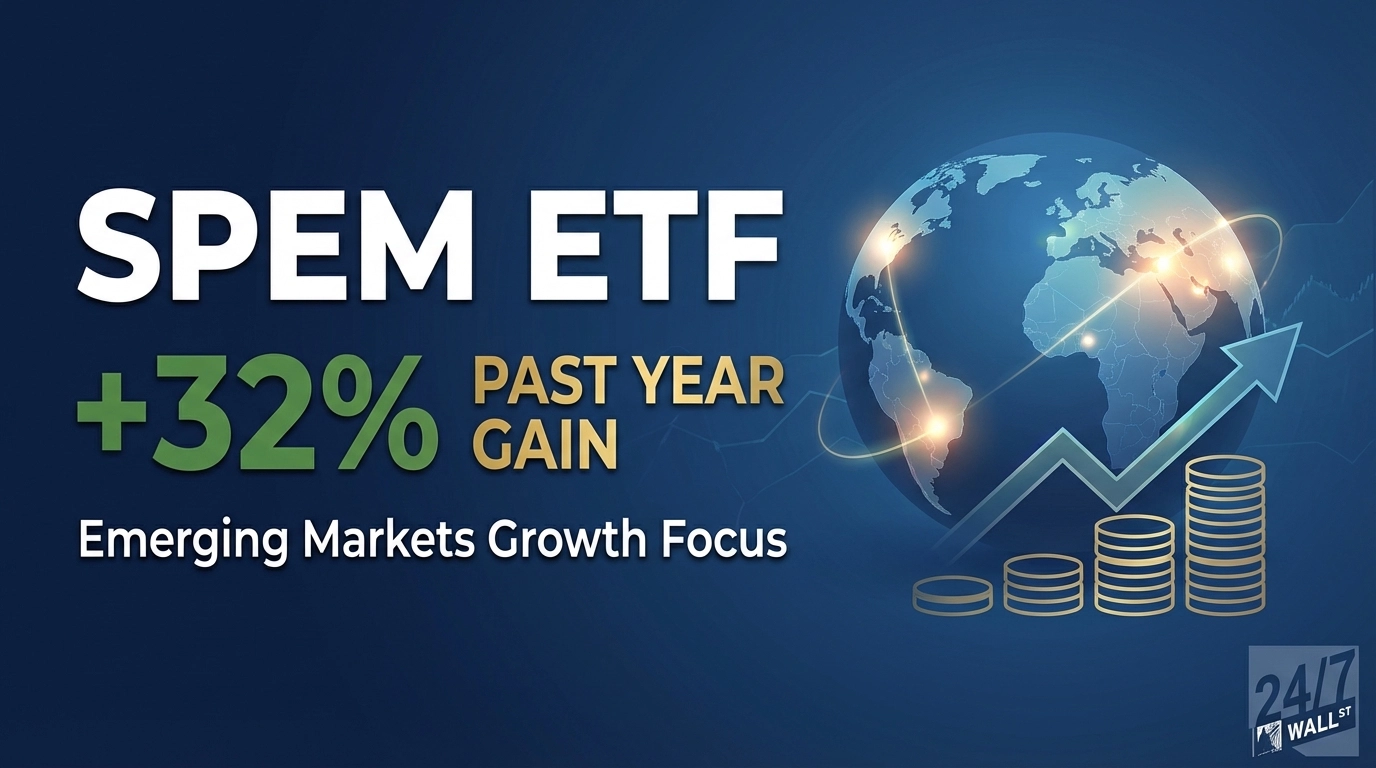
SPEM has delivered a 32% gain over the past year, outpacing the S&P 500’s 16% return by a wide margin. This outperformance stems from the fund’s exposure to recovering emerging market economies where growth rates exceed developed markets, particularly in Asia and Latin America where consumer spending and infrastructure investment are accelerating.
SPDR Portfolio Emerging Markets ETF (NYSEARCA:SPEM | SPEM Price Prediction) provides diversified access to this growth at just a 0.07% expense ratio—among the lowest in the category. The fund tracks over 800 holdings across China, India, Brazil, and other developing economies, spreading risk while capturing broad-based emerging market expansion.
The Dollar Decides Direction
Currency movements drive emerging market returns more than most investors realize. When the dollar weakens, emerging market assets denominated in local currencies become more valuable in dollar terms, and capital flows toward higher-yielding developing economies. The opposite happens when the dollar strengthens. SPEM’s performance over the next year will largely hinge on whether the dollar continues its recent consolidation or resumes a strengthening trend.
Watch the DXY Dollar Index. A sustained move below 100 would likely support continued emerging market strength, while a push above 108 could create headwinds. The Federal Reserve’s policy stance matters because interest rate differentials between the U.S. and emerging markets influence capital flows. If the Fed signals rate cuts while emerging market central banks hold steady or tighten, that narrows the rate gap and makes EM assets more attractive. Monthly Fed statements and the quarterly Summary of Economic Projections provide the clearest signals.
Concentration Creates Volatility
Individual holdings within SPEM show how emerging market stocks can move independently of the fund’s overall trend. PDD Holdings (NASDAQ:PDD) represents 0.72% of the fund but has declined 8% over the past year as the Chinese e-commerce company prioritizes long-term market share over near-term profitability. This investment-heavy approach compressed margins and led to disappointing quarterly results, illustrating the growth-versus-profit tradeoffs that define many emerging market companies.
Latin American fintech presents a contrasting growth story. Nu Holdings (NYSE:NU) has surged 28% over the past year as the digital bank scales profitably across Brazil and Mexico, delivering 41% earnings growth while expanding its customer base. Where PDD sacrifices profits for growth, Nu demonstrates that emerging market companies can achieve both simultaneously when operating in underpenetrated markets with strong unit economics.
India’s dual economy creates divergent performance within SPEM’s holdings. While ICICI Bank (NYSE:IBN) trades flat as domestic banking remains stable, Infosys (NYSE:INFY) has dropped 23% over the past year as global IT services demand weakens. This split reflects how India’s export-oriented tech sector faces different pressures than its domestic-focused financial services, making the fund’s performance dependent on which economic drivers dominate at any given time.
Track these individual holdings through quarterly earnings and the fund’s monthly fact sheet updates available on the SPDR website. When top holdings diverge this sharply, the fund’s returns become less predictable and more dependent on which sectors or countries are leading at any given moment.












 Top Gaining Stocks
 Top Losing Stocks