


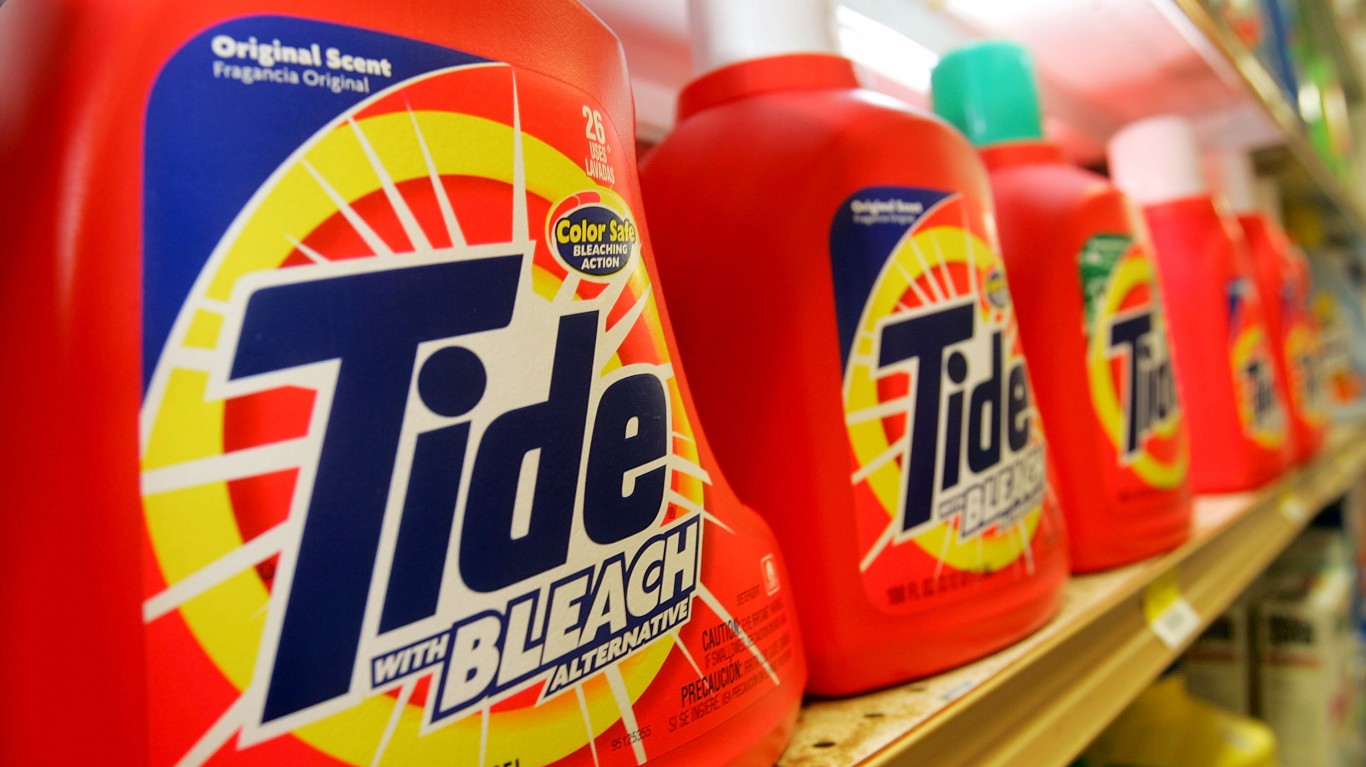
Procter & Gamble (NYSE: PG | PG Price Prediction) stock has climbed 11.65% year-to-date as of February 11, 2026, reaching $160 per share from a year-end close of $142.31. That gain looks impressive until you examine the broader consumer staples landscape. Clorox (NYSE: CLX) has surged 24.91%, Colgate-Palmolive (NYSE: CL) jumped 20.62%, and Church & Dwight (NYSE: CHD) gained 19.81%. P&G ranks middle of the pack in its own sector, raising questions about whether the company can justify its premium valuation while facing tariff headwinds and a leadership transition.
New CEO Takes Helm Amid Uncertainty
Shailesh Jejurikar assumed the role of president and CEO on January 1, 2026, succeeding Jon Moeller, who transitioned to executive chair. Jejurikar brings a 36-year P&G career spanning multiple businesses in Focus and Enterprise Markets, most recently serving as COO with P&L responsibility for Enterprise Markets. His timing is challenging. P&G reported Q4 fiscal 2025 organic sales of approximately 2% with core EPS of $1.48, up 6% year-over-year. But the company faces $900 million in tariff headwinds, down from $1 billion after an EU trade deal but still substantial. Management projects fiscal 2026 organic sales growth of flat to 3%, well below the 4% target that analysts previously expected.
Tariff Threat Clouds Growth Outlook
P&G’s tariff exposure breaks down to approximately $300 million from China tariffs and $600 million from rest of world. The company plans mid-single-digit price increases on roughly 25% of SKUs impacted by tariffs, translating to portfolio average pricing of about 2.5%. CFO Andre Schulten cautioned that “if there is a favorable shift in tariffs, a decrease will likely not lead to sustained pricing in the market,” suggesting limited upside from potential tariff relief. The company faces a difficult choice: absorb costs and compress margins, or raise prices and risk volume losses to private label competitors already gaining ground in value segments.
Valuation Stretched Despite Underperformance
P&G trades at 23.6x trailing earnings and 22.73x forward earnings, a premium valuation for a company delivering single-digit growth. The PEG ratio of 4.835 signals limited growth justification for current multiples. Compare that to Clorox at 19.87x trailing earnings or Colgate-Palmolive at 35.7x trailing earnings but with 5.8% quarterly revenue growth. P&G’s defensive characteristics and 68 consecutive years of dividend increases provide downside protection, while peers like Clorox and Colgate-Palmolive have delivered stronger year-to-date returns.
Income Safe, Growth Questionable
P&G’s 2.63% dividend yield and Dividend Aristocrat status appeal to income investors. The company returned $16 billion to shareholders in fiscal 2025, including $9.9 billion in dividends. That dividend appears secure given 31.6% return on equity and 26.3% operating margin. The company’s year-to-date performance trails sector peers despite its premium valuation. Tariff pressures and the leadership transition add uncertainty to the near-term outlook.









 Top Gaining Stocks
 Top Losing Stocks