


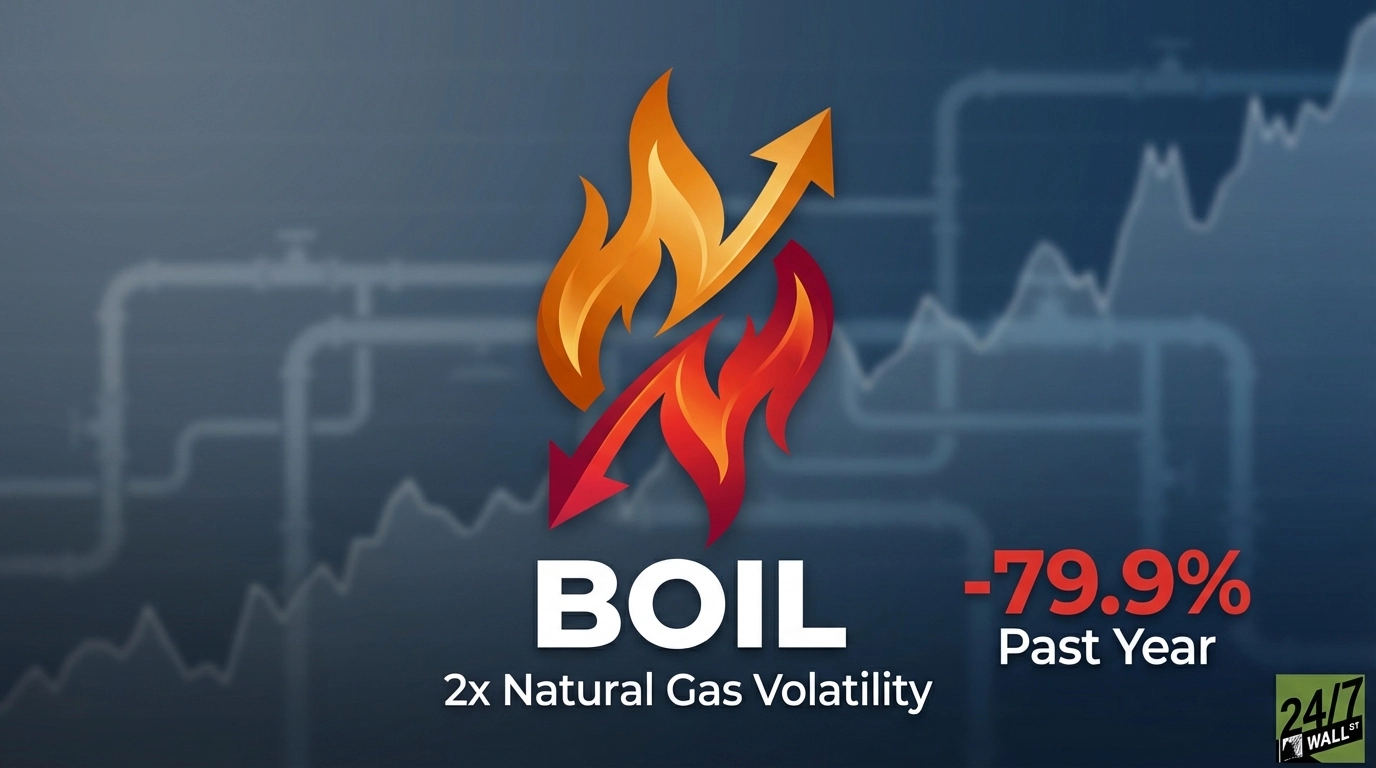
ProShares Ultra Bloomberg Natural Gas ETF (NYSEARCA:BOIL) gives traders amplified exposure to natural gas price swings – specifically, 2x the daily return of the Bloomberg Natural Gas Subindex. That amplification cuts both ways: BOIL has fallen roughly 80% over the past year. But with the US strikes on Iran in early March sending shockwaves through the energy sector, BOIL may be interesting for short term speculation.
The Macro Factor: Natural Gas Supply and Demand
The biggest macro driver for BOIL is the balance between natural gas supply and demand, which directly sets Henry Hub spot prices. January 2026 showed just how violent this relationship can get: Henry Hub spiked to $30.72/MMBtu on January 23 – a near-tenfold surge – before collapsing to $3.13/MMBtu by February 23. Extreme winter heating demand and supply constraints drove that move – exactly what BOIL is built to capture on the upside, and what devastates holders on the way back down.
The key variable to track is weekly storage levels. The EIA publishes its Natural Gas Weekly Update every Thursday, reporting storage injections and withdrawals. A storage deficit relative to the five-year average historically pressures prices higher; a surplus does the opposite. With February 2026 prices running below February 2025’s range of $3.22-$7.15, the supply picture appears comfortable — but that can shift heading into next winter or if U.S. LNG export capacity keeps expanding.
The Micro Factor: Daily Compounding Decay
BOIL’s most underappreciated risk is structural. Because the fund resets its 2x leverage target daily, sideways or volatile markets erode value even when the underlying commodity goes nowhere. This beta slippage explains why BOIL has lost 99.9% of its value over the past decade despite natural gas prices not approaching zero — a sobering reminder that this is a trading instrument, not a buy-and-hold position. The fund holds approximately $477 million in net assets and has been trading since October 2011, giving it a long track record of this decay in action.
Traders should also monitor the natural gas futures curve. Contango — where near-month contracts are cheaper than future months — creates additional drag each time the fund rolls expiring contracts forward, compounding losses beyond what spot price moves alone would suggest. ProShares publishes daily holdings on its fund page.
Bottom Line
Watch the EIA’s Thursday storage reports for any supply deficit that could reignite a Henry Hub rally. Equally important is the futures curve — if natural gas stays in contango through the spring shoulder season, daily compounding decay will keep quietly eroding BOIL’s value even if spot prices hold steady.












 Top Gaining Stocks
 Top Losing Stocks