



JPMorgan Dividend Leaders ETF (NYSEARCA:JDIV) launched in September 2024 as an actively managed fund targeting global dividend payers. The promise is straightforward: own a diversified basket of companies with strong dividend track records, collect quarterly income, and benefit from JPMorgan’s active management. For retirees seeking international diversification alongside income, that sounds appealing. The reality is more nuanced.
How JDIV Generates Its Yield
JDIV collects dividends from the underlying companies it owns and passes that income to shareholders. The fund holds a globally diversified mix of equities spanning the U.S., Europe, and Asia, with financials at 10.7%, information technology at 9.6%, and industrials at 7.7% as the three largest sector weights. The income stream depends entirely on whether those underlying companies continue paying and growing their dividends. There are no options strategies or synthetic structures involved.
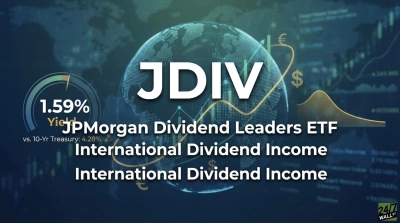
The current dividend yield sits at 1.59%, which is modest. For context, the 10-year Treasury yields 4.15% today. JDIV’s income alone does not compete with risk-free alternatives, which means total return matters significantly here.
Dividend History: Too Short to Draw Conclusions
JDIV has paid six distributions since inception. The payment amounts have swung widely across quarters — reflecting the lumpy timing of dividends collected from global holdings across different fiscal calendars. That variability is not a red flag on its own, but it does mean retirees planning around a predictable monthly check will find JDIV’s payment schedule unreliable.
The Real Risk: Size and Track Record
JDIV’s most significant limitation for retirement planning is structural. The fund holds only $9.9 million in net assets as of now. Small funds carry closure risk. If assets do not grow, JPMorgan could decide the fund is not economically viable and liquidate it, forcing investors to reinvest at a potentially inconvenient time. That is not speculation; it is how the ETF industry works.
The fund also has roughly 18 months of operating history. There is no data showing how it behaved during a genuine credit cycle or bear market. The VIX hit 52 in April 2025, and JDIV navigated that period, but one volatility spike does not constitute a stress test track record.
Total Return: The Bright Spot
Price performance has been the fund’s strongest argument for retirees willing to accept modest income. Shares have climbed roughly 15% over the past year, a meaningful supplement to the yield, and the fund has held positive territory year-to-date despite recent market turbulence. That resilience reflects the quality tilt in the underlying portfolio rather than any leverage or options overlay.
The top positions include Taiwan Semiconductor, Microsoft, and Broadcom, all companies with strong cash generation. That quality tilt helps explain the price stability and gives the dividend stream a credible foundation.
A Quality Fund Still Building Its Case
JDIV’s 47 basis point expense ratio is competitive, the underlying holdings are high quality, and the one-year total return is genuinely good. The real concern is structural. JDIV is too small, too new, and too inconsistent in its payment timing to serve as a core income holding for a retiree who needs predictable cash flow.
Investors researching international dividend ETFs may want to monitor JDIV as it builds a longer track record. The 1.59% yield and short operating history are factors worth weighing alongside the competitive expense ratio and strong one-year total return when conducting due diligence.









 Top Gaining Stocks
 Top Losing Stocks