



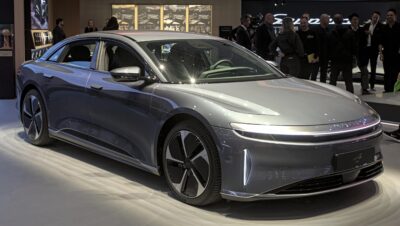
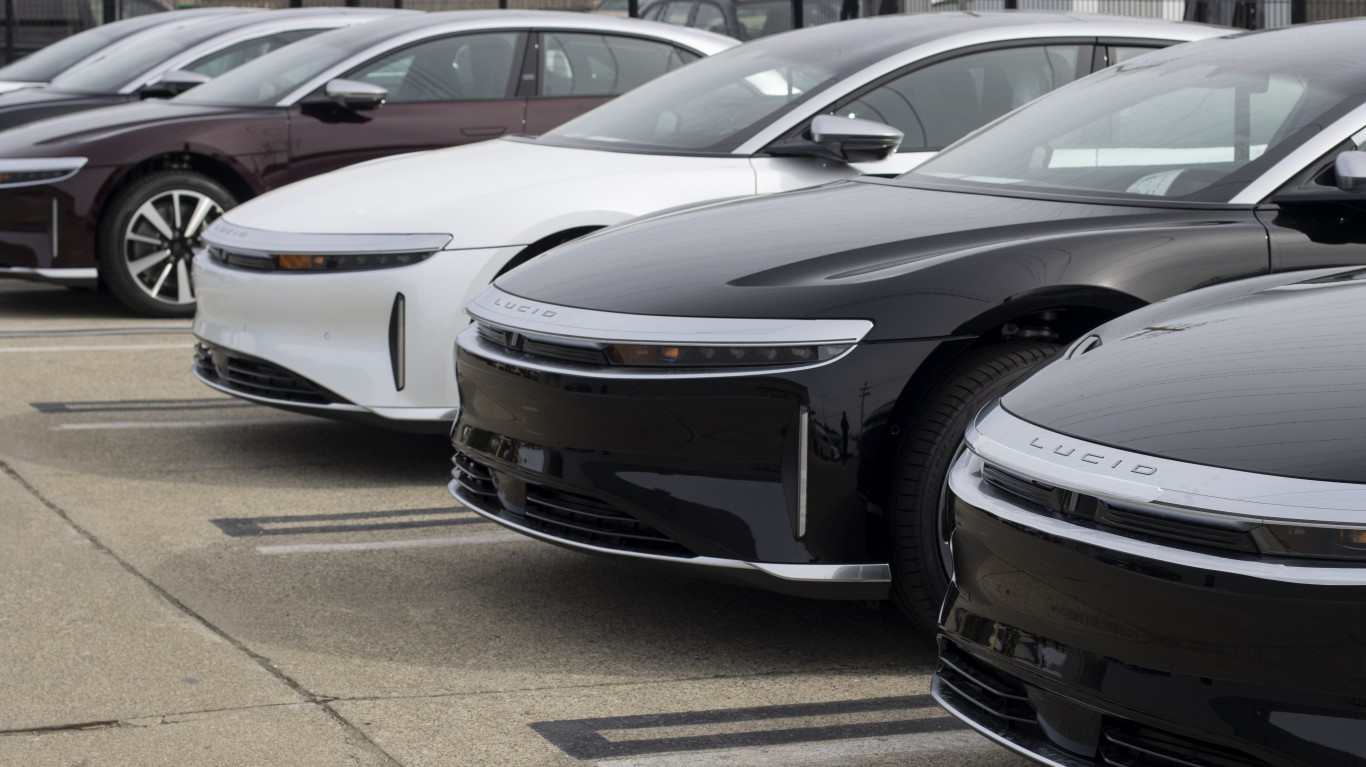
Lucid Group (NASDAQ:LCID | LCID Price Prediction) interim CEO Marc Winterhoff made a pointed case on live television this week: the Lucid Gravity already beats its gas-powered rivals on every meaningful spec, and the price tag proves it.
“Our new Lucid Gravity, for instance beats them in all of the specs and even in range. The 450, you will not get a vehicle that has anywhere close, let’s say, the horsepower and the dynamics to get that far with an internal combustion engine.”
Winterhoff is not comparing the Gravity to a family sedan. He is stacking it against high-powered ICE competitors priced close to or above $100,000, with Mercedes sometimes closer to $120,000. The Gravity starts at $95,000 and offers up to 450 miles of range. At that price point, his claim is harder to dismiss than it sounds.
Winterhoff confirmed that a new mid-size vehicle is coming at the end of this year at approximately $50,000, roughly the average selling price of a new vehicle in the U.S. That expands Lucid’s addressable market from $40 billion today to an estimated $350 billion by 2030. The Gravity was the proof of concept. The mid-size is the volume play.
The operational momentum is real. Q4 2025 deliveries hit 5,345 vehicles, up 72% year-over-year, and full-year 2025 revenue reached $1.35 billion, up 68% year-over-year. The Gravity earned Car and Driver 10Best honors in its first year of eligibility. The product credibility is building.
But the financials demand equal attention. Cost of revenue in Q4 was $944.64 million against $522.73 million in revenue. Lucid is still selling every car at a loss, and full-year free cash flow was negative $3.8 billion. Prediction markets currently assign a 42.5% probability of bankruptcy before end of 2026. That is not a number to brush past.
Winterhoff’s product confidence is grounded in real specs and real awards. But the gap between “best vehicle on the market” and “viable business” is still enormous. Whether the mid-size platform arrives on schedule, whether margins improve as volumes scale, and whether the Saudi PIF backstop holds are the central questions analysts and observers are watching. If any of those links breaks, the product specs alone may not be enough to sustain the business.








 Top Gaining Stocks
 Top Losing Stocks